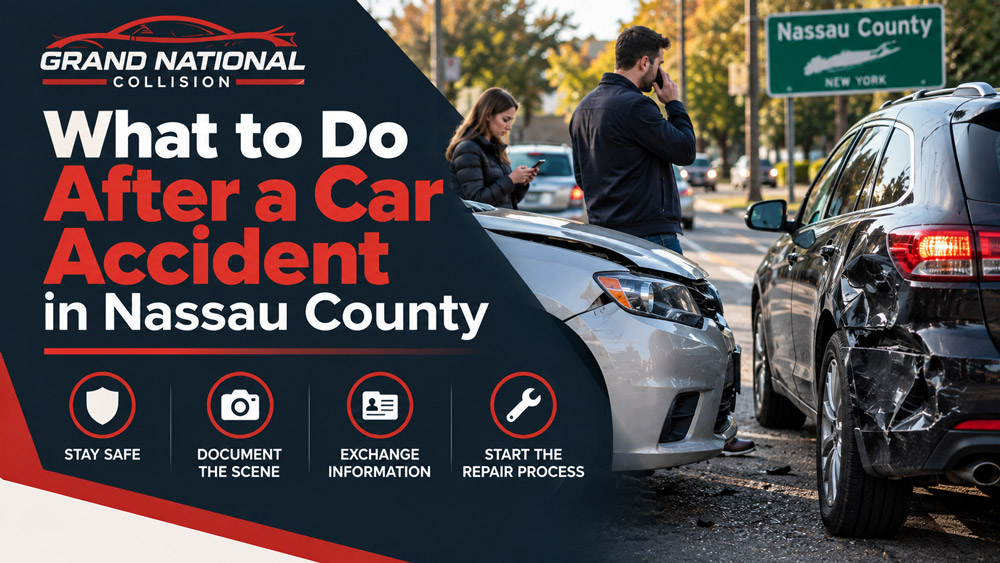
A calm, step-by-step guide to safety, information exchange, photos, and getting a damaged vehicle looked at.
The minutes after a collision are the hardest time to think clearly, so it helps to have a sequence in mind before you ever need it. On the Jericho Turnpike corridor and the local streets of New Hyde Park and Garden City Park, traffic can be heavy, and a minor collision can quickly become a dangerous scene if people stand in the roadway. Safety comes first, documentation second, and the repair conversation third.
Start with safety. If the vehicles can still move and it is safe to do so, get them out of the travel lanes and onto a shoulder, a parking lot, or a side street. Turn on hazard lights. If anyone is injured, or if the vehicles cannot be moved safely, call 911 and wait for help rather than trying to direct traffic yourself. Do not stand between the vehicles or behind them.
Once everyone is safe, exchange information. That means names, phone numbers, driver license numbers, insurance company names, and policy numbers for each driver. Note the make, model, color, and plate of each vehicle. If a police officer responds, ask how to get a copy of the report, because an insurer will often want the report number.
Photos are the most valuable thing you can collect. Take wide shots that show where the vehicles ended up and the surrounding street, then closer shots of every damaged area from a few angles. Capture the other vehicle plates and any visible damage, and photograph the road surface, lane markings, and any traffic signs or signals nearby. These images help both the claim and the repair estimate.
Be careful what you say at the scene. Provide the facts the other driver and the police need, but avoid guessing at fault or arguing about what happened. Fault is determined later by the insurers, and an offhand admission can complicate a claim. Stick to information exchange and let the process work.
When you get home, call your insurer to open a claim, and write down what you remember while it is fresh: the time, the location, the direction each vehicle was traveling, the weather, and the road conditions. If there were witnesses, note any contact information you collected. Memory fades quickly, and a written note is a reliable record.
Then turn to the vehicle. Cosmetic damage may be drivable, but some damage that looks minor is not. If the steering pulls, the brakes feel different, a wheel looks shifted, a headlamp or tail lamp is broken, or a door will not latch, do not drive the vehicle. Have it towed. Driving a vehicle with hidden structural or suspension damage can make the repair larger and can be unsafe.
One more situation is worth planning for: a collision with an unattended parked car, or a hit-and-run. If you return to your vehicle and find damage with no one there, photograph the damage and the position of your vehicle, note the time, and look for any note or witness. Report it to the police so there is a record, and open a claim. Leaving the scene without documenting it can make the claim harder later, and a police report is often what an insurer needs to treat the incident as a not-at-fault loss.
Finally, arrange for an assessment. A body shop can look at the damage and explain what it sees, including anything that is not visible from outside. Keep your photos, the police report number, and your claim information together, and bring them with you. The earlier the vehicle is assessed, the sooner the repair can be planned and, if hidden damage is found, documented for the insurer. For a collision in the New Hyde Park area, a shop on Jericho Turnpike is a practical place to start the conversation.