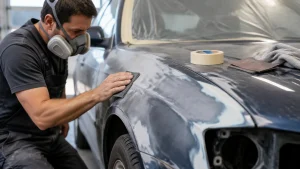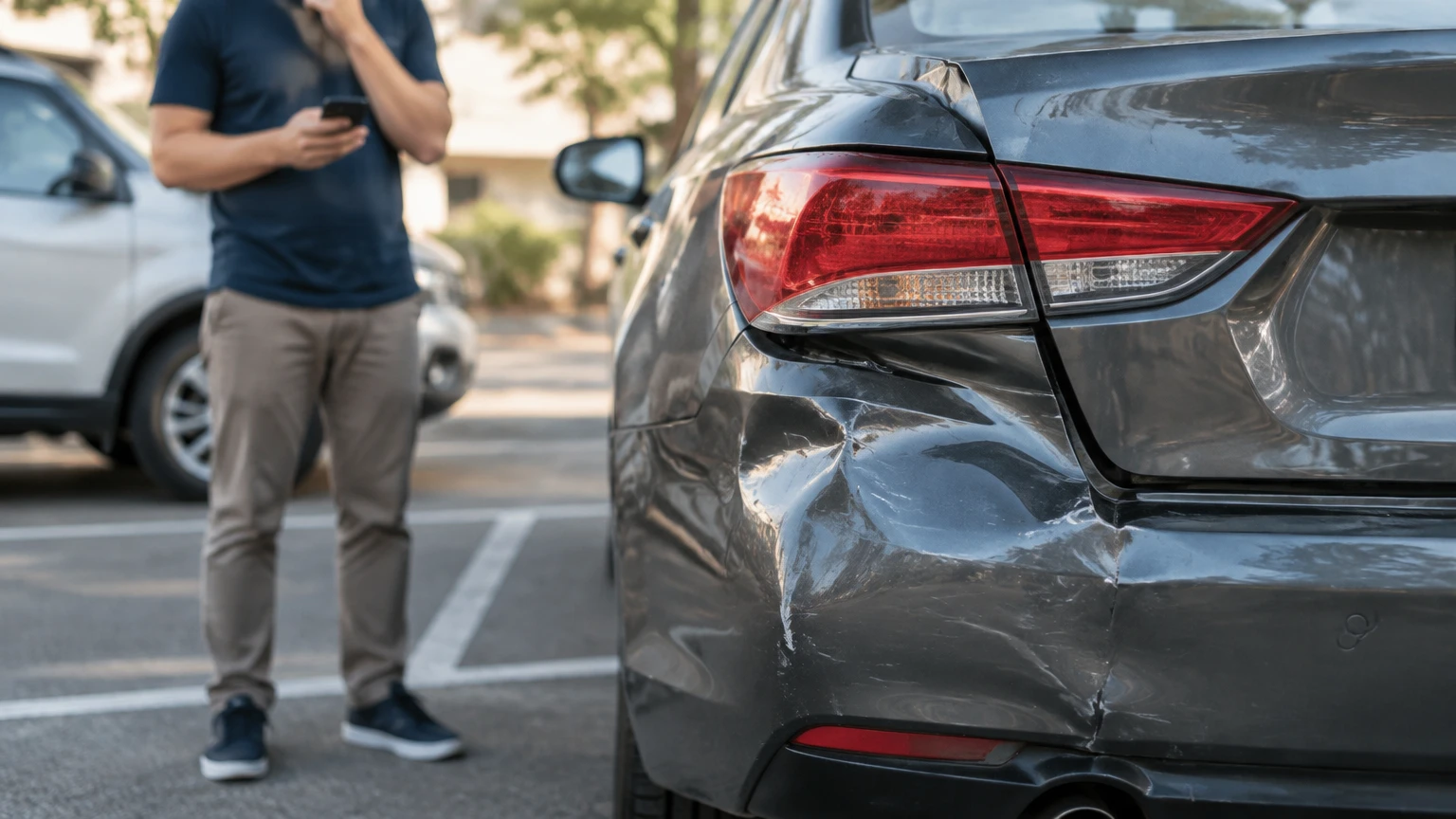
Yes, rear-end collision damage can reduce a car’s resale value even after professional repairs. The loss usually comes from an accident-history discount, reduced buyer confidence, and any remaining repair defects, with typical market reductions ranging from about 5% for a documented cosmetic claim to 30% or more for severe structural damage.
Key facts
A repaired vehicle can retain an inherent diminished value because its VIN may show an accident history.
A rear-end collision involving frame rails, the trunk floor, quarter panels, or safety systems usually causes a larger loss than bumper damage alone.
A 10%-30% reduction is a practical broad range, not a guaranteed formula for every vehicle or market.
Carfax and AutoCheck reports can influence buyers, but a reported accident does not automatically prove unsafe repairs.
OEM parts, documented measurements, ADAS calibration records, and a repair warranty can protect value, although they cannot erase the accident record.
A not-at-fault owner may qualify for a diminished-value claim, subject to state law, policy terms, evidence, and filing deadlines.
Can Rear-End Collision Damage Affect a Car’s Resale Value?
Rear-end collision damage affects resale value through two separate channels: the vehicle’s documented accident history and the quality or completeness of its repairs. A cleanly repaired bumper may create a smaller discount, while frame movement, airbag deployment, trunk leakage, or unresolved sensor faults can make the vehicle worth substantially less.
The vehicle’s pre-crash value matters. A $35,000, two-year-old SUV with one documented rear impact may lose more dollars than a $7,000, twelve-year-old sedan with the same percentage reduction. Buyers also price risk differently by segment. Luxury vehicles, performance cars, electric vehicles, collector models, and certified-pre-owned candidates often receive stronger scrutiny.
The answer is therefore yes, but the exact reduction depends on severity, age, mileage, prior condition, local supply, repair documentation, and whether the vehicle history report records the event.
What Is Diminished Value?
Diminished value is the difference between a vehicle’s market value before a collision and its market value after the collision and repairs. In practice, appraisers usually distinguish inherent diminished value from repair-related loss, although insurance terminology varies by jurisdiction.
The three useful categories
| Category | Meaning | Typical example | Main evidence |
|---|---|---|---|
| Inherent diminished value | Loss caused by the accident record itself | Repaired bumper, clean inspection, accident still reported | VIN history and comparable listings |
| Repair-related diminished value | Loss caused by visible or functional repair defects | Uneven gaps, mismatched paint, warning lights | Inspection, photographs, repair invoice |
| Immediate diminished value | Loss while the vehicle remains damaged | Unrepaired trunk and crushed bumper | Pre-loss valuation and repair estimate |
Inherent diminished value remains after a high-quality repair because many buyers prefer a comparable vehicle with no reported collision. Repair-related diminished value is avoidable in theory, but poor parts, rushed bodywork, missing calibration, or undocumented structural repairs can make it larger.
A diminished-value claim is not the same as reimbursement for repair costs. Repair payment addresses physical restoration. A diminished-value payment addresses the market discount that may remain afterward.
How Much Value Can a Car Lose After a Rear-End Collision?
A rear-end collision commonly reduces resale value by roughly 5%-30%, while severe structural damage, multiple accidents, a branded title, or airbag deployment can produce a larger discount. Those percentages are typical market ranges, not a universal insurance formula.
| Collision outcome | Typical market reduction | Approximate loss on a $25,000 car | Common valuation result |
|---|---|---|---|
| Bumper cover and paint only | 5%-8% | $1,250-$2,000 | Minor history discount |
| Bumper, lamps, sensors, exhaust | 8%-15% | $2,000-$3,750 | Moderate buyer negotiation |
| Trunk floor or rear body structure | 15%-25% | $3,750-$6,250 | Significant retail and trade discount |
| Frame rail or crumple-zone repair | 20%-30% | $5,000-$7,500 | Strong wholesale risk discount |
| Salvage or rebuilt title | 30%-50% or more | $7,500-$12,500+ | Limited lender and buyer pool |
A vehicle’s dollar loss is not calculated reliably by multiplying a percentage by its original sticker price. The relevant baseline is the vehicle’s pre-loss market value, adjusted for mileage, options, condition, location, and comparable sales.
The common “diminished value formula” used in some claims is not accepted uniformly. Some adjusters apply a percentage cap, a damage multiplier, and a mileage factor, but those methods may not match actual local market behavior. An independent appraisal using comparable vehicles is stronger than an unsupported percentage.
Which Rear-End Damage Matters Most?
Structural damage usually affects resale value more than cosmetic damage because buyers associate it with safety, alignment, future corrosion, and uncertain repair quality. Damage to sensors and restraint systems can also create substantial loss even when the exterior looks attractive.
| Damage area | What can be affected | Typical repair range | Resale concern |
|---|---|---|---|
| Bumper cover | Plastic cover, brackets, reflectors | $500-$2,500 | Visible history with limited mechanical concern |
| Rear body and trunk | Trunk floor, latch, quarter panel, spare-tire well | $2,000-$8,000 | Water leaks, alignment, repair evidence |
| Frame and crumple zones | Rear rails, crush boxes, measurement points | $5,000-$15,000+ | Structural integrity and buyer confidence |
| ADAS equipment | Radar, cameras, parking sensors | $800-$3,500 | Calibration and warning-light risk |
| Exhaust and cooling systems | Muffler, pipes, rear mounts, cooling components | $700-$4,000 | Noise, emissions, drivability |
| EV battery area | Battery enclosure, high-voltage wiring | $3,000-$20,000+ | Safety inspection and battery warranty concerns |
Rear parking sensors, blind-spot monitors, automatic emergency braking, and surround-view cameras may require scans and calibration after a seemingly modest impact. A repair invoice that lists bumper replacement but omits sensor calibration deserves further investigation.
Structural repairs are not automatically unsafe. A vehicle repaired to the manufacturer’s procedures can be roadworthy, but resale buyers often cannot verify that standard without measurements, photographs, parts records, and a qualified inspection.
How Do Carfax and AutoCheck Reports Change the Price?
Carfax and AutoCheck reports can lower a vehicle’s selling price because buyers treat a reported accident as a risk signal, even when the repair was competent. The effect depends on the event description, reported damage severity, title status, number of incidents, and whether independent inspection confirms the repair.
History reports do not contain every collision. An accident may be absent when repairs were paid in cash, the insurer did not receive a claim, or the reporting body did not transmit the event. Conversely, a report can show an accident without describing every damaged component.
| History entry | Buyer reaction | Typical pricing effect | Seller response |
|---|---|---|---|
| Minor accident, no airbag deployment | Requests inspection | 3%-8% discount | Provide repair invoice |
| Moderate collision with body repair | Negotiates firmly | 8%-18% discount | Provide photographs and alignment report |
| Structural damage reported | Limits buyer pool | 15%-30% discount | Obtain independent inspection |
| Multiple accidents | Treats vehicle as higher risk | 20%-35% discount | Price below clean-history comparables |
| Salvage or rebuilt title | Financing and insurance may narrow | 30%-50%+ discount | Disclose title status before inspection |
A history report is a data point, not a mechanical diagnosis. A clean report does not prove that a car has never been damaged, and an accident entry does not prove that the car was repaired incorrectly.
Do Repairs Restore the Original Resale Value?
Repairs restore usability and safety, but they usually do not restore the original resale value when the collision remains on the vehicle history. High-quality work reduces additional repair-related loss; it does not normally remove inherent diminished value.
Parts and documentation that matter
OEM parts can fit and function more predictably, particularly on newer vehicles with integrated sensors and complex crash structures. Equivalent aftermarket or recycled parts may be acceptable when they meet specifications, but buyers often discount a vehicle when the repair file cannot identify the parts used.
Strong documentation includes:
- The insurer’s estimate and final repair invoice.
- Before, during, and after photographs.
- Four-wheel alignment results.
- Structural measurement sheets when structural parts were repaired.
- Diagnostic scan results and ADAS calibration records.
- Paint, corrosion, and seam-sealer information.
- A written repair warranty.
A practitioner rule of thumb is that documentation protects value most when the vehicle is newer, expensive, technologically complex, or likely to be sold within two years. On an older economy car, spending thousands extra on OEM cosmetic parts may recover less resale value than the added repair cost.
Can You Claim Diminished Value From the Other Driver’s Insurance?
A not-at-fault driver may be able to claim diminished value from the at-fault driver’s insurer, but eligibility depends on state law, liability, insurance rules, title status, and the vehicle’s age and condition. The claim is separate from payment for physical repairs.
Many jurisdictions permit some form of third-party diminished-value claim, while others restrict recovery or apply different standards. Some insurers also resist claims unless the owner provides a professional appraisal and proof of pre-loss value. A first-party claim under the owner’s own collision coverage may be unavailable or limited, depending on the policy.
A practical claim sequence
- Confirm liability and obtain the claim number.
- Photograph the vehicle before repairs whenever safe.
- Collect the police report, repair estimate, final invoice, and vehicle-history report.
- Establish pre-crash value using dated comparable listings or a valuation report.
- Obtain an independent diminished-value appraisal after repairs.
- Submit the demand before the applicable deadline.
- Compare the offer with the appraiser’s method and comparable vehicles.
- Escalate through an insurance supervisor, regulator, mediation, or attorney when appropriate.
Do not sign a release covering “all claims” until the settlement clearly addresses both repair costs and diminished value. A release can prevent later recovery.
Should You Repair, Trade, Sell, or Keep It?
The best option depends on repair cost, post-repair market value, financing, safety, and how long you intend to own the vehicle. Repairing and keeping usually produces the best transportation value when the car is structurally sound, while an immediate trade-in is convenient but commonly captures the dealer’s risk discount.
| Option | Immediate cash need | Typical value outcome | Best fit |
|---|---|---|---|
| Trade in unrepaired | $0-$500 | Lowest offer, repair deduction plus margin | Owner needing rapid disposal |
| Repair and trade | $1,500-$15,000+ | Better than unrepaired trade, history discount remains | Newer vehicle with moderate damage |
| Repair and private sale | $1,500-$15,000+ | Highest potential price, more disclosure work | Documented, safely repaired vehicle |
| Sell as-is privately | $0 | Below repaired market value | Buyer accepting repair risk |
| Repair and keep | Variable | Avoids immediate transaction discount | Owner planning several years of use |
Dealers often deduct more than the raw repair estimate because they price inspection time, warranty risk, inventory delay, and resale uncertainty. A private buyer may pay more, but the seller must disclose the accident accurately and provide enough evidence to support the asking price.
Selling as-is is not automatically dishonest. The seller must describe known damage, title status, and material repair history accurately, because concealing a collision can create legal and financial exposure.
Does the Loss Shrink as the Vehicle Gets Older?
The percentage effect of one accident often shrinks as a vehicle ages and accumulates mileage, but the dollar loss does not follow a fixed schedule. A five-year-old car may still suffer a meaningful discount if it has low mileage, a premium badge, severe structural damage, or a market where clean-history examples are scarce.
Accident history becomes one of several condition variables over time. Mechanical reliability, tire condition, service records, rust, battery health, and ownership cost may matter more than a minor bumper claim after many years.
The loss does not necessarily fade when the vehicle has a branded title, unresolved safety issue, repeated accidents, or evidence of poor workmanship. Those conditions remain important to lenders, insurers, dealers, and cautious private buyers.
How Can You Maximize the Remaining Value?
You can maximize remaining value by completing safe repairs, retaining detailed documentation, correcting warning lights, obtaining an independent inspection, and pricing the vehicle against accident-history comparables rather than clean-history retail listings.
Use this checklist:
- Select a repair facility experienced with the vehicle’s make and ADAS systems.
- Ask whether structural measurements will be recorded.
- Verify that OEM procedures were followed where required.
- Obtain post-repair diagnostic scans and calibration reports.
- Check for trunk, quarter-panel, and taillight water leaks.
- Request a four-wheel alignment printout.
- Keep the repair estimate, invoice, photographs, and warranty.
- Order current Carfax and AutoCheck reports before listing.
- Disclose the accident in writing.
- Obtain multiple offers from dealers, online buyers, and private-market prospects.
An independent pre-sale inspection can expose defects before a buyer does. It also gives the seller a credible explanation for why the asking price differs from a clean-history vehicle.
What Mistakes Reduce Recovery?
The most expensive mistakes are accepting a repair settlement without considering diminished value, failing to document hidden damage, and treating a history report as a substitute for a mechanical inspection. Each mistake weakens either the claim amount or the eventual sale.
Common failure modes
- Using the repair estimate as the vehicle’s value loss. Repair cost and diminished value measure different losses.
- Selling before repairs are complete. An unrepaired car usually receives both a repair deduction and a buyer-risk discount.
- Ignoring calibration. A bumper replacement can leave parking or collision-warning systems inaccurate.
- Choosing the cheapest body shop without checking procedures. Visible defects and missing records can exceed the original savings.
- Failing to disclose the accident. A later report discovery can collapse the sale and create a dispute.
- Assuming every claim qualifies. Fault, jurisdiction, vehicle age, prior accidents, and policy language can defeat a claim.
A diminished-value appraiser is useful when the vehicle is relatively new, the loss is substantial, or the insurer’s offer relies on a generic formula. The appraisal fee is less attractive for an older car whose expected value loss is only a few hundred dollars.
What Should You Inspect Before Buying a Repaired Rear-End Vehicle?
A buyer should inspect alignment, tire wear, trunk seals, structural seams, safety-system scans, and repair documentation before purchasing a repaired rear-end vehicle. A history report alone cannot establish that the car is safe or correctly repaired.
Ask for the repair invoice and photographs, then hire an independent mechanic or collision specialist who is not affiliated with the seller. Confirm that the VIN on the documentation matches the vehicle, and compare panel gaps, paint texture, fasteners, welds, trunk-floor condition, and underbody components.
A short test drive should include straight-line tracking, braking, reverse sensors, camera operation, warning lights, and unusual exhaust or suspension noise. Water testing around the trunk and rear lamps can identify leaks that are invisible on a dry inspection day.
Avoid a purchase when the seller refuses an independent inspection, cannot explain title branding, has no repair records for alleged structural work, or pressures you to rely on a clean-looking exterior.
FAQ
Does a rear-end accident always appear on Carfax?
No. Carfax receives data from participating insurers, repair facilities, government agencies, auctions, and other sources, so cash-paid repairs or unreported collisions may not appear. A missing entry does not prove a clean history. Buyers should combine the report with a professional inspection, paint measurement, and repair-record review.
Is a repaired car with frame damage safe?
A repaired car with frame damage can be safe when a qualified facility follows the manufacturer’s structural procedures and verifies measurements, welds, alignment, restraint systems, and corrosion protection. Safety cannot be judged from appearance alone. Buyers should request structural documentation and obtain an independent collision inspection.
Can I claim diminished value if I caused the accident?
Usually, an owner cannot claim against the other driver’s liability insurer when the owner caused the collision. Recovery under the owner’s own policy depends on policy language and local rules, and many collision policies pay repair costs without automatically paying inherent diminished value. A local insurance professional can confirm eligibility.
Does a leased car lose resale value after a rear-end collision?
Yes, a leased car can lose market value, although the leasing company typically owns the vehicle and controls end-of-lease charges. The driver should report the collision, follow repair requirements, retain all records, and review the lease agreement. A diminished-value payment may involve the owner or lessor, depending on jurisdiction and contract terms.
Should I repair a car if the estimate exceeds its value?
Repairing a car may be uneconomic when repair cost approaches the vehicle’s pre-crash market value, especially if structural or restraint damage is extensive. Insurers may declare a total loss under state-specific thresholds or formulas. Compare the repair estimate, salvage value, replacement cost, financing balance, and post-repair inspection results before deciding.
How long should I keep a repaired car before selling it?
There is no universal waiting period. Keep the car long enough to verify alignment, warning systems, trunk sealing, tire wear, and repair quality, often at least several weeks and one or two hundred miles when practical. Selling sooner may preserve mileage but can expose unresolved defects and reduce buyer confidence.
The Bottom Line
Can Rear-End Collision Damage Affect a Car’s Resale Value? Yes. The largest losses usually come from structural damage, branded titles, repeated accidents, unresolved ADAS faults, and weak repair documentation, while a documented cosmetic repair generally produces a smaller discount.
Repair quality protects safety and limits additional value loss, but it cannot always remove an accident-history discount. Before accepting an insurance settlement or selling the car, establish its pre-crash value, document every repair, check the post-repair systems, and evaluate a diminished-value claim when the law and facts support one.