Repainting a car can reduce resale value by roughly 10%-30% when the work is poorly documented, visibly low quality, or suggests accident, rust, or structural damage. A factory-quality repaint can limit the loss, and may increase the value of a classic or severely weathered vehicle, but original factory paint usually remains more desirable on modern cars.
Key Facts at a Glance
- A repaint does not automatically mean a car has been wrecked, but it creates a reasonable question about why the work was necessary.
- Typical resale loss is greatest when the paint has overspray, texture, color mismatch, poor edges, or no repair documentation.
- A paint thickness gauge can identify many repainted panels, but a thickness reading alone cannot prove structural damage.
- Paint correction preserves original paint and is usually safer for resale than repainting a sound panel.
- A full professional repaint commonly costs $4,000-$12,000 for one color, while a budget job can cost less than $2,000.
- Period-correct restoration paint can add value to a classic, while non-original paint often reduces value in a modern luxury or collector vehicle.
Does Repainting Lower a Car’s Resale Value?
Repainting usually lowers a modern car’s resale value because buyers and dealers treat non-factory paint as a risk signal. The typical deduction is about 10%-30% when the repaint is visible, undocumented, or associated with collision or corrosion repairs; a clean, well-documented repair may produce little direct deduction.
The percentage is not a universal appraisal rule. A dealer may make a larger deduction than a private buyer because the dealer must resell the vehicle, finance it, and manage warranty or disclosure risk. A classic-car auction may reach the opposite conclusion if the finish is period-correct and the restoration records establish sound preparation.
The car’s baseline value matters as well. A $3,000 repaint on a $9,000 vehicle is difficult to recover, while a $10,000 restoration on a rare Porsche, Chevrolet Corvette, or Jaguar E-Type may be economically rational.
Typical Resale Outcomes by Repaint Scenario
| Repaint scenario | Typical work cost | Likely buyer reaction | Typical value effect |
|---|---|---|---|
| One professionally blended bumper | $500-$1,200 | Normal cosmetic repair | 0% to -3% |
| Two repaired accident panels | $1,500-$4,000 | Acceptable with records | -2% to -8% |
| Full daily-driver respray | $3,000-$7,000 | Questions about history | -5% to -20% |
| Low-cost full repaint | $800-$2,000 | Quality and hidden-damage concerns | -15% to -30% |
| Bare-metal classic restoration | $8,000-$25,000+ | Positive if documented and correct | -5% to +20% |
| Undocumented color change | $6,000-$15,000+ | Originality and workmanship concerns | -15% to -35% |
These figures are typical practitioner ranges, not guaranteed deductions. Condition, mileage, title status, local demand, brand, accident history, and the quality of the underlying body repair can outweigh the paint itself.
Why Does Aftermarket Paint Create a Resale Discount?
Aftermarket paint creates a resale discount because the finish reveals that a panel was removed, repaired, corroded, faded, or deliberately changed. Buyers are not paying only for color. They are pricing uncertainty.
A car with a fresh respray can conceal poor filler work, stretched metal, corrosion under the paint, or an unrepaired frame issue. The suspicion remains even when the finish looks glossy. A professional inspection therefore considers panel gaps, welds, fasteners, underbody damage, airbag deployment records, and alignment alongside paint thickness.
The same logic applies to a repaint caused by sun damage. Severe ultraviolet fading may be entirely cosmetic, but a seller who cannot show photographs, invoices, or a body-shop explanation leaves the buyer to assume the more expensive possibility.
What Paint Thickness Readings Reveal
Most modern original paint systems measure approximately 3-5 mils, or 75-125 microns, although readings vary by manufacturer, panel, color, and measuring instrument. A repainted panel may measure 6-12 mils, while filler or several repair layers can exceed 15-20 mils.
A paint thickness gauge measures coating depth, not accident severity. Aluminum panels require a gauge that supports aluminum, and plastic bumpers cannot be measured with the same magnetic method used for steel. One high reading may indicate localized filler, while a consistent difference across several panels may indicate a factory application variation.
The strongest inspection pattern combines measurements with physical evidence:
- Compare symmetrical panels, such as both front fenders.
- Check door jambs, trunk edges, hood hinges, and weather-strip channels.
- Look for masking lines, overspray, sanding marks, and disturbed fasteners.
- Inspect panel gaps and paint color under indirect daylight.
- Compare the report with the vehicle-history record and repair invoice.
How Is a Professional Repaint Performed?
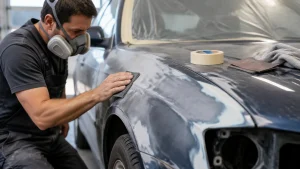
A professional repaint involves disassembly, surface correction, corrosion protection, color application, clearcoat, curing, and final finishing. Preparation determines resale quality more than the brand of paint, because a premium coating cannot hide uneven metal, contamination, or poorly masked edges.
A reputable shop removes or carefully detaches lamps, moldings, handles, badges, weather seals, and trim rather than spraying around them. Technicians repair dents with controlled metalwork, apply the correct primer to exposed substrate, block-sand the surface, and blend adjacent panels when necessary.
The normal sequence is:
- Wash and inspect the vehicle.
- Photograph existing damage and measure panel condition.
- Remove trim and lights where practical.
- Sand defective clearcoat and repair dents or corrosion.
- Apply epoxy, etch, or surfacing primer according to the substrate.
- Block-sand and seal the repair area.
- Spray basecoat in controlled coats.
- Apply two or more clearcoat layers.
- Cure the finish in a controlled booth.
- Wet-sand and polish dust nibs, texture, and minor defects.
A full repaint does not automatically restore factory originality. Factory paint is applied before many components are installed and under tightly controlled production conditions. A repair shop must work around a completed vehicle, so small differences in texture, edge coverage, and panel color remain possible even after excellent work.
Which Paint Type Preserves Value Best?
Modern two-stage urethane or waterborne basecoat systems generally preserve value best because they approximate current OEM appearance, durability, and color behavior. Paint chemistry matters less than substrate preparation, color matching, booth control, and documentation.
| Paint system | Typical use | Durability profile | Resale implication |
|---|---|---|---|
| Acrylic lacquer | Period restorations | Thin, UV-sensitive, chip-prone | Suitable only when historically correct |
| Acrylic enamel | Older budget repairs | Hard finish, limited depth | Often looks non-original on modern cars |
| Urethane basecoat/clearcoat | Modern collision and refinishing | Strong UV and chemical resistance | Neutral if professionally applied |
| Waterborne basecoat | OEM-style refinishing | Accurate color, requires controlled drying | Strong choice for modern factory matching |
A collector vehicle may require lacquer or single-stage enamel to meet a period-correct standard. Using a modern system on a historically significant vehicle can reduce authenticity even when the finish is technically more durable.
How Much Does Repainting a Car Cost?
A professional full-car repaint typically costs $3,000-$12,000, while a bare-metal restoration or complete color change can exceed $15,000. The price depends on labor hours, corrosion, dent repair, disassembly, paint materials, booth time, and whether door jambs, the trunk, and engine bay must be refinished.
| Repaint level | Typical price | Typical timeframe | Likely finish |
|---|---|---|---|
| Economy exterior respray | $800-$2,000 | 2-5 days | Limited disassembly and visible compromises |
| Mid-level full repaint | $3,000-$7,000 | 1-3 weeks | Better preparation and blending |
| High-quality exterior repaint | $7,000-$12,000 | 2-5 weeks | Extensive preparation and controlled finishing |
| Bare-metal restoration | $12,000-$30,000+ | 1-4 months | Metal correction and detailed documentation |
| Complete color change | $10,000-$25,000+ | 3-8 weeks | Includes jambs, trunk, and additional masking or removal |
Low estimates often exclude rust removal, dent repair, trim removal, jambs, underside edges, and post-cure polishing. Ask the shop for a written scope that states what will be removed, repaired, painted, blended, and warranted.
Does a Repaint Pay for Itself Before Selling?
A repaint rarely pays for itself on an ordinary car sold soon afterward. If a $10,000 vehicle needs a $5,000 respray, the owner may recover only part of that cost because buyers still see a non-factory finish and dealers must price resale risk.
Repainting can make financial sense when paint damage prevents a sale, the vehicle is valuable, the owner will keep it for several years, or the work addresses clear corrosion before it spreads. For a low-value commuter, paint correction and targeted panel repair usually produce a better return.
Is Paint Correction Better Than Repainting?
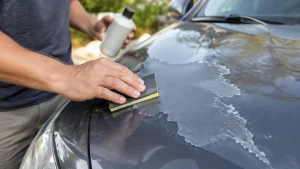
Paint correction is usually better for resale when the original clearcoat remains healthy. Machine polishing can remove swirls, oxidation, water spots, and shallow scratches without creating a new repaint history.
| Option | Typical cost | Useful lifespan | Reversibility | Resale effect |
|---|---|---|---|---|
| Paint correction | $400-$1,500 | 1-3 years with maintenance | Permanent material removal | Usually positive |
| Spot repair and blending | $500-$1,500 per panel | 3-10 years | No | Small deduction if well matched |
| Vinyl wrap | $2,500-$6,000 | 3-7 years | Usually removable | Neutral if removed cleanly |
| Full-body PPF | $4,000-$8,000 | 5-10 years | Removable | Protects original paint |
| Full repaint | $3,000-$12,000 | 5-15 years | No | Neutral to negative on modern cars |
Paint correction cannot repair scratches through the clearcoat, exposed primer, bubbling rust, peeling paint, or warped panels. PPF cannot conceal bad preparation, and a vinyl wrap can pull failing paint from a panel during removal.
For a car being sold within twelve months, correct the existing finish, repair only necessary panels, and retain every invoice. For a car being kept long term, a repaint may be justified by corrosion control or deterioration that correction cannot reverse.
Does Changing the Car’s Color Hurt Resale?
Changing a car’s exterior color usually hurts resale because buyers expect the engine bay, door jambs, trunk channels, and under-hood areas to match. A partial color change exposes the original color at edges and signals that the owner prioritized appearance over factory consistency.
A complete color change requires extensive disassembly and often costs $10,000-$25,000. Even then, the vehicle may lose originality, attract fewer buyers, and create questions about whether the original paint hid damage. Neutral colors such as black, white, silver, and gray generally offer broader demand than unusual custom colors, although rare factory colors can behave differently.
A color change can work for a custom build, restomod, or enthusiast vehicle when the finish is coherent and documented. It is rarely a sensible resale investment for a recent commuter, luxury sedan, or leased vehicle.
When Can Repainting Increase Value?
Repainting can increase value when the original finish is severely faded, the replacement follows the factory color and period standard, and the work corrects documented defects rather than concealing them. This situation occurs most often with classics, rare models, and vehicles whose clearcoat failure makes them difficult to sell.
Classic buyers evaluate originality differently from ordinary used-car buyers. Some prioritize untouched factory paint, while others prefer a high-quality restoration. A 1967 Ford Mustang with a documented, correct-color restoration may appeal more than one with chalky, rusting original paint, but a modern repaint on a low-mileage original Porsche 911 may reduce collector value.
The key is documentation:
- Photograph the vehicle before disassembly.
- Record rust, dents, and repaired metal.
- Keep the paint code and product invoices.
- Photograph primer, filler, welds, and booth stages.
- Save the final invoice and warranty.
- Identify the shop and technician when possible.
Documentation converts an unexplained repaint into a traceable repair history.
What Repaint Problems Reduce Value Most?
The most damaging repaint defects are poor color matching, overspray, hard masking lines, orange peel, peeling edges, fisheyes, solvent pop, and visible filler waves. These defects indicate rushed preparation and make buyers expect additional failures after purchase.
Common Defects and Remedies
| Defect | Visible symptom | Likely cause | Usual remedy |
|---|---|---|---|
| Orange peel | Bumpy surface texture | Spray setup or curing issue | Sand and polish if clearcoat allows |
| Overspray | Rough mist on glass or trim | Poor masking or booth control | Mechanical and chemical removal |
| Fisheyes | Small circular craters | Silicone, oil, or contamination | Sand and respray affected area |
| Solvent pop | Tiny bubbles or pinholes | Thick coats or trapped solvent | Sand back and refinish |
| Edge peeling | Paint lifts near seals | Poor feathering or contamination | Strip edge, prime, and repaint |
| Color mismatch | Panel looks different in sunlight | Poor formula or blend | Reblend adjacent panel |
Do not use strong solvent indiscriminately on trim, rubber, or cured factory paint. A body shop should identify the substrate before attempting overspray removal, because an aggressive chemical can create a larger repair than the original defect.
What Should Owners of Luxury, Classic, and Electric Cars Do?
Luxury owners should preserve factory paint whenever possible, classic owners should match originality goals, and electric-vehicle owners should use a shop qualified for aluminum panels, high-voltage systems, and manufacturer repair procedures. Vehicle category changes the financial consequence of a repaint.
Modern Luxury Cars
Use paint correction for minor defects and a manufacturer-certified collision center for accident repairs. Brands such as BMW, Mercedes-Benz, Porsche, and Tesla may use aluminum, advanced driver-assistance sensors, or specialized coating procedures that ordinary body shops do not handle consistently.
Classic and Collector Cars
Decide whether the car is being preserved, restored, or customized before selecting paint. A bare-metal restoration can add value when the color, gloss, trim, and process match the model’s historical standard, but an undocumented high-gloss custom finish may reduce value to originality-focused buyers.
Electric and Aluminum Vehicles
Aluminum panels require compatible tools, primers, and contamination controls. Electric vehicles also require safe procedures around battery packs, charging hardware, cameras, radar sensors, and calibration systems. A cheap repaint can create repair risk beyond appearance.
Should You Repaint Before Selling?
You should repaint before selling only when the work solves a clearly documented problem and the expected sale-price increase exceeds the total cost, inconvenience, and resale discount attached to non-factory paint. Most sellers should obtain valuations before authorizing a full respray.
Use this decision calculation:
Expected gain = likely sale-price increase – repaint cost – likely repaint-related discount.
For example, if a $14,000 car could sell for $16,000 after a $4,500 repaint, the owner loses $2,500 before considering downtime. A $900 correction and $700 panel repair may produce a stronger financial result.
Obtain three opinions:
- A detailer, to determine whether correction can restore the finish.
- A body shop, to price targeted repair and a full repaint separately.
- A dealer or independent appraiser, to estimate the vehicle with and without the work.
A dealer trade-in, private sale, collector auction, and insurance valuation do not use identical standards. Compare like with like.
What Documentation Protects Resale Value?
Repair documentation protects resale value by explaining the repaint’s cause, scope, materials, and quality. Buyers respond better to dated photographs and invoices than to a seller’s unsupported statement that the car was painted for cosmetic reasons.
Keep the following records:
- Before-and-after photographs
- Body-shop estimate and final invoice
- Paint code and product system
- Parts replaced during the repair
- Alignment or structural inspection results
- Insurance claim and vehicle-history information
- Warranty terms
- Paint thickness readings after completion
A repaint does not erase a branded title, accident record, or insurance claim. Accurate disclosure is safer than describing a repaired panel as “original.”
Frequently Asked Questions
Does repainting affect a car’s trade-in value more than private-sale value?
A repaint often affects trade-in value more because dealers price inspection risk, reconditioning, and future buyer questions into the offer. A private buyer may accept excellent documented work, especially on an older vehicle, but the buyer can still negotiate when paint thickness, color mismatch, or repair history is unclear.
How long does a professional car repaint last?
A professional urethane repaint can last approximately 5-15 years when preparation is sound, the vehicle is washed safely, and ultraviolet exposure is controlled. Lifespan falls sharply when rust remains under the coating, clearcoat is thin, the car sits outdoors, or the shop applies a low-cost system with minimal preparation.
Can a buyer tell whether a car was repainted?
A buyer can often identify repainting with a paint thickness gauge, lighting, panel comparison, overspray inspection, and review of fasteners and trim edges. Detection is not proof of damage. A professionally repaired, well-documented panel can be structurally sound despite measuring differently from factory panels.
Does repainting void a manufacturer warranty?
A repaint does not automatically void the entire manufacturer warranty, but damage caused by improper refinishing may be excluded. Corrosion warranties can be affected when a shop fails to follow substrate, primer, seam-sealer, or corrosion-protection procedures. Review the warranty terms and retain the repair invoice.
Is a wrapped car worth more than a repainted car?
A wrapped car is usually worth about the same as an equivalent unwrapped car when the original paint underneath is healthy and the wrap is removable without damage. A wrap rarely adds intrinsic value, while a poorly installed wrap, hidden damage, or neglected removal can create a discount.
The Bottom Line
How repainting affects a car’s resale value depends on the original condition, repair cause, workmanship, documentation, vehicle category, and selling channel. A poor or unexplained repaint can reduce value by 10%-30%, while a localized professional repair may have only a small effect and a documented classic restoration can increase value.
Preserve sound factory paint when resale is the priority. Choose paint correction for superficial defects, use targeted panel repair for isolated damage, and authorize a full repaint only when the vehicle’s value, corrosion condition, or restoration goal supports the cost. Evidence of careful work is the strongest protection against the uncertainty that makes repainting expensive.