Paintless Dent Repair vs Traditional Dent Repair comes down to whether the original paint remains intact and whether the metal can return to shape without refinishing. PDR is usually faster, less expensive, and better for preserving factory paint when the panel is accessible and the metal is not torn. Traditional repair is necessary when paint, metal, corrosion protection, or safety-related structures are damaged.
Key Facts
Typical PDR costs range from $75-$250 for a small door ding and increase substantially for hail or multiple-panel damage.
Traditional refinishing commonly takes 3-7 business days, while a straightforward PDR repair may take 1-4 hours.
PDR cannot restore paint that is cracked, chipped, peeling, or missing.
Traditional repair can address torn metal, exposed steel, corrosion, deep scratches, and severe panel distortion.
Original paint can support resale and lease-return condition, but neither method automatically guarantees a clean vehicle-history record.
A hybrid repair can be the best answer when PDR corrects most of the dent and localized refinishing repairs paint damage.
What Is the Difference Between PDR and Traditional Repair?
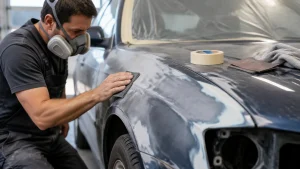
PDR reshapes a vehicle panel from behind without removing the factory paint. Traditional dent repair restores the panel through mechanical pulling, body filler, sanding, primer, color coat, and clear coat, so it can repair damage that PDR cannot.
The decisive question is not simply whether a dent is large. Dent depth, sharpness, location, paint condition, metal stretch, backside access, previous repairs, and proximity to a panel edge determine the method. A shallow 12-inch hail dent may be an excellent PDR candidate, while a 2-inch crease through a character line may require conventional work.
Modern automotive panels also behave differently by location. A broad door skin may move predictably, whereas a reinforced pillar, double-layer edge, or aluminum hood can limit tool access and increase the risk of cracking old paint.
Quick verdict by vehicle owner
| Vehicle situation | Usually better choice | Reason |
|---|---|---|
| Lease return with intact paint | PDR | Preserves factory finish and usually reduces visible repair evidence |
| Collector vehicle with original paint | PDR | Avoids repainting an original panel |
| Daily-driver door ding | PDR | Often completed in 1-4 hours |
| Collision with chipped paint and torn metal | Traditional repair | Restores metal, corrosion protection, and paint |
| Hail-damaged vehicle with many shallow dents | PDR | Avoids repainting numerous panels when paint remains sound |
How Do the Two Repair Processes Work?
PDR uses controlled pressure, reflection lighting, and incremental metal movement. Traditional repair removes damaged paint, reshapes or replaces the panel, fills remaining imperfections, and applies a new finish.
PDR process
A technician generally follows these stages:
- Inspect the damage. The technician measures the dent, studies its crown and edges, checks paint condition, and identifies body lines or reinforcements.
- Create access. Interior trim, a wheel-well liner, a lamp, a speaker, or another component may be removed. Access varies by panel.
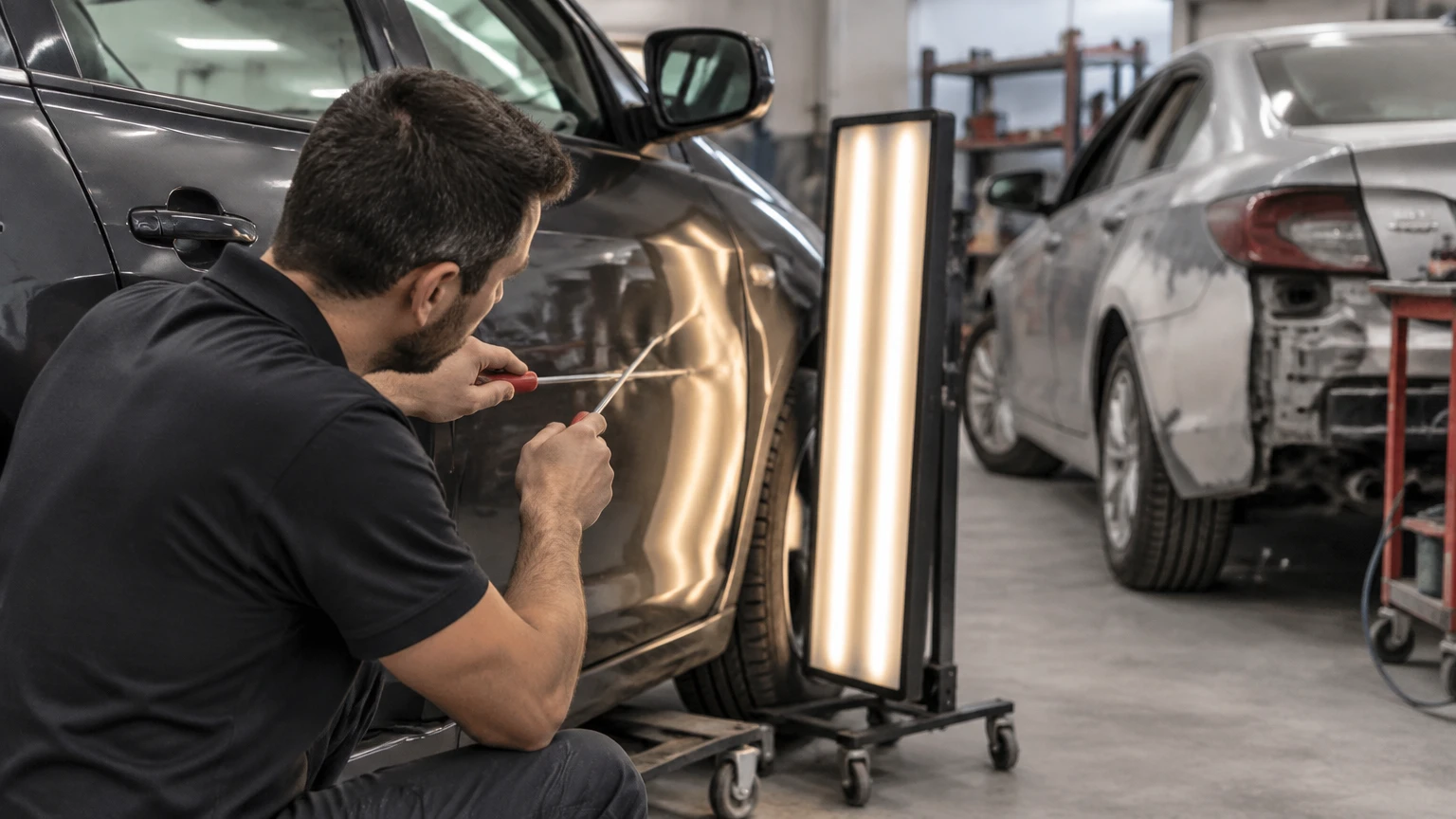
- Position a reflection board. A striped LED or fluorescent reflection pattern reveals low spots and high spots that are difficult to see in ordinary light.
- Massage the panel. Rods, picks, whale tails, and leverage tools apply small, controlled pressures to the back of the metal.
- Blend the surface. A technician lowers excess high spots with a plastic knockdown and blending hammer.
- Inspect from multiple angles. The panel is checked in changing light because a repair that looks complete from one angle may retain a wave from another.
The process is slower and more precise than simply pushing the deepest point outward. Excessive pressure can create a “push-to-paint” defect, where a small peak or sharp pimple remains in the surface.
Traditional repair process
Conventional repair usually includes:
- Disassembly and damage measurement. Trim, lights, moldings, sensors, and sometimes adjacent panels are removed.
- Paint and corrosion-layer removal. Damaged areas are sanded to a suitable substrate, often bare metal where required.
- Metal reshaping. A technician may use a stud welder, slide hammer, hydraulic puller, hammer and dolly, or replacement panel.
- Filler application. Polyester filler corrects shallow contour imperfections after the metal has been brought close to shape.
- Sanding and surfacing. The area is shaped through progressively finer abrasives, followed by primer-surfacer.
- Color and clearcoat application. Basecoat is blended into the surrounding area, and clearcoat is applied according to the repair system.
- Reassembly and calibration. Cameras, radar, parking sensors, lamps, and trim are checked after installation.
Body filler is not a substitute for metal repair. Thick filler over poorly corrected metal increases the chance of cracking, shrinkage, contour sinking, or later detection during an inspection.
Which Method Costs Less?
PDR usually costs less for intact-paint dents because it avoids filler, primer, color-matching, masking, booth time, and clearcoat. Traditional repair becomes financially reasonable when the damage already requires painting or when the panel needs major reshaping.
| Damage type | Typical PDR price | Typical traditional price | Typical time |
|---|---|---|---|
| Small door ding, 1-2 inches | $75-$150 | $300-$600 | PDR: 1-2 hours; traditional: 2-4 days |
| Medium dent, 3-6 inches | $150-$400 | $500-$1,200 | PDR: 2-5 hours; traditional: 3-5 days |
| Sharp crease or body-line dent | $300-$900 | $700-$1,800 | PDR: 4-10 hours; traditional: 4-7 days |
| One hail-damaged panel | $250-$900 | $700-$1,500 | PDR: 1-2 days; traditional: 4-7 days |
| Extensive hail damage, multiple panels | $1,500-$4,000 | $3,000-$10,000+ | PDR: 2-7 days; traditional: 1-3 weeks |
These are typical North American consumer ranges, not fixed rates. Labor rates, vehicle class, aluminum construction, paint systems, trim removal, shop backlog, and regional demand can change the estimate. A luxury vehicle with difficult access may cost more even when its dent is small.
Insurance deductibles also change the decision. If hail damage is covered under comprehensive insurance and the estimate exceeds the deductible, a claim may make sense. A minor door ding below the deductible is normally paid directly, although policy terms and claim history differ.
Which Method Is Faster?
PDR is faster when the technician can reach the panel and the dent responds predictably. A single door ding may take 60-120 minutes, while a traditional repair commonly requires several business days because sanding, primer, paint curing, reassembly, and scheduling occur in sequence.
| Repair stage | PDR typical duration | Traditional typical duration |
|---|---|---|
| Initial inspection | 10-30 minutes | 30-90 minutes |
| Single minor dent | 1-4 hours | 2-4 business days |
| One heavily damaged panel | 4-10 hours | 4-7 business days |
| Hail claim, multiple panels | 1-7 days | 1-3 weeks |
| ADAS or sensor verification | 15-60 minutes when needed | 1-4 hours when needed |
A same-day promise should not be interpreted as a quality guarantee. Large hail jobs, difficult interior access, glue-pull limitations, and paint-condition concerns can require more time. Traditional repair may also be delayed by parts availability, paint-booth scheduling, hidden damage, or insurer approval.
Can PDR Fix Every Dent?
PDR can repair many dents with intact paint, but PDR is unsuitable when the paint is cracked, the metal is torn, the panel is badly stretched, or the technician cannot safely access the damage. Dent size alone does not decide repairability.
| Condition | PDR suitability | Preferred response |
|---|---|---|
| Broad shallow dent with intact paint | High | PDR |
| Door ding between body lines | High | PDR |
| Sharp crease across a body line | Moderate to low | PDR evaluation or hybrid repair |
| Cracked or missing paint | Low | Traditional repair or hybrid repair |
| Torn or punctured metal | None | Traditional repair or panel replacement |
| Dent beside a panel edge | Moderate to low | Specialist inspection |
| Aluminum panel with stretched metal | Variable | Technician assessment |
| Plastic bumper deformation | Usually not standard PDR | Heat reshaping or bumper repair |
Paint condition matters most. Factory paint is usually more resilient than aged, previously repaired, or poorly refinished paint, but cold temperatures, ultraviolet aging, prior bodywork, and brittle clearcoat can increase cracking risk.
Deep dents can sometimes receive PDR, especially when the metal has not stretched and the damage has broad, rounded contours. A shallow dent can be a poor candidate if it crosses a sharp ridge or terminates at an inaccessible flange.
Does Traditional Repair Preserve the Factory Finish?
Traditional repair does not preserve the original finish on the repaired area because the paint system is removed and replaced. A skilled refinish can be visually excellent, but a new paint layer is not chemically or historically identical to the factory-applied finish.
Factory paint is applied in a controlled manufacturing sequence that may include electrocoat, primer, basecoat, and clearcoat. A collision shop recreates the visible finish using a refinish system, color formula, blending technique, and clearcoat. Even accurate color matching can differ slightly in texture, gloss, metallic orientation, or orange peel.
| Finish factor | PDR | Traditional repair |
|---|---|---|
| Factory paint retained | Yes, when successful | No on the repaired area |
| Color mismatch risk | None from repainting | Possible, especially on metallic colors |
| Clearcoat texture change | No repaint texture | Possible after refinishing |
| Corrosion protection | Existing layers remain | Must be correctly restored |
| Original-paint inspection | Strong advantage | Repaired area may be detectable |
A repainted panel is not automatically defective. Proper substrate preparation, seam sealing, corrosion protection, primer selection, spray technique, and curing can produce a durable repair. Poor workmanship, however, can cause adhesion loss, solvent pop, edge mapping, overspray, or premature clearcoat failure.
Does PDR Affect Carfax or Resale Value?
PDR performed privately usually does not create a Carfax entry, but no repair method guarantees a clean history report. Insurance claims, collision reports, dealership records, auction disclosures, police records, and state reporting practices determine whether an event appears.
Original paint can help during a visual inspection, especially for collector vehicles and lease returns. Traditional repair can still preserve substantial value when documented, structurally correct, color-matched, and completed by a reputable facility.
The stronger resale argument for PDR is physical and documentary, not a guaranteed reporting result. PDR avoids paint-meter differences and often leaves fewer visible signs, but a large hail claim may still be recorded even when every dent is repaired without paint.
Which Repair Is Better for Aluminum, Steel, and High-Strength Panels?
Panel material affects technique, not just price. Aluminum generally requires dedicated tools and technician experience, while high-strength steel may resist movement and punish aggressive pressure.
| Panel material or location | Repair consideration | Typical implication |
|---|---|---|
| Mild steel door skin | Predictable movement | Often favorable for PDR |
| Aluminum hood or roof | Work-hardening risk | Requires aluminum-specific technique |
| High-strength steel pillar | Limited movement | Traditional repair or replacement may be safer |
| Double-layer door edge | Restricted tool access | Inspection is necessary |
| Plastic bumper cover | Material memory differs | Heat repair or replacement may be required |
Steel can harden as it is repeatedly manipulated. Aluminum can crack or retain distortion after overworking, and its surface may show subtle waves under reflection lighting. A technician should disclose whether the panel has prior filler, repainting, corrosion, or a previous PDR attempt.
What Are the Environmental and Safety Differences?
PDR generally creates less material waste because it avoids paint, reducer, masking paper, sanding dust, filler, and disposable spray materials. Calling PDR “zero emissions,” however, is inaccurate because technicians still use electricity, vehicle transport, lighting, cleaners, and sometimes adhesives.
Traditional refinishing uses coatings and solvents that require ventilation, personal protective equipment, waste handling, and compliance with local air-quality rules. The U.S. Environmental Protection Agency regulates automotive refinishing emissions through National Emission Standards for Hazardous Air Pollutants, while state rules can be stricter.
Safety also involves vehicle systems. A dent near a radar sensor, camera, door-impact beam, hood latch, or pedestrian-protection system may require inspection even when the cosmetic damage appears minor. Neither PDR nor traditional repair should proceed without considering calibration requirements specified by the vehicle manufacturer.
When Is a Hybrid Repair the Best Option?
A hybrid repair combines PDR and conventional refinishing when the metal is mostly repairable but the paint has localized damage. The technician may remove most of the dent with PDR, reduce filler thickness, and then refinish a smaller area.
Common hybrid scenarios include:
- A door ding with a small paint chip at its deepest point.
- A crease where PDR restores the broad contour but a body line remains damaged.
- Hail damage with isolated chips caused by impact.
- A panel with an old conventional repair that needs contour correction before repainting.
- A dent near an edge where limited PDR reduces, rather than eliminates, body-shop work.
Hybrid work can reduce filler depth, sanding area, and paint consumption. It still requires a painter, so its cost and turnaround usually fall between pure PDR and full conventional repair.
What Mistakes Should Vehicle Owners Avoid?
The most expensive mistake is choosing a method before inspecting paint, metal stretch, access, and hidden damage. A low quote can become expensive when a repairer discovers previous filler, corrosion, broken clips, or a damaged sensor after work begins.
Mistake 1: Selecting PDR solely because the dent is small
A small, sharp dent at a panel edge may be harder than a large, shallow center-panel dent. Ask the technician to identify the limiting factor, such as access, stretched metal, paint condition, or body-line damage.
Mistake 2: Assuming a traditional repair always lowers value
A documented, well-executed repair may protect value better than an incomplete PDR attempt or a neglected chip that allows corrosion. Original paint has an advantage, but workmanship and structural correctness matter more than method alone.
Mistake 3: Using glue pulling as a universal PDR solution
Glue tabs can help when backside access is limited, but excessive pulling can lift paint, create a high spot, or distort the panel. Glue pulling is a technique within PDR, not a guaranteed alternative to rod access.
Mistake 4: Ignoring corrosion protection
Grinding to bare metal requires correct primer, seam sealer, cavity wax, and paint restoration. A visible cosmetic repair can look acceptable while moisture reaches an unprotected flange or inner panel.
Mistake 5: Forgetting ADAS checks
A repaired bumper, grille, hood, quarter panel, or radar mounting area may affect sensors even when no warning light appears. The repair facility should identify whether the manufacturer requires calibration or aiming.
Expert inspection rule
Use a reflection board or direct sunlight to inspect the panel from at least three angles. A finished PDR repair should show consistent reflection flow across the original body contour, not merely a dent that disappears under flat lighting.
How Should You Choose Between PDR and Traditional Repair?
Choose PDR when the paint is intact, the metal is not torn, access is practical, and preserving the factory finish matters. Choose traditional repair when paint or metal is damaged, corrosion protection is compromised, structural components are involved, or the panel cannot be returned to shape safely.
Use this decision sequence:
- Check the paint. Cracks, chips, peeling, and exposed metal move the decision toward traditional or hybrid repair.
- Check the metal. Tears, punctures, severe folds, and substantial stretching usually exclude pure PDR.
- Check the location. Edges, pillars, reinforcements, and double-wall sections reduce access and repairability.
- Check the vehicle. Aluminum, high-strength steel, previous repairs, sensors, and collector status affect the method.
- Compare written estimates. Require labor, trim removal, paint scope, calibration, warranty, and potential supplements.
- Confirm the finish. Ask whether the proposed work retains factory paint or includes blending into adjacent panels.
- Inspect the result. View the repair in direct and angled light, check panel gaps, and request documentation.
For insurance work, ask whether the facility will perform post-repair scanning, whether parts are original-equipment or aftermarket, and how supplements are handled. For a lease return, obtain photographs and an invoice showing that the dent was repaired before the inspection.
FAQ
Is PDR worth it for a 10-inch dent?
PDR may be worthwhile for a 10-inch dent when the contour is broad, the paint is intact, and the panel is accessible. Size alone does not disqualify the repair. A shallow hail dent across a door can be easier than a two-inch crease through a body line. Request an in-person inspection rather than relying on diameter.
Can PDR repair a dent with a paint chip?
PDR can reduce the metal distortion around a paint chip, but PDR cannot replace missing paint or seal exposed metal. A hybrid repair may use PDR for contour correction followed by chip repair and localized refinishing. Promptly sealing exposed steel helps prevent corrosion while the repair is scheduled.
Is traditional dent repair stronger than PDR?
Traditional repair is not automatically stronger than PDR. PDR retains the original panel and factory coating when the metal can be restored without overworking it, while traditional repair is stronger for torn, corroded, or structurally compromised damage. Strength depends on correct metal repair, corrosion protection, and panel installation.
Can I repair a dent myself?
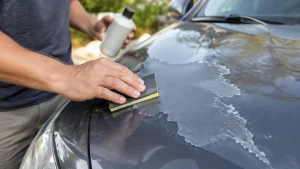
DIY repair is reasonable for a very shallow, accessible dent when appearance standards are modest and the owner accepts paint or contour risk. Household plungers, suction cups, and uncontrolled hammering commonly worsen damage. Professional PDR requires specialized lighting, leverage control, and an understanding of panel movement.
Will a PDR repair be invisible?
A skilled PDR repair can be visually undetectable under normal inspection, but results depend on paint condition, metal stretch, access, depth, and the original body contour. Ask to see completed work under angled reflection lighting. Severe creases and prior filler can leave a detectable texture even after extensive correction.
Should a dented panel be replaced instead of repaired?
Panel replacement is appropriate when the panel is torn, badly folded, heavily corroded, unsafe to restore, or more expensive to repair than replace. Replacement also introduces fit, paint, part-quality, and calibration considerations. A qualified estimator should compare repair labor, replacement-part cost, refinishing, and required sensor procedures.
The Bottom Line
Paintless Dent Repair vs Traditional Dent Repair is primarily a choice between preserving an intact panel and restoring damage that exceeds PDR’s limits. PDR is usually the better option for accessible dents with unbroken paint because it commonly costs less, takes less time, and retains the factory finish. Traditional repair is the correct choice for cracked paint, torn or corroded metal, severe distortion, structural concerns, and damage requiring refinishing. Get both the repair method and the finish scope in writing before authorizing work.