Collision repair typically costs $150-$13,000 or more, while a repairable accident commonly falls around $2,500-$6,000 in the United States. A bumper or panel repair may cost less than $1,500, but structural damage, airbags, sensors, paint blending, luxury materials, and hidden damage can push the final invoice above $10,000.
Key Facts at a Glance
- A minor scratch may cost $150-$400, while paintless dent repair commonly costs $100-$600.
- A painted bumper replacement usually costs $650-$1,500, including removal, refinishing, and installation.
- Front-end collision repairs commonly cost $1,500-$5,500 when cooling, lighting, and body components are affected.
- Structural or frame-related damage can cost $3,000-$13,000 or more, depending on access, replacement parts, and measurements.
- Advanced driver assistance system calibration commonly adds $200-$800, although radar, camera, and alignment requirements can increase the bill.
- The first estimate is often incomplete because teardown can reveal brackets, absorbers, wiring, sensors, and rails hidden behind exterior panels.
What Does Collision Repair Usually Cost?
Collision repair costs about $150-$13,000 or more, with the most common repairable claims generally landing between $2,500 and $6,000. The final price depends on damage severity, vehicle construction, labor rates, replacement parts, paint requirements, safety-system calibration, and whether teardown reveals hidden damage.
A collision estimate is not simply a body-panel price. The invoice combines body labor, structural labor, mechanical labor, refinishing materials, replacement components, diagnostic scans, calibration, towing, storage, and sometimes rental-car expenses. A late-model SUV with a damaged bumper may require radar calibration and grille shutters, whereas an older compact car with a dented steel fender may need only panel repair and paint.
National figures should be used for planning, not approval. Repair facilities in high-cost metropolitan areas often charge higher labor rates than shops in rural markets, and luxury, electric, aluminum-bodied, and low-volume vehicles create additional equipment and parts constraints.
Typical Collision Repair Prices
| Damage or service | Typical cost | Typical shop time | Main cost drivers |
|---|---|---|---|
| Paint correction or surface scratch | $150-$400 | 2-6 hours | Scratch depth, clear-coat damage, paint blending |
| Paintless dent repair | $100-$600 | 1-5 hours | Dent size, access, crease, aluminum panel |
| Door or fender repair | $400-$1,500 | 2-5 days | Repair versus replacement, adjacent-panel blending |
| Bumper cover replacement | $650-$1,500 | 1-3 days | Sensor openings, paint, brackets, impact absorber |
| Windshield replacement | $300-$1,200 | 2-6 hours | Glass type, rain sensor, camera recalibration |
| Front-end repair | $1,500-$5,500 | 1-2 weeks | Headlamps, radiator, condenser, grille, sensors |
| Airbag and restraint repair | $2,000-$8,000 | 1-3 weeks | Airbags, seat belts, control module, trim |
| Structural repair | $3,000-$13,000+ | 2-4+ weeks | Measuring, pulling, sectioning, parts, corrosion protection |
These are typical planning ranges, not guaranteed quotes. Paintless dent repair is unsuitable when paint has broken, metal has stretched severely, or the technician cannot reach the backside of the panel.
What Factors Increase the Repair Bill?
The largest collision-cost increases usually come from hidden damage, expensive parts, labor-intensive paint work, and electronic safety systems. Exterior appearance provides an unreliable measure of the total repair price because modern vehicles use bumpers, brackets, absorbers, sensors, and crumple zones behind visible panels.
Vehicle Construction and Age
A steel fender on a high-volume vehicle is usually easier and cheaper to replace than an aluminum quarter panel or carbon-fiber component. Aluminum repairs require dedicated tools and contamination control because steel particles can compromise the repair area and accelerate corrosion.
Vehicle age creates two opposing effects. Older vehicles may have cheaper recycled parts, but rusted fasteners, discontinued trim, and unavailable modules can increase labor. New vehicles often have better parts availability, yet LED lamps, radar sensors, cameras, and integrated grille assemblies make relatively small impacts expensive.
Labor Rates and Repair Operations
Collision estimates separate body, paint, frame, mechanical, and sometimes diagnostic labor. A shop may charge different rates for structural measuring, aluminum work, refinishing, and mechanical operations.
Repair operations also matter. “R&I” means remove and install, while “R&R” means remove and replace. R&I may involve removing a lamp, molding, or bumper so technicians can paint correctly. R&R includes the cost of a replacement component. Confusing those entries can materially distort an estimate.
Paint and Panel Blending
Paint blending increases cost because an adjacent undamaged panel may need preparation and partial refinishing to make the color transition visually consistent. Metallic, pearl, tri-coat, matte, and aged finishes are more difficult to match than common solid colors.
A proper refinish normally includes preparation, primer or sealer, basecoat, clearcoat, curing, denibbing, polishing, and quality inspection. A low-priced spot repair may look acceptable under shop lighting but reveal a hard blend edge, texture mismatch, or clear-coat failure in sunlight.
Hidden Mechanical and Safety Damage
A bumper impact can bend an absorber, crush a reinforcement beam, damage a radiator support, displace a condenser, or break a headlamp mount without visibly cracking the bumper cover. A wheel impact may damage a tire, rim, steering knuckle, tie rod, bearing, or alignment geometry.
Airbag deployment changes the job substantially. The repair may require airbags, seat-belt pretensioners, impact sensors, a restraint-control module, instrument-panel components, and diagnostic scans. A warning light after repair is not a cosmetic issue; the vehicle requires diagnosis before normal driving.
How Does the Collision Repair Process Work?
Collision repair normally follows six stages: inspection, teardown, structural repair, panel and mechanical repair, refinishing, and final calibration. The sequence matters because a shop cannot confirm the complete repair scope until damaged areas are disassembled and the vehicle is measured.
1. Inspection and Estimate
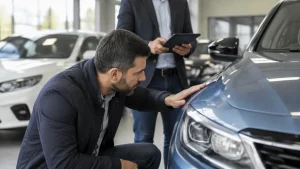
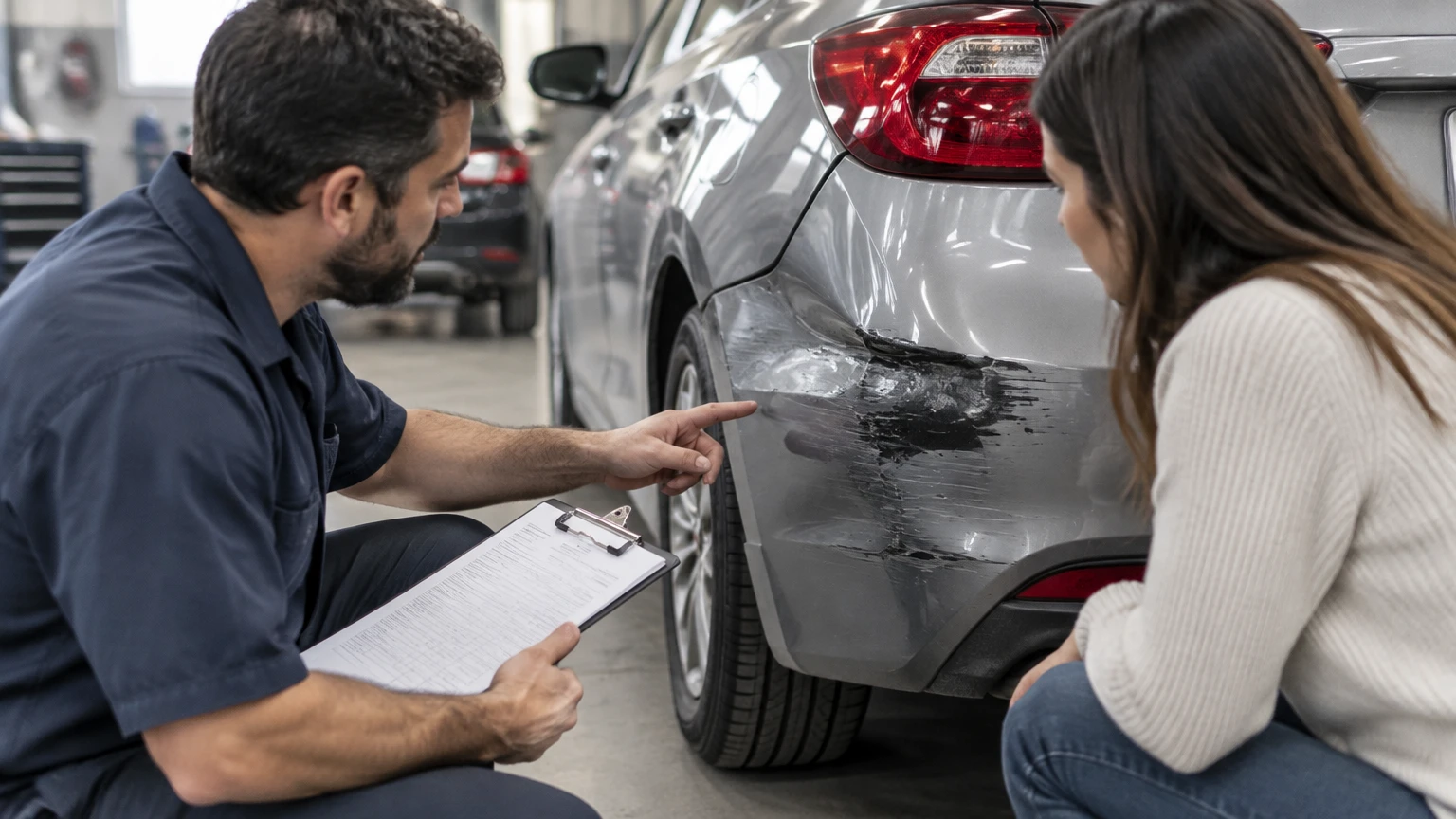
The estimator documents the vehicle identification number, mileage, damage location, warning lights, wheel position, tire condition, and visible parts. Photographs support the estimate, but they cannot verify concealed deformation.
Estimating platforms such as CCC Intelligent Solutions and Mitchell Cloud Estimating help organize labor operations, parts, paint materials, and manufacturer procedures. The estimate should identify repair versus replacement decisions, parts type, labor category, paint operations, scans, calibration, and probable supplements.
2. Teardown and Hidden-Damage Inspection
Technicians remove affected covers, lamps, trim, liners, and sometimes cooling components. The shop then compares the vehicle against manufacturer dimensions and checks brackets, rails, welds, wiring, restraints, and suspension mounting points.
If teardown reveals additional damage, the shop writes a supplement. The insurer, vehicle owner, or responsible payer may need to approve added work before the shop proceeds, although urgent safety or preservation work can require immediate documentation.
3. Structural Measurement and Repair
Unibody vehicles use structural rails, pillars, aprons, rocker panels, and floor sections rather than a separate truck-style frame. Technicians secure the vehicle to a measuring or frame system and compare reference points with factory dimensions.
A frame machine can pull distorted metal, but pulling is not automatically proof of a safe repair. The shop must document measurements, repair procedures, welds, corrosion protection, and replacement of parts that cannot be restored within manufacturer limits.
4. Mechanical and Body Repair
Technicians repair or replace panels, reinforcements, cooling components, steering parts, suspension pieces, lamps, wiring, and restraint components. Wheel alignment often belongs after structural or suspension work, not at the beginning, because later repairs can change geometry.
5. Refinishing
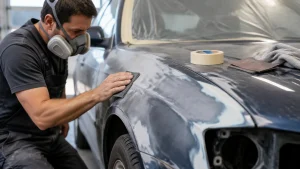
The refinish department prepares surfaces, mixes paint, blends adjacent panels when required, applies clearcoat, and cures the finish. Color varies with production batch, exposure, repair history, and viewing angle, so a blend may be necessary even when the replacement panel is the correct factory color code.
6. Scanning, Calibration, and Quality Control
Modern collision repairs often require pre-repair and post-repair diagnostic scans. Cameras, radar, ultrasonic sensors, blind-spot monitors, lane-departure systems, adaptive cruise control, and automatic emergency braking may require calibration after impact, bumper removal, windshield replacement, suspension work, or wheel alignment.
The final inspection should verify warning lights, panel gaps, lamps, locks, water leaks, tire pressure, steering position, alignment, road noise, paint texture, and operation of safety systems. The customer should receive scan or calibration documentation when the vehicle manufacturer requires it.
How Much Do Common Repairs Cost?
Common repair prices vary because the same named repair can include different components. A “bumper repair,” for example, may mean sanding a scuff, repairing tabs, replacing a painted cover, replacing an absorber, or calibrating a radar sensor.
| Repair type | Parts range | Labor and materials | Total typical range |
|---|---|---|---|
| Scratch polishing or spot repair | $0-$150 | $150-$350 | $150-$400 |
| Small dent without paint damage | $0-$100 | $100-$500 | $100-$600 |
| Fender replacement and paint | $250-$900 | $400-$1,100 | $650-$2,000 |
| Door replacement and blending | $500-$2,000 | $600-$1,500 | $1,100-$3,500 |
| Painted bumper replacement | $250-$900 | $400-$1,000 | $650-$1,900 |
| Headlamp and front-corner repair | $400-$2,500 | $500-$1,500 | $900-$4,000 |
| Cooling-system front-end repair | $700-$2,500 | $800-$2,500 | $1,500-$5,000 |
| Structural rail or apron repair | $500-$4,000 | $2,000-$9,000 | $3,000-$13,000+ |
Parts prices differ sharply by vehicle. An aftermarket bumper cover may cost less than an OEM cover, while an OEM LED headlamp, radar unit, or camera can cost several thousand dollars before labor and calibration.
OEM, Aftermarket, or Recycled Parts: Which Should You Choose?
OEM parts are the safest default for structural, restraint, sensor, lighting, and fit-sensitive repairs, while aftermarket and recycled components can reduce cost for suitable cosmetic applications. The correct choice depends on the manufacturer’s repair procedure, part certification, availability, warranty, and insurance policy.
| Parts option | Typical price position | Best application | Primary risk or limitation |
|---|---|---|---|
| New OEM | 100% baseline | Sensors, airbags, structural parts, lamps | Highest price and possible backorder |
| Certified aftermarket | 60%-90% of OEM | Some bumper covers, fenders, grilles | Fit, finish, and warranty variation |
| Recycled OEM | 40%-80% of OEM | Doors, lamps, trim, body panels | Color, wear, mileage, limited supply |
| Remanufactured | 50%-85% of new OEM | Select modules and mechanical parts | Quality depends on remanufacturer |
The cheapest part is not automatically the cheapest repair. A poorly fitting bumper can require extra labor, create uneven gaps, interfere with sensors, or require replacement after installation. Recycled OEM parts can be excellent for doors and body panels when condition and fit are documented.
Ask whether the chosen part is new, aftermarket, recycled, remanufactured, or supplied by the manufacturer. Also ask whether the warranty covers fit, corrosion, finish, and labor if the part must be replaced.
When Does ADAS Calibration Add Cost?
ADAS calibration commonly adds $200-$800, with additional wheel alignment, diagnostic, glass, or sensor-replacement charges when the system requires them. Calibration may be necessary after bumper damage, windshield replacement, suspension work, steering repair, radar movement, or structural correction.
Static calibration uses targets positioned at measured distances from the vehicle. Dynamic calibration uses a controlled road drive, diagnostic equipment, or both. Manufacturer procedures determine the method; a shop should not substitute a generic reset for required calibration.
Calibration is especially important after impacts involving:
- Front radar behind a grille or emblem
- Windshield-mounted lane cameras
- Blind-spot radar inside rear bumper corners
- Parking sensors and surround-view cameras
- Steering-angle or suspension components
- Adaptive headlights and vehicle-height sensors
A vehicle can drive normally while lane keeping, automatic braking, or adaptive cruise control remains inaccurate. Request the calibration result, diagnostic scan, and any failed or deferred procedure in writing.
Why Does a Collision Estimate Increase After Work Begins?
A collision estimate increases when teardown exposes damage that photographs and exterior inspection could not reveal. Common supplements include crushed absorbers, broken brackets, bent rails, damaged wiring, sensor mounts, distorted cooling packs, hidden suspension damage, and manufacturer-required replacement fasteners.
Estimate changes also occur when parts are unavailable or when a manufacturer procedure requires additional operations. For example, a replacement bumper may require a radar aiming procedure, while a windshield replacement may require camera calibration that was not visible during the initial body inspection.
Review every supplement for:
- New damage: What component was discovered, and where is the photograph or measurement?
- Operation type: Is the line R&I, R&R, repair, replace, blend, scan, or calibrate?
- Parts source: Is the part OEM, aftermarket, recycled, or remanufactured?
- Labor category: Is the time body, paint, frame, mechanical, or diagnostic labor?
- Approval status: Who authorized the added work, and does the change affect your deductible or rental period?
An asterisk or manually entered labor time is not automatically improper. It means the estimator should be able to explain why the standard database operation does not represent the actual work.
Should You Pay Cash or File an Insurance Claim?
Paying cash can make sense when damage is close to or below the deductible, no injury or third-party property damage exists, and the repair will not create a coverage dispute. Filing a claim is usually safer when damage may exceed the deductible, hidden damage is likely, another driver is involved, or airbags and structural components are affected.
| Situation | Usually favor cash | Usually favor insurance |
|---|---|---|
| Estimated damage | Under deductible or within about $500 above it | Several thousand dollars above deductible |
| Damage type | Scratch, small dent, cosmetic bumper scuff | Structure, airbags, suspension, sensors |
| Other parties | No other vehicle or property involved | Another driver, injury, public property |
| Vehicle value | Older, low-value vehicle | New, financed, leased, high-value vehicle |
| Estimate certainty | Clearly visible and fully inspected | Teardown likely to reveal hidden damage |
Do not delay reporting when a policy requires prompt notice. A private payment arrangement can create problems if the other party later reports injury or additional damage. Ask your insurer how a claim affects premiums, claim history, rental coverage, deductible, and parts selection in your jurisdiction.
When Is a Vehicle Totaled Instead of Repaired?
A vehicle is generally treated as a total loss when the insurer determines that repairing it is not economically or legally practical, but the exact threshold depends on state law, vehicle value, salvage value, and the insurer’s method. The repair estimate alone does not decide the result.
A useful planning calculation is:
Repair-cost ratio = estimated repair cost ÷ pre-loss actual cash value × 100
A $12,000 repair on a vehicle valued at $18,000 produces a 66.7% ratio. That may or may not trigger a total loss because insurers also consider supplemental damage, rental cost, salvage recovery, taxes, storage, and state thresholds.
For a total-loss valuation, collect comparable listings, maintenance records, trim and option details, mileage evidence, and proof of recent upgrades. A vehicle with a salvage title normally has lower future value and may face financing, inspection, and insurance restrictions.
How Do You Choose a Collision Repair Shop?
Choose a shop based on repair capability, manufacturer procedures, written warranty, communication, and documented calibration rather than the lowest initial estimate. A suitable shop should explain parts choices, supplements, expected completion date, diagnostic scans, structural measurement, and post-repair inspection.
Check whether the facility has:
- I-CAR-trained technicians for the needed operations
- Manufacturer certification for the vehicle, when relevant
- Separate aluminum repair capability
- Factory or approved diagnostic and calibration equipment
- A paint booth and refinishing warranty
- A written workmanship and corrosion warranty
- A process for storing EVs safely after collision damage
- Clear responsibility for rental extensions and supplements
A direct statement from the shop should answer whether the vehicle is safe to drive, which warning lights are present, whether the battery or high-voltage system is involved, and which procedures remain pending. Shops should not promise a firm completion date before parts availability and teardown are known.
What Mistakes Make Collision Repair More Expensive?
The most expensive mistakes involve skipping diagnosis, choosing incompatible parts, and approving cosmetic work before safety systems are assessed. Four recurring failures deserve special attention.
- Accepting a photo-only estimate as final: Photos cannot confirm rail position, sensor mounts, cooling damage, or restraint-system faults. Treat the first estimate as provisional until teardown.
- Skipping calibration: A vehicle may look repaired while automatic braking or lane assistance operates outside its intended parameters.
- Comparing totals without comparing scope: A $2,000 estimate may exclude scans, calibration, blending, OEM parts, rental, or hidden damage.
- Driving with alignment or warning-light symptoms: Pulling, steering-wheel offset, tire damage, airbag lights, and fluid leaks require diagnosis before ordinary use.
- Selecting a shop that lacks EV or aluminum capability: Improper lifting, welding, or high-voltage handling can create safety and liability problems.
Cheap paint work is also a false economy when preparation is skipped. Peeling clearcoat, solvent pop, color mismatch, and visible blend edges often require repainting rather than a simple correction.
What Should a Collision Repair Estimate Include?
A complete estimate should identify the vehicle, damage, parts, labor operations, refinish materials, scans, calibrations, and exclusions. Before approving work, verify the following checklist:
- Vehicle identification number, mileage, and estimate date
- Every damaged panel and mechanical component
- Repair, remove-and-install, or remove-and-replace designation
- OEM, aftermarket, recycled, or remanufactured part status
- Body, paint, frame, mechanical, and diagnostic labor rates
- Paint hours, materials, blending, and clearcoat operations
- Structural measurement and manufacturer repair procedures
- Pre-repair and post-repair scan requirements
- ADAS calibration method and documentation
- Wheel alignment, tire, and suspension inspection
- Deductible, taxes, storage, towing, and rental responsibility
- Warranty terms and supplement approval process
The estimate should also state what has not yet been inspected. “Pending teardown” is more honest than presenting a low number as a complete repair commitment.
How Long Does Collision Repair Take?
Minor cosmetic repairs may take a few hours to three days, while structural, airbag, or parts-constrained repairs commonly take two to six weeks. Repair time depends on parts availability, teardown findings, insurer approvals, paint curing, calibration scheduling, and shop workload.
| Repair scenario | Typical active repair time | Common delay |
|---|---|---|
| Scratch or PDR | 1-5 hours | Technician availability |
| Single panel and paint | 2-5 days | Paint matching or parts |
| Bumper replacement | 1-3 days | Sensor parts or calibration |
| Front-end collision | 1-2 weeks | Cooling, lamps, supplements |
| Airbag deployment | 1-3 weeks | Restraint modules and parts |
| Structural repair | 2-4+ weeks | Measuring, parts, approval |
| EV or aluminum repair | 2-6+ weeks | Certified equipment and parts |
Ask whether the stated date means estimated completion, parts arrival, or the start of repair. A vehicle can remain in the shop while waiting for one backordered lamp, module, sensor, or trim piece.
The Bottom Line
How much does collision repair cost? Plan on $150-$600 for minor cosmetic or dent work, $650-$2,000 for many single-panel or bumper repairs, $1,500-$5,500 for front-end damage, and $3,000-$13,000 or more for structural repairs. The most reliable decision comes from a complete teardown-based estimate that includes parts type, hidden damage, paint blending, scans, calibration, alignment, and the vehicle’s actual cash value.
Do not select the lowest number without comparing scope. A properly documented repair protects safety, resale value, insurance rights, and long-term operating cost.
Frequently Asked Questions
Can I drive a car after a collision if it still runs?
A running engine does not prove that a collision-damaged vehicle is safe. Do not drive when airbags deployed, warning lights remain on, fluids leak, steering pulls, a wheel is visibly damaged, the hood or door cannot latch, or the vehicle has exposed high-voltage components. Arrange an inspection or tow.
Does insurance require me to use its preferred body shop?
In many cases, an insurer can recommend a network shop but cannot require you to surrender every repair decision to that facility. Rules vary by jurisdiction and policy. Confirm shop choice, parts approval, warranty responsibility, rental coverage, and supplement handling before authorizing repairs.
Will collision repair reduce my vehicle’s resale value?
A documented accident can reduce resale value even after a technically correct repair, especially on newer, luxury, performance, and electric vehicles. Diminished-value claims depend on location, fault, policy language, vehicle history, severity, and market evidence. Keep repair invoices, calibration records, measurements, and photographs.
Are aftermarket collision parts safe?
Aftermarket parts are not automatically unsafe, but suitability varies by component and manufacturer procedure. Cosmetic trim may tolerate alternatives better than airbags, structural members, sensors, lamps, and restraint components. Ask for certification, warranty, fitment evidence, and written confirmation that the part meets the required repair procedure.
Can a shop repair frame damage safely?
A qualified shop can repair many structural vehicles when factory dimensions, sectioning limits, welding procedures, and corrosion protection are followed. Frame damage is not automatically a total loss, but a shop should provide measurement documentation and explain any components that cannot be returned to specification.
Why is my deductible still due if the other driver caused the crash?
Your insurer may initially apply your collision deductible while investigating fault or recovering money from the responsible party. If the other insurer accepts liability, your deductible may later be reimbursed, depending on local law and recovery rules. Keep the claim number, estimate, payment record, and accident evidence.