Bumper repair costs typically range from $150 to $600 for cosmetic damage and $800 to $2,500 or more for replacement. A sensor-equipped luxury vehicle can exceed $3,500 when the estimate includes a new cover, paint, brackets, radar or camera calibration, labor, and hidden impact damage.
Key Facts at a Glance
- A bumper scuff commonly costs $150-$500 to sand, prime, blend, and refinish.
- A cracked or punctured plastic bumper commonly costs $450-$1,400 to repair when the cover remains structurally suitable.
- A standard bumper replacement usually totals $800-$2,000, including painting and installation.
- OEM parts commonly cost more than aftermarket or recycled parts, but fitment and sensor compatibility are usually more predictable.
- Advanced Driver Assistance Systems, including radar, cameras, and parking sensors, can add $150-$600 or more for diagnosis and calibration.
- A bumper repair generally takes one to four business days; parts delays or ADAS calibration can extend replacement work to five to ten days.
How Much Does Bumper Repair Cost by Damage Type?
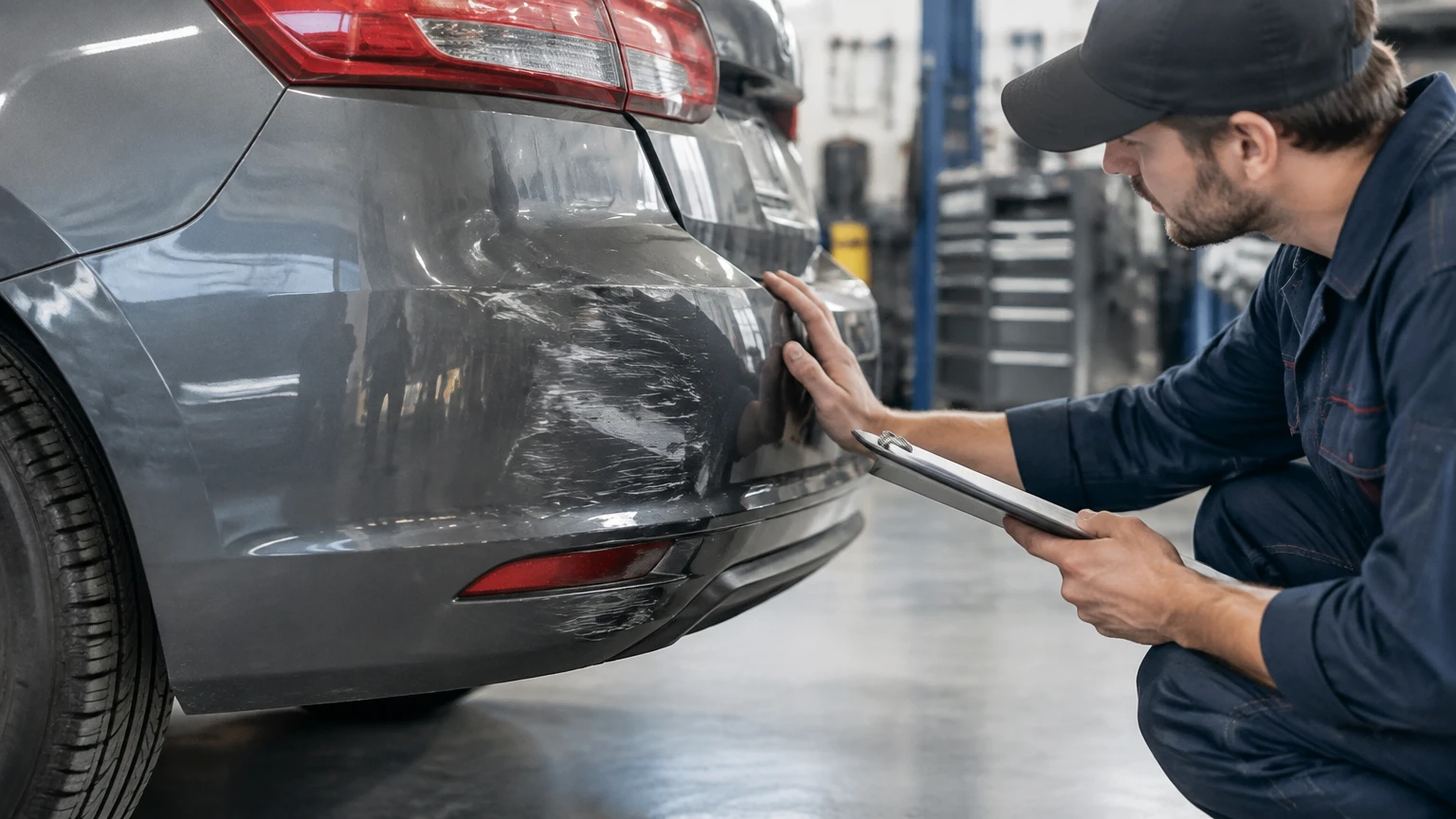
Bumper repair costs depend first on the damage, not the vehicle’s paint color. A shallow scuff requires refinishing, while a torn cover, broken mount, damaged absorber, or displaced radar module can turn a cosmetic job into a collision repair.
The following are typical United States consumer prices. They assume an independent collision shop, ordinary labor access, and no major frame damage. Dealer labor rates, metropolitan locations, imported vehicles, and specialty paint can raise the total.
| Damage type | Typical method | Typical total cost | Typical time |
|---|---|---|---|
| Light scratch or scuff | Sanding, primer, blending, clear coat | $150-$500 | 1-2 days |
| Small dent with intact paint | Heat reshaping or limited repair | $150-$300 | 2-4 hours |
| Deep dent with paint damage | Plastic repair, filler, repainting | $400-$1,200 | 2-3 days |
| Crack or puncture under 10 cm | Plastic welding, reinforcement, refinishing | $450-$1,400 | 2-4 days |
| Broken mounting tab | Tab repair or cover replacement | $250-$900 | 1-3 days |
| Complete cover replacement | Part, paint, installation, inspection | $800-$2,500 | 3-7 days |
| Tech-equipped or luxury replacement | OEM cover, specialty finish, calibration | $1,500-$3,500+ | 5-10 days |
A repair estimate should identify whether the price includes teardown. Shops often discover broken tabs, crushed foam absorbers, bent reinforcement bars, or damaged wiring only after removing the bumper cover.
What Makes a Bumper Repair More Expensive?
Labor, part quality, paint complexity, sensor equipment, and hidden impact damage create most price differences. A basic rear bumper on an older compact car may need only cosmetic refinishing, while a front bumper on a newer SUV can contain radar brackets, cameras, grille shutters, parking sensors, and lighting hardware.
Typical collision-shop labor rates range from $75 to $175 per hour, with higher rates common in large cities and luxury-certified facilities. A cosmetic repair may require two to five labor hours; replacement with teardown, paint, reassembly, and calibration can require six to fifteen hours.
Other cost factors include:
- Vehicle size: Large SUVs and pickups use larger covers and require more paint and labor.
- Paint type: Solid paint is usually simplest; metallic, pearl, tri-coat, and matte finishes require more preparation and blending.
- Part availability: A scarce OEM cover can create shipping delays and storage charges.
- Mounting damage: Broken retainers, guides, clips, and brackets add parts and labor.
- Safety electronics: Radar, cameras, ultrasonic sensors, and wiring increase inspection and calibration requirements.
- Location: Labor and paint-material prices vary substantially by state and metropolitan area.
- Previous repairs: Thick filler, incompatible plastic, and old paint can make a new repair fail prematurely.
How Much Does a New Bumper Replacement Cost?
A new bumper replacement commonly costs $800-$2,000 for a standard vehicle and $1,500-$3,500 or more for a luxury or technology-rich vehicle. The quoted total should include the bumper cover, paint, installation, clips and brackets, system scans, and any required calibration.
The visible plastic cover is only one part of the assembly. A complete estimate may include a foam energy absorber, steel or aluminum reinforcement bar, grille inserts, license-plate components, parking sensors, radar brackets, wiring, and fasteners.
| Replacement component | Aftermarket typical price | OEM typical price | Notes |
|---|---|---|---|
| Plastic bumper cover | $150-$600 | $400-$1,500 | Vehicle and trim determine price |
| Foam absorber | $50-$250 | $100-$500 | Often replaced after a meaningful impact |
| Reinforcement bar | $150-$700 | $300-$1,200 | Bent metal should not be reused |
| Brackets, guides, and clips | $30-$250 | $75-$400 | Fitment affects panel gaps |
| Paint and materials | $250-$800 | $250-$1,000 | Pearl and tri-coat finishes cost more |
| Installation labor | $200-$700 | $200-$900 | Labor rate and access determine total |
| Scan or ADAS calibration | $100-$600+ | $150-$800+ | Required on some vehicles after removal |
A low advertised replacement price may cover only an unpainted cover. Ask whether the estimate includes color matching, clear coat, clips, sensor transfer, diagnostic scans, and disposal of the old part.
Can a Cracked or Dented Bumper Be Repaired?
A cracked or dented bumper can often be repaired when the tear is small, the mounting points remain usable, and the damaged area does not sit in front of a radar sensor or another manufacturer-restricted component. Replacement is safer when the cover has extensive deformation, multiple broken mounts, torn sensor openings, or damage that prevents correct alignment.
Most modern bumper covers use polypropylene, thermoplastic olefin, or ABS-based plastic. Technicians may use controlled heat to reshape a dent and plastic welding to join compatible material. The repair area is then reinforced where appropriate, sanded, primed with a plastic-compatible system, painted, and clear-coated.
Plastic welding is not a universal solution. A repaired area can remain weaker than an undamaged cover, and excessive body filler may crack because bumper plastic flexes during ordinary driving. Manufacturer repair procedures take priority, particularly near radar modules and sensor mounts.
When Is Bumper Replacement Better Than Repair?
Replacement is usually the better choice when repair labor approaches the cost of a suitable replacement part. A practical shop rule is to compare the complete repair estimate with the complete replacement estimate, rather than comparing labor with the bare price of a cover.
| Situation | Usually better choice | Reason |
|---|---|---|
| Paint scuff under 30 cm | Repair | Refinishing costs less than a new cover |
| One small crack away from sensors | Repair | Material remains repairable |
| Several cracks and broken tabs | Replacement | Labor and alignment risk rise quickly |
| Torn radar opening | OEM replacement | Sensor position and signal path matter |
| Older car without sensors | Used or aftermarket replacement | Lower vehicle value supports lower-cost parts |
| Luxury car with tri-coat paint | Professional replacement or repair | Color matching requires specialist equipment |
| Bent reinforcement bar | Structural component replacement | Cover repair cannot restore metal strength |
| Repair estimate above 70% of replacement | Replacement | Repair offers poor economic value |
The “50% rule” is not a universal engineering standard. It is a budgeting guideline, and the correct decision depends on part availability, vehicle value, warranty, safety systems, and the quality of the proposed repair.
Do Parking Sensors and ADAS Increase the Price?
Parking sensors, blind-spot hardware, cameras, and radar commonly increase bumper-related costs because the shop must protect, transfer, diagnose, and sometimes calibrate those systems. A bumper cover is not merely cosmetic when a sensor bracket controls the position of a safety component.
A post-repair scan may identify fault codes in radar, camera, airbag, parking-assistance, or communication systems. Some vehicles require static calibration with target boards; others require dynamic calibration during a controlled road drive. The manufacturer’s repair information determines the procedure.
Typical additional costs include:
- Diagnostic pre-scan and post-scan: $50-$200
- Parking-sensor testing or replacement: $100-$600 per sensor
- Radar bracket or module work: $150-$1,000 or more
- Camera calibration: $150-$500
- Radar calibration: $200-$600
- Wheel-alignment or ride-height correction before calibration: $100-$300
Collision Repair Education Foundation materials and OEM repair procedures emphasize following vehicle-specific repair information rather than assuming every bumper can be welded or filled. A calibration invoice should identify the system calibrated, the procedure used, and whether the final scan showed no related faults.
A calibration is not automatically necessary for every bumper removal. It is necessary when the manufacturer specifies it, when a sensor or bracket moves, when diagnostic faults appear, or when the repair changes the sensor’s position or field of view.
Which Bumper Part Should You Choose?
OEM, aftermarket, and recycled OEM parts can all be reasonable choices, but they serve different priorities. OEM parts usually offer the most predictable fit and sensor compatibility; aftermarket parts reduce the initial price; recycled OEM parts can provide factory design at a lower cost when condition and availability are verified.
| Part source | Typical cost position | Fitment risk | Best use |
|---|---|---|---|
| New OEM | Highest, often 100% baseline | Lowest when correctly specified | Newer, leased, luxury, sensor-equipped vehicles |
| Certified aftermarket | About 50%-80% of OEM | Moderate | Older vehicles and budget repairs |
| Recycled OEM | About 30%-70% of new OEM | Low to moderate | Older vehicles with available matching parts |
| Used aftermarket | About 20%-50% of OEM | Highest | Temporary or low-value repairs |
| Repaired original cover | Labor-dependent | Depends on damage | Cosmetic damage with intact mounts |
Ask whether the part is certified by the vehicle manufacturer, whether it includes sensor openings and brackets, and whether the shop guarantees panel gaps. An aftermarket cover that fits poorly can require additional refinishing or modification, eliminating much of its apparent saving.
A recycled OEM cover may already contain scratches, repair history, or sensor hardware from a different trim level. The part number and vehicle configuration must match.
How Does the Repair Process Work?
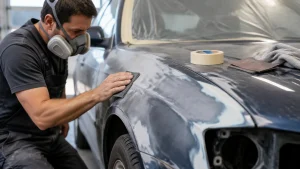
A professional bumper repair normally follows seven stages: inspection and scanning, removal, hidden-damage assessment, repair or replacement, surface preparation, paint, and reassembly with final testing. The exact sequence varies by vehicle, but skipping inspection creates the largest risk of an incomplete repair.
1. Inspect and Pre-Scan the Vehicle
The technician records visible damage, checks warning lights, and scans electronic control modules. Photographs, diagnostic codes, mileage, paint condition, and vehicle options should appear in the repair file.
2. Remove the Bumper Cover
Removing the cover exposes the absorber, reinforcement bar, mounts, wiring, and sensor brackets. A shop that quotes a final price without allowing for teardown may issue a supplement after hidden damage is found.
3. Assess Structural and Sensor Damage
The technician checks whether the reinforcement bar is bent, the foam absorber is crushed, or the crash structure has moved. The shop also verifies that radar and camera brackets are not distorted.
4. Repair or Replace the Cover
Small compatible cracks may receive plastic welding or controlled reshaping. A cover with severe distortion, extensive cracking, or damaged sensor openings normally receives replacement.
5. Prepare and Paint the Surface
Preparation can include sanding, flexible filler, plastic adhesion promoter, primer, basecoat, and clear coat. A spectrophotometer can help identify paint variation, but blending adjacent panels may still be necessary because sun exposure changes the original color.
6. Reassemble the Bumper
The technician installs clips, guides, brackets, sensors, grilles, wiring, and trim. Correct panel gaps and secure sensor seating are required before the vehicle leaves the bay.
7. Complete Scans and Calibration
The shop performs a post-scan and any required camera, radar, or parking-sensor calibration. The final repair record should identify completed tests and remaining fault codes.
How Long Does Bumper Repair Take?
A cosmetic bumper repair commonly takes one to two business days, while a replacement generally takes three to seven days. Sensor calibration, unavailable parts, extensive hidden damage, and tri-coat or matte paint can extend the job to five to ten business days.
| Repair situation | Shop time | Main delay risk |
|---|---|---|
| Mobile scratch repair | 2-6 hours | Weather and paint curing |
| Small dent repair | 2-4 hours | Access and plastic memory |
| Cracked cover repair | 2-4 days | Welding and refinishing |
| Standard replacement | 3-5 days | Part delivery and paint matching |
| Radar-equipped replacement | 5-10 days | Calibration and supplements |
| Luxury tri-coat repaint | 4-8 days | Color matching and curing |
A promised completion date should begin after parts arrive, not when the vehicle first enters the shop. Ask whether the facility has the calibration equipment or must subcontract that step.
Can You Repair a Bumper Yourself?
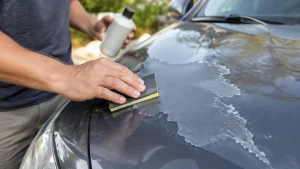
A vehicle owner can usually handle a light surface scuff, but DIY repair is unsuitable for damage near radar, cameras, airbag sensors, mounting points, or reinforcement structures. Home repairs commonly fail because the owner uses ordinary body filler, skips plastic adhesion promoter, or paints without controlling dust and temperature.
DIY materials may cost $50-$250, but the result depends on matching plastic, paint, surface preparation, and equipment. A shallow mark that has not cut through the paint may respond to careful cleaning, polishing, and touch-up. A deep gouge or crack usually requires professional refinishing to achieve a durable color transition.
Do not drill, heat, weld, or sand near a sensor without the manufacturer’s repair instructions. A visually acceptable bumper can still produce incorrect radar readings or unreliable parking-sensor operation.
Does Insurance Pay for Bumper Damage?
Insurance may pay for bumper damage when a covered collision or comprehensive event caused it, subject to the policy deductible, exclusions, fault rules, and coverage limits. A $400 repair is usually uneconomical to claim under a $500 deductible, while a $2,000 collision may justify a claim after considering premiums and claim history.
Liability insurance generally pays for damage you cause to another party, not damage to your own car. Collision coverage typically addresses impact damage to your vehicle. Comprehensive coverage may apply to vandalism, falling objects, animal strikes, or weather events, depending on the policy.
Before filing, compare:
- The complete repair estimate.
- The applicable deductible.
- Whether the insurer will use aftermarket or recycled parts.
- The effect of a claim on premiums or claim-free discounts.
- Whether hidden damage can create a later supplement.
- Whether the policy covers rental transportation.
Do not accept an insurer estimate that omits required calibration, paint blending, sensor brackets, or manufacturer-specified procedures. Ask the repairer to document those items in a supplement.
What Should a Bumper Repair Estimate Include?
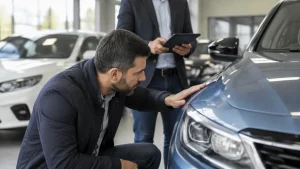
A reliable estimate identifies every component, operation, part source, labor category, scan, calibration, tax, and warranty term. A single line reading “bumper repair, $900” does not show whether the shop included the work required for a safe and durable result.
Use this checklist:
- Vehicle identification number and exact trim
- Front or rear bumper location
- Repair or replacement recommendation
- OEM, aftermarket, or recycled part source
- Part number and availability
- Paint type and blending operations
- Clips, guides, brackets, absorber, and reinforcement inspection
- Pre-scan and post-scan
- ADAS calibration, if required
- Alignment or ride-height checks, if required
- Labor hours and labor rate
- Shop materials and disposal charges
- Completion date and parts-delay policy
- Written paint and labor warranty
A reputable shop should explain what the technician cannot know until teardown. That uncertainty is normal; an unexplained supplement is not.
Common Bumper Repair Mistakes
Several inexpensive-looking shortcuts create repeat repairs or safety concerns.
- Repairing a sensor zone without checking OEM instructions: Patched plastic or a displaced bracket may interfere with radar or camera performance.
- Using rigid filler on flexible plastic: Thick conventional filler can crack when the bumper flexes.
- Reusing broken clips: The cover may sag, vibrate, or develop uneven gaps.
- Replacing only the visible cover: A crushed absorber or bent reinforcement bar can remain hidden.
- Choosing the cheapest aftermarket part: Poor fitment may require extra labor and affect sensor alignment.
- Skipping the post-scan: A warning light or stored fault can remain after the cosmetic work appears complete.
The most counterintuitive cost issue is calibration. The sensor itself may be undamaged, yet removal of its bracket can change its angle enough to require a paid procedure. The second is paint: a cheap cover can become expensive after sanding, modification, priming, and repeated color matching.
The Bottom Line on How Much Does Bumper Repair Cost?
How Much Does Bumper Repair Cost? Plan on $150-$600 for minor cosmetic damage, $450-$1,400 for a repairable crack or deep dent, and $800-$2,500 or more for replacement. Sensor-equipped luxury vehicles, specialty paint, hidden structural damage, and ADAS calibration can push the total beyond $3,500.
Choose repair when the cover has limited damage, intact mounts, and no restricted sensor area. Choose replacement when the cover is extensively torn, the mounts are broken, the reinforcement is damaged, or repair labor approaches the cost of a correctly fitted replacement. Get a written estimate that separates parts, paint, labor, scans, calibration, and supplements.
Frequently Asked Questions
Is It Cheaper to Repair or Replace a Bumper?
Repair is usually cheaper for scratches, shallow dents, and one small crack, with typical prices from $150-$1,400. Replacement becomes more economical when the cover has several broken mounts, extensive distortion, sensor openings, or repair labor near the price of a painted replacement. The correct comparison uses complete installed costs, not bare part prices.
How Much Does a Front Bumper Cost Compared With a Rear Bumper?
Front bumper work often costs more when the front assembly contains radar, cameras, grille components, active shutters, or headlamp-related brackets. Rear bumpers may cost less, although parking sensors, blind-spot modules, exhaust trim, and powered tailgate components can produce similar totals. Typical replacement pricing for either end is $800-$2,500.
Can a Bumper Be Repaired Without Painting?
A bumper can sometimes be repaired without full painting when the damage is a shallow dent with intact paint or a small unpainted plastic section. Scratches through the color layer usually require sanding, primer, color application, and clear coat. Paintless dent methods are less predictable on thermoplastic bumper covers than on steel body panels.
Will a Bumper Repair Affect Resale Value?
A documented professional repair generally affects resale value less than an unrepaired crack, mismatched paint, or visible panel gap. A major collision, replaced structural component, airbag deployment, or accident history can still reduce value even when the bumper looks new. Keep invoices, photographs, scan results, and calibration records.
Should I Use a Dealer or an Independent Collision Shop?
Use a dealer or manufacturer-certified collision facility when the vehicle has complex ADAS, unusual paint, a lease requirement, or a warranty concern. An independent shop may cost less for cosmetic damage and older vehicles, especially when it has current calibration equipment and access to manufacturer repair procedures. Verify equipment rather than relying on the shop’s label.