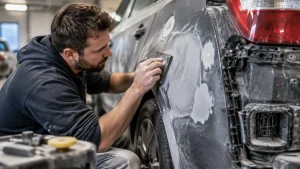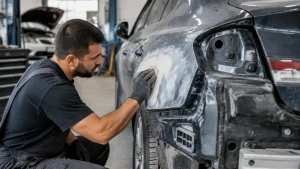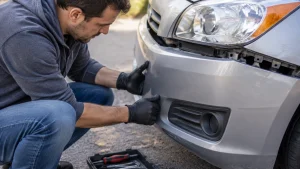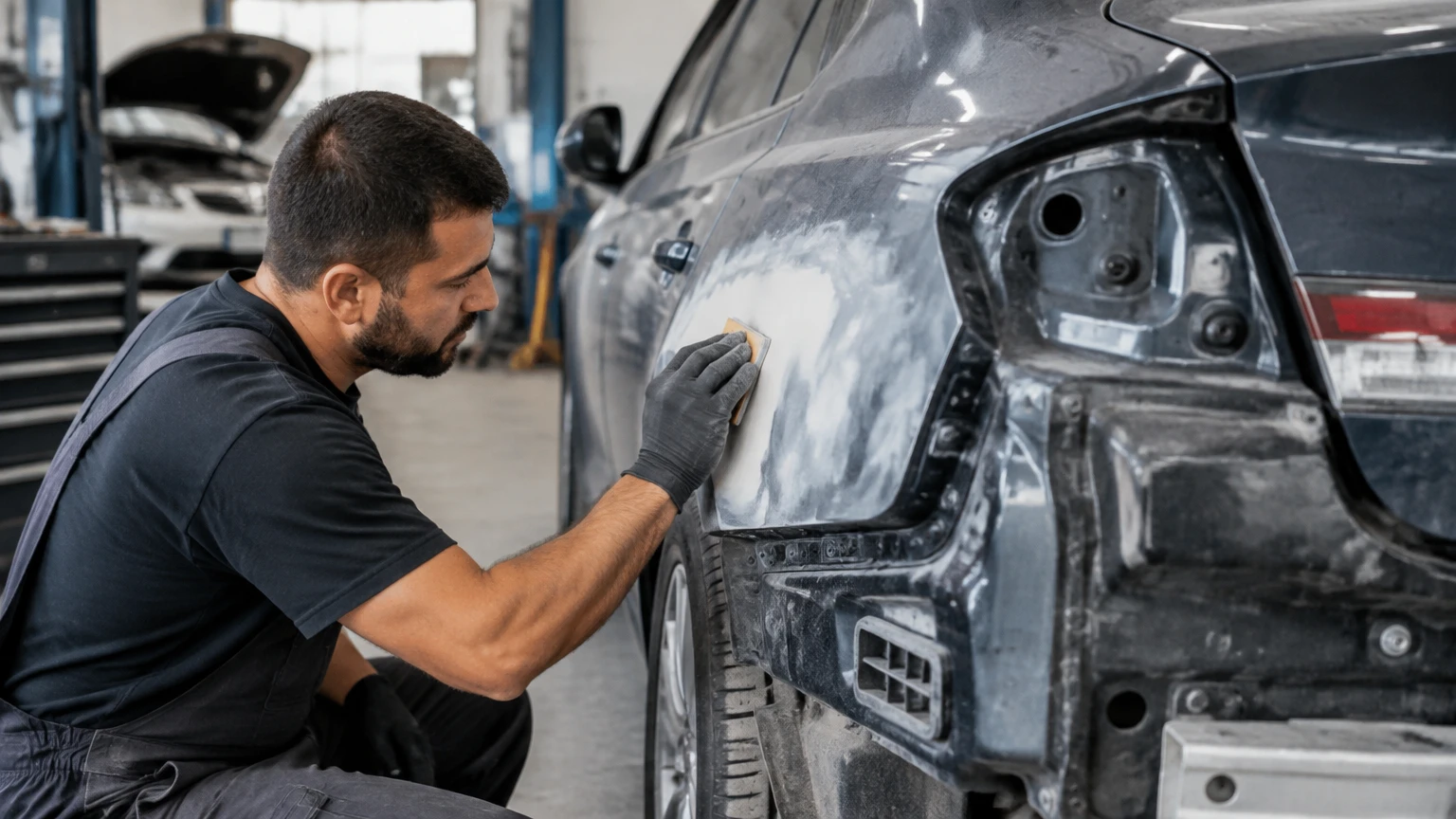
Collision repair typically takes 2 days for a minor cosmetic repair, 4-10 days for moderate panel damage, 2-5 weeks for major structural damage, and 6-12 or more weeks for complex repairs. The calendar cycle includes teardown, parts delivery, insurance approvals, bodywork, paint, reassembly, diagnostics, and safety calibration, not merely technician labor.
Key facts at a glance
A minor bumper, dent, or paint repair commonly takes 1-3 business days.
Moderate collision damage involving replacement panels commonly takes 4-10 business days.
Structural damage, suspension work, or multiple airbags commonly requires 2-5 weeks.
A parts backorder or insurance supplement can add several days or weeks.
A vehicle is not finished until diagnostics, ADAS calibration, road testing, and quality checks are complete.
A severe repair may become an insurance total loss instead of entering an 8-12 week repair cycle.
What Determines Collision Repair Time?
Collision repair time is determined by damage severity, parts availability, insurer authorization, shop capacity, vehicle technology, and the number of repair operations. The visible damage provides only an initial estimate because bumpers, quarter panels, and doors can conceal damaged absorbers, brackets, wiring, sensors, suspension components, or structural rails.
A repair estimate usually contains labor hours, parts, materials, paint operations, and sublet work such as wheel alignment or camera calibration. Those labor hours do not equal consecutive hours in the shop. A vehicle requiring 25 labor hours may occupy a repair facility for 7-14 calendar days because work is sequenced around parts, paint-booth capacity, supplements, and technician availability.
Labor time is different from cycle time
Labor time measures hands-on work. Cycle time measures the period from vehicle intake to customer delivery. A shop may complete 30 labor hours over 10 calendar days when the vehicle waits one day for a supplement, two days for a bumper, and another day for calibration availability.
The 19.3-day average cited in some collision-repair discussions should therefore be treated as an industry measurement or reference point, not a guaranteed appointment length. A vehicle with a damaged fender does not automatically require 19 days, while a vehicle with structural damage can exceed that figure substantially.
How Does the Collision Repair Process Work?
A collision repair follows seven connected stages: inspection, blueprinting, authorization and parts sourcing, structural repair, refinishing, reassembly, and final diagnostics. Several stages overlap, but hidden damage or a missing safety component can send the vehicle back to an earlier stage.
1. Inspection, documentation, and pre-scan
The repair facility photographs the vehicle, records mileage and condition, checks warning lights, and creates an initial estimate. A diagnostic pre-scan may identify stored trouble codes before repair begins, while a visual inspection identifies obvious body, glass, wheel, and suspension damage.
A photo estimate is useful for triage, towing decisions, and appointment planning. It is not a reliable final repair scope because photographs cannot confirm rail deformation, damaged mounting points, radar alignment, or wiring faults.
2. Disassembly and blueprinting
Technicians remove damaged exterior parts to inspect the components underneath. This blueprinting stage can reveal a bent bumper reinforcement, crushed absorber, broken headlamp mount, displaced condenser, damaged harness, or distorted unibody attachment point.
A shop should update the estimate after disassembly rather than promise a fixed delivery date from photographs alone. Blueprinting often takes one-half to two business days, depending on access and vehicle condition.
3. Supplement approval and parts procurement
The shop documents newly discovered damage and submits a supplement to the insurer or vehicle owner. Repairs involving the added operations may pause until financial responsibility is approved, although some facilities continue unaffected work.
Parts are ordered at the same time when the specification is clear. A readily available bumper cover may arrive in 1-3 business days; a backordered lamp, radar bracket, structural component, or vehicle-specific trim piece may take 1-6 weeks.
4. Structural and mechanical repair
Structural technicians measure the vehicle against manufacturer specifications and use a frame machine or dedicated measuring system when required. The repair may also include suspension replacement, wheel alignment, cooling-system work, steering inspection, and restraint-system replacement.
A straight-looking vehicle can still have unsafe geometry. Unibody measuring, weld access, corrosion protection, and replacement procedures affect both labor hours and scheduling.
5. Bodywork and refinishing
Technicians repair or replace panels, prepare surfaces, apply primer and basecoat, blend adjacent panels when necessary, and apply clearcoat. Paint-booth scheduling can add one or more days even when bodywork is complete.
Cure time depends on the paint system, booth process, temperature, humidity, and manufacturer instructions. Rushing reassembly before coatings cure can create defects, imprinting, or fitment damage.
6. Reassembly and mechanical installation
The shop reinstalls lamps, grilles, moldings, glass, liners, sensors, wiring, trim, airbags, and other removed components. Technicians check fasteners, fluid levels, panel gaps, electrical functions, and warning indicators.
Reassembly often exposes a second round of problems. A broken clip, incompatible replacement lamp, damaged connector, or missing fastener can delay delivery after the vehicle appears cosmetically finished.
7. Scanning, calibration, road testing, and delivery
The vehicle receives a post-repair diagnostic scan, required ADAS calibration, wheel alignment, road test, wash, and final quality inspection. ADAS includes systems such as forward-collision warning, automatic emergency braking, lane-keeping assistance, blind-spot monitoring, and adaptive cruise control.
Calibration may require a level floor, specified tire pressure, wheel alignment, target boards, scan tools, or a controlled road drive. A post-scan that clears a warning light does not prove that every camera or radar is correctly aimed.
How Long Does Each Type of Collision Repair Take?
Typical collision-repair duration ranges from 1 day for localized cosmetic work to 12 or more weeks for specialty structural or electric-vehicle repairs. The following ranges assume parts are available and the vehicle does not wait through a prolonged insurance dispute.
| Damage type | Typical work | Typical calendar time | Typical U.S. repair cost |
|---|---|---|---|
| Paintless dent repair | Small door or fender dent, intact paint | 1-2 days | $150-$600 |
| Minor cosmetic damage | Bumper scuff, scratch, localized refinishing | 1-3 days | $350-$1,500 |
| Moderate panel damage | Door, fender, lamp, bumper, paint blending | 4-10 business days | $2,500-$6,000 |
| Major collision damage | Structural measuring, suspension, cooling, airbags | 2-5 weeks | $6,000-$20,000+ |
| Specialty or catastrophic damage | EV battery, aluminum structure, imported components | 6-12+ weeks | $25,000 to total-loss threshold |
Costs vary by vehicle, region, labor rate, parts choice, paint operations, and hidden damage. A luxury vehicle and a mass-market sedan can sustain similar visible damage while producing very different parts and calibration costs.
Can a shop repair a bumper in one day?
A shop can sometimes repair or refinish a bumper in one day when the bumper is available, mounting points are intact, no sensor requires calibration, and the facility has immediate paint capacity. Replacement, curing, sensor setup, and quality inspection more commonly produce a 1-3 business-day timeline.
A bumper containing parking sensors, a front camera, radar equipment, grilles, or active shutters requires more than cosmetic work. Damage to the reinforcement or absorber also changes the repair category.
How long does frame or structural damage take?
Frame or unibody structural damage commonly takes 2-5 weeks, although severe distortion, parts delays, and airbag-system work can extend the cycle beyond eight weeks. Structural repair requires measurement, controlled pulling or replacement, weld procedures, corrosion protection, alignment checks, and final safety-system verification.
Some vehicles are not economically repairable after major structural damage. The insurer may compare the estimated repair cost and salvage value with the vehicle’s actual cash value and state-specific total-loss rules.
Which Parts Make Repairs Faster or Slower?
Parts selection affects repair time through availability, fitment, inspection, approval, and installation requirements. OEM parts generally provide the clearest vehicle-specific specification, but an aftermarket or recycled part may arrive sooner when the OEM warehouse is backordered.
| Parts route | Typical availability | Relative cost | Timing and quality consideration |
|---|---|---|---|
| New OEM | 1-14 days when stocked | 100% baseline | Best specification match; factory backorders can add 2-6 weeks |
| Certified aftermarket | 1-7 days | 60%-90% of OEM | Availability may be faster; fit and finish require inspection |
| Recycled OEM, LKQ | 2-10 days | 40%-80% of OEM | Original geometry; condition, color, and donor history vary |
| Remanufactured component | 3-14 days | 50%-85% of new | Common for selected mechanical or electronic assemblies |
LKQ means “like kind and quality” and usually refers to a recycled component from a comparable vehicle. A recycled headlamp may reduce cost and waiting time, but the shop should verify mounting points, lens condition, electronics, and compatibility before installation.
Aftermarket availability does not guarantee faster delivery. A part that arrives quickly but requires modification, repainting, or return for poor fit can consume more time than a correctly fitting OEM component.
Why Is Collision Repair Taking So Long?
Collision repair most often takes longer because of hidden damage, parts delays, supplement approval, technician capacity, paint scheduling, or unresolved safety-system faults. Waiting time frequently exceeds hands-on labor time, particularly when a vehicle needs a specialized sensor, structural component, or insurer authorization.
Common delay sources include:
- Hidden damage: Teardown reveals crushed reinforcements, wiring damage, suspension deformation, or cooling-system leaks.
- Supplement approval: The insurer requires photographs, measurements, invoices, or an adjuster review before approving added work.
- Backordered parts: A single unavailable lamp, bracket, trim piece, or module can prevent reassembly.
- Shop capacity: A vehicle may wait for a frame technician, aluminum-certified technician, paint booth, or calibration lane.
- Parts mismatch: The wrong trim level or sensor-equipped part must be returned and reordered.
- Calibration failure: Incorrect ride height, alignment, tire size, target placement, or software status can prevent a successful calibration.
- Total-loss review: The vehicle may pause while the insurer determines whether repair remains economically practical.
Practitioner rule: ask for milestone dates
A reliable status update contains a completed milestone, the next blocked operation, and an expected date. “It is in progress” provides no usable scheduling information; “blueprinting is complete, the radar bracket is backordered, and the supplier expects it Thursday” identifies the actual constraint.
Ask whether the vehicle is waiting for parts, approval, labor, paint, calibration, or a decision about total loss. Each cause requires a different solution.
Does Insurance Approval Affect the Repair Timeline?
Insurance approval can add 1-7 business days for ordinary supplements and substantially longer when liability, coverage, valuation, or repairability is disputed. A direct repair program may reduce administrative handoffs, but it cannot make an unavailable part arrive or eliminate required safety procedures.
The vehicle owner should confirm the claim number, deductible, rental authorization, preferred communication method, and supplement process. Promptly signing an authorization or answering a coverage question can prevent avoidable idle time.
A customer generally may choose a repair facility in the United States, subject to policy terms and state law, rather than assuming the insurer’s preferred shop is mandatory. The practical choice is between administrative convenience, facility capability, repair warranty, distance, and communication quality.
How Long Does Collision Repair Take for EVs and Advanced Vehicles?
Electric vehicles and advanced vehicles commonly require additional inspection and repair controls, so a moderate repair may take 1-3 weeks and a complex repair may take 6-12 or more weeks. High-voltage isolation, battery inspection, aluminum or mixed-material construction, software procedures, and ADAS calibration can restrict which facilities may perform the work.
A damaged EV does not automatically need a battery replacement. The manufacturer’s repair information and qualified technicians determine whether the battery enclosure, modules, isolation system, and mounting structure are safe to return to service.
The same principle applies to vehicles with extensive driver-assistance technology. A front-end impact can affect radar, cameras, grille geometry, wheel alignment, and wiring even when the bumper damage looks minor.
What Should You Do Before and During Repairs?
The owner can reduce avoidable delays by preparing documents, removing personal property, approving decisions quickly, and requesting milestone-based updates. The owner cannot safely shorten structural repair, required cure time, or calibration by pressuring technicians to skip procedures.
Use this checklist:
- Photograph the vehicle and remove valuables before drop-off.
- Provide the shop with both keys, wheel-lock information, and security codes.
- Confirm whether the estimate includes teardown and possible supplements.
- Ask whether parts are OEM, aftermarket, recycled, or pending approval.
- Confirm rental-car days and what happens if the repair exceeds the original authorization.
- Ask for the current blocked operation and next milestone date.
- Request written confirmation when a supplement is approved.
- Do not authorize cosmetic completion before safety faults are resolved.
- Ask whether wheel alignment, pre-scan, post-scan, and ADAS calibration are included.
- Inspect warning lights, panel gaps, paint match, lamps, glass, locks, sensors, and tire pressure at delivery.
A shop should explain what is known and what remains conditional. A precise answer may be “delivery is expected five business days after the remaining lamp arrives,” not a calendar date unsupported by parts availability.
When Is a Damaged Car Declared a Total Loss?
An insurer declares a total loss when the projected repair economics or applicable state threshold make repairing the vehicle impractical, unsafe, or legally restricted. The exact formula varies, but the decision commonly considers actual cash value, repair cost, salvage value, taxes, storage, rental expense, and state rules.
A total-loss decision can occur before full repair begins or after teardown reveals structural and restraint-system damage. A high repair estimate does not by itself prove a total loss, and a low estimate does not guarantee repair if the vehicle has unsafe or unavailable components.
Ask the insurer for the valuation report, comparable vehicles, deductible treatment, salvage calculation, and any deadline to dispute the valuation. Do not authorize extensive customer-paid work until responsibility for the repair is documented.
What Are the Most Common Collision Repair Mistakes?
The most expensive mistakes involve treating a photo estimate as final, ignoring diagnostic scans, selecting parts solely by price, or accepting delivery before calibration and road testing. These errors can create repeat visits, disputed charges, safety faults, and longer total ownership time.
Mistake 1: Planning from the first estimate
Fix: Treat the initial estimate as provisional until teardown and parts verification are complete.
Mistake 2: Measuring time from the accident date
Fix: Separate towing, claim setup, inspection, shop intake, approval, repair, and delivery dates. Insurance rental coverage may begin under a different event than repair cycle time.
Mistake 3: Choosing the cheapest part without checking fit
Fix: Ask who pays for a rejected part, how fitment is verified, and whether replacement affects sensors, lamps, brackets, or warranty coverage.
Mistake 4: Ignoring calibration
Fix: Request the required post-repair scan and calibration documentation, especially after front, rear, windshield, suspension, or wheel impacts.
Mistake 5: Accepting an unexplained delay
Fix: Ask for the specific blocker, responsible party, expected resolution date, and whether unaffected work can continue.
How Long Will Your Repair Probably Take?
The most useful estimate combines impact location, deployed airbags, vehicle technology, parts status, insurance route, and structural findings. The following examples are typical planning ranges, not promises.
| Scenario | Likely repair scope | Typical timeline | Main risk |
|---|---|---|---|
| Door dent with intact paint | PDR and inspection | 1-2 days | Paint damage discovered |
| Rear bumper and lamp | Replacement, paint, electrical check | 3-7 days | Sensor or bracket damage |
| Front-end impact without airbags | Bumper, lamp, cooling, calibration | 7-15 days | Radar or condenser damage |
| Side impact with airbags | Panels, restraint system, structural inspection | 2-4 weeks | Supplement and parts |
| Wheel impact with suspension damage | Suspension, alignment, body repair | 1-3 weeks | Unibody or steering damage |
| EV front or underbody impact | Battery and high-voltage inspection | 3-12+ weeks | Specialist capacity or battery decision |
A practical delivery-date test
A delivery date is reasonably credible when the shop has completed blueprinting, obtained approval, received critical parts, scheduled paint, and identified the calibration method. If any of those conditions remains unknown, the date is an estimate with a meaningful risk of change.
Frequently Asked Questions
Can I drive my car while waiting for collision repairs?
Drive only when the vehicle is legally roadworthy and the shop or qualified technician confirms that steering, braking, lighting, tires, suspension, restraints, and visibility remain safe. A loose bumper, leaking fluid, deployed airbag, warning light, damaged lamp, or misaligned wheel can make driving unsafe even when the engine operates normally.
Does a replacement windshield add repair time?
A replacement windshield can add one or more business days when glass must be ordered, adhesive cure time is required, or a forward camera needs recalibration. Camera-equipped windshields often require calibration after installation, so cosmetic completion does not establish delivery readiness.
Can I speed up a collision repair?
You can reduce administrative delay by choosing a capable shop, responding to supplement requests, approving parts decisions promptly, and confirming rental authorization. You cannot safely shorten manufacturer-required structural procedures, paint curing, diagnostic testing, or ADAS calibration.
How often should I contact the body shop?
Contact the shop at agreed milestones rather than calling repeatedly without a specific question. A weekly update is reasonable for a routine repair, while a parts backorder, supplement dispute, or changing delivery date justifies a more frequent schedule.
What happens if the repair takes longer than the estimate?
The shop should explain the cause, revised operations, parts status, and new expected delivery date. Contact the insurer promptly if rental coverage, supplement authorization, storage charges, or policy limits could be affected by the delay.
The Bottom Line
How long collision repair takes depends more on hidden damage, parts, approvals, and safety procedures than on visible dents alone. Plan for 1-3 days for minor cosmetic work, 4-10 business days for moderate panel damage, 2-5 weeks for structural repairs, and 6-12 or more weeks for complex EV, specialty, or parts-constrained claims. Ask for the current blocker and next milestone, then confirm scans, calibration, road testing, and quality inspection before accepting the vehicle.