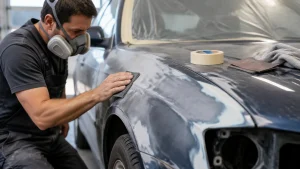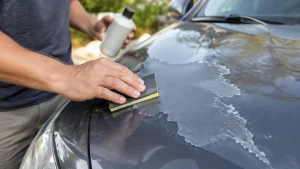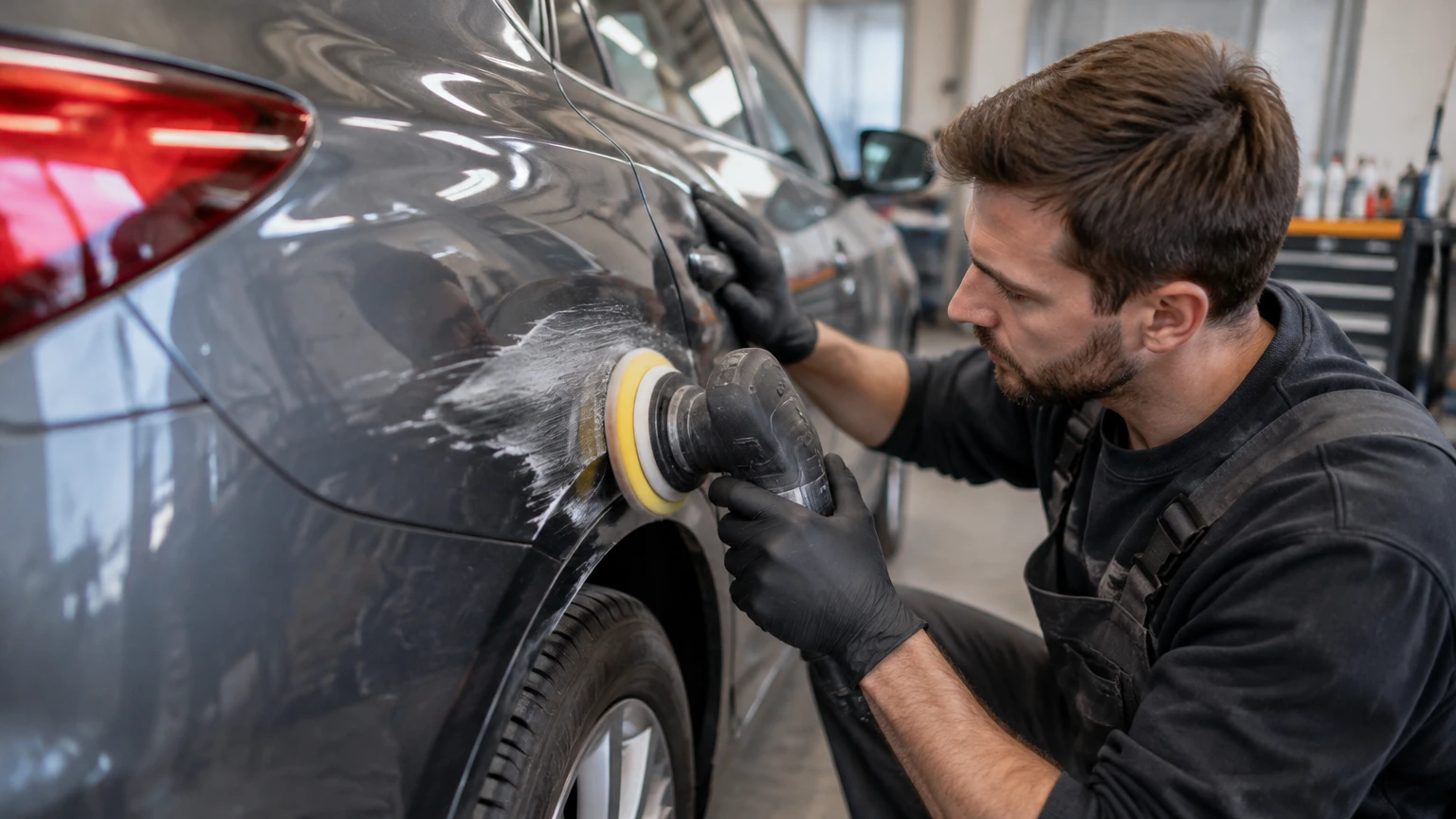
Car scratch repair usually takes 15-30 minutes for paint transfer, 30 minutes to 2 hours for a clear-coat scratch, 2-4 hours for a small color-layer repair, and 1-3 business days for deep damage reaching primer, metal, or plastic. Appointment availability, panel size, color complexity, drying conditions, and hidden dents can extend the calendar time.
Key Facts at a Glance
- A surface scuff can often be cleaned and polished in 15-30 minutes.
- A clear-coat scratch commonly needs 30 minutes to 2 hours of machine polishing.
- A base-coat scratch generally takes 2-4 hands-on hours, or one day when blending is required.
- A deep scratch through primer or into metal usually takes 1-3 business days.
- A body shop’s calendar time can exceed its hands-on repair time because paint must flash, cure, and be inspected.
- Rust, dents, plastic damage, metallic paint, and multi-panel blending increase both repair time and cost.
How Can You Tell How Deep the Scratch Is?
Scratch depth determines repair time because a technician either levels existing clear coat or rebuilds missing paint layers. A fingernail that glides across the mark usually indicates surface damage; a nail that catches suggests damage in the color coat or below it.
Use the fingernail test only as a screening method. Wash and dry the panel first, then inspect the mark in bright, indirect light. Dirt and paint transfer can make a shallow mark appear deeper, while a narrow gouge can hide exposed substrate.
| Scratch type | Typical appearance | Fingernail result | Typical repair time |
|---|---|---|---|
| Paint transfer or scuff | чужой paint, rubber, or gray streak on top | Does not catch | 15-30 minutes |
| Clear-coat scratch | White or hazy line that nearly disappears when wet | Usually does not catch | 30 minutes-2 hours |
| Base-coat scratch | Contrasting color line with no exposed substrate | Catches clearly | 2-4 hours |
| Primer or plastic damage | Gray, black, or dull pale area | Drops into groove | 1-2 business days |
| Bare-metal gouge | Silver metal, brown corrosion, or sharp edges | Deep catch | 2-3 business days |
A scratch that exposes steel needs more urgency than one exposing plastic. Moisture can begin corrosion beneath an apparently small chip, especially where the panel edge or a door seam allows water to remain.
How Long Do Minor Scratches Take?
Minor car scratch repair takes about 15-30 minutes for paint transfer and 30 minutes to 2 hours for a clear-coat defect. The shorter estimate applies to a clean, isolated mark; contamination, oxidation, multiple scratches, or difficult access can double the hands-on time.
Paint transfer sits on the vehicle rather than removing the vehicle’s finish. A technician normally washes the area, uses a suitable solvent or panel cleaner, and follows with light polishing. The solvent must be compatible with the clear coat and plastic trim.
Clear-coat correction uses a diminishing abrasive compound or polish on a dual-action polisher. The technician removes a controlled amount of surrounding clear coat so the surface becomes level with the bottom of the scratch. Polishing cannot replace missing color or primer.
A typical mobile technician may complete a small bumper scuff in one visit, but environmental conditions matter. Wind, dust, direct sunlight, and temperatures outside the product manufacturer’s range can prevent a clean finish.
How Long Does Deep Scratch Repair Take?
Deep scratch repair usually requires 1-3 business days because the technician must prepare the substrate, apply compatible coatings, allow flash and cure intervals, blend the color, and inspect the finish. A multi-panel gouge, dent, or corrosion can extend the repair beyond three business days.
Deep damage is a filling process rather than a polishing process. The technician removes loose paint, feathers the surrounding edge, treats corrosion where necessary, and applies the appropriate primer. New base coat and clear coat then restore the missing paint system.
A short scratch across a large door can take longer than a longer mark on a small bumper. Panel shape, body lines, access, and the need to blend into adjacent paint affect labor more than scratch length alone.
| Damage condition | Main work required | Hands-on time | Normal calendar time |
|---|---|---|---|
| 2-inch clear-coat mark | Compound and polish | 30-90 minutes | Same appointment |
| 2-inch color-layer mark | Sand, touch-up, clear coat, polish | 2-4 hours | Same day or next day |
| Door gouge to primer | Sand, prime, color, blend, clear coat | 4-8 hours | 1-2 business days |
| Bare steel with light rust | Rust treatment plus refinishing | 5-10 hours | 2-3 business days |
| Bumper gouge with plastic damage | Plastic repair, primer, refinish | 6-12 hours | 2-3 business days |
| Damage across two panels | Multiple blends and inspection | 8-16 hours | 2-5 business days |
Why Does Professional Repair Take Longer Than Polishing?
Professional repair takes longer because paint products need controlled flash and curing intervals, and the finished panel must be cleaned, color-checked, and polished before delivery. A technician may spend only four hours working on a vehicle that remains at the shop for two calendar days.
A typical professional sequence is:
- Decontaminate the panel. The technician washes away grit, then uses a panel wipe or wax-and-grease remover.
- Sand and feather the damage. Coarser abrasive removes damaged edges; finer abrasive creates a smooth transition.
- Repair the substrate. Bare steel receives corrosion protection, while raw plastic needs a compatible adhesion promoter or plastic primer.
- Apply primer and allow it to cure. Primer fills minor surface texture and isolates the substrate.
- Mix and verify the color. The vehicle’s paint code provides a starting formula, but age, sun exposure, and previous repairs can change the visible color.
- Spray and blend the base coat. Multiple thin coats provide better control than one heavy application.
- Apply clear coat. The clear layer restores gloss and provides UV and chemical resistance.
- Cure, inspect, and polish. Heat lamps or a controlled booth may accelerate curing, but the product technical data sheet controls the required interval.
The “oven bake” description needs precision. Many shops use heated spray booths or infrared lamps, but the exact temperature and duration depend on the paint system. A 60-70°C setting may be appropriate for some professional coatings, not every vehicle finish or mobile repair product.
Which Repair Option Is Fastest?
Mobile smart repair is usually fastest for a localized defect, with a typical appointment lasting 1-4 hours. DIY is fastest to begin, while a body shop is usually the most suitable for deep, multi-panel, corroded, or structurally complicated damage.
| Repair route | Typical appointment time | Calendar time | Best suited to | Main limitation |
|---|---|---|---|---|
| DIY polish | 30 minutes-2 hours | Same day | Transfer and clear-coat marks | High risk of uneven correction |
| DIY touch-up | 1-3 hours plus curing | 1-3 days | Tiny chips on older vehicles | Visible texture or color mismatch |
| Mobile smart repair | 1-4 hours | Same day | Small localized scratches | Weather and panel-size limits |
| Detailer correction | 1-4 hours | Same day | Surface marring and light scratches | Cannot replace missing paint |
| Body shop | 4-16 labor hours | 1-5 business days | Deep or multi-panel damage | Queue and higher cost |
Mobile repair is not automatically inferior. A trained technician using a clean canopy, accurate color matching, and suitable refinishing products can produce a strong localized result. The limitation is physical: a driveway setup cannot replicate every dust-controlled booth, bake cycle, or panel-replacement capability.
How Much Does Car Scratch Repair Cost?
Typical professional pricing ranges from $50-$100 for a simple scuff, $75-$150 for clear-coat correction, $150-$400 for a localized color repair, and $400-$800 or more for deep refinishing of one panel. Prices vary by region, vehicle class, paint type, access, and whether a deductible applies.
| Repair level | Typical DIY cost | Typical professional cost | Typical timeframe |
|---|---|---|---|
| Paint transfer removal | $10-$40 | $50-$100 | 15-30 minutes |
| Clear-coat polishing | $20-$80 | $75-$150 | 30 minutes-2 hours |
| Small color touch-up | $30-$120 | $150-$400 | 2-4 hours |
| Deep one-panel repair | $100-$250 | $400-$800+ | 1-3 business days |
| Two-panel blend | $200-$400 | $700-$1,400+ | 2-5 business days |
Paint code accuracy does not guarantee an invisible repair. Metallic, pearl, and tri-coat finishes change appearance with spray orientation, light angle, and adjacent-panel fading. A professional may therefore blend beyond the damaged area even when the scratch itself is only a few inches long.
Ask whether an estimate includes sanding, primer, color blending, clear coat, taxes, shop supplies, and post-repair polishing. The cheapest quote may omit one of those operations and reveal the difference only when the vehicle is already disassembled.
Can Polishing Remove the Scratch?
Polishing can remove or reduce a scratch only when the defect remains within the clear coat. Polishing cannot restore a missing base coat, primer, exposed metal, or damaged plastic because abrasive compound removes material rather than adding paint.
The wet-test provides a useful clue. If water temporarily makes the scratch disappear, the mark may be shallow enough for correction, although the result is not guaranteed. If the contrasting line remains visible when wet, the damage probably reaches the color layer or deeper.
Clear-coat polishing also has a limit that inexperienced users often miss. Repeated aggressive passes can thin the protective layer, create haze, or expose the base coat. A dual-action polisher is generally more forgiving than a rotary machine, but neither tool makes unlimited correction safe.
When Is DIY Scratch Repair Reasonable?
DIY repair is reasonable for a small, isolated surface mark on an older vehicle when the owner accepts that the result may remain visible. DIY is a poor choice for deep metallic paint damage, lease-return preparation, corrosion, sharp body-line damage, or a vehicle with high resale value.
Before attempting a repair, gather:
- pH-neutral automotive shampoo and two clean microfiber towels
- a suitable panel wipe or paint-safe cleaner
- masking tape and a sanding block
- OEM-matched touch-up paint using the paint code
- compatible primer if the substrate is exposed
- clear coat specified for the touch-up system
- compound and finishing polish
Apply touch-up paint in thin layers rather than filling the entire groove with one thick blob. Thick paint shrinks unevenly, traps solvent, and leaves a raised ridge that catches reflected light.
Do not use toothpaste as a substitute for automotive compound. Toothpaste may provide temporary mild abrasion, but it has no engineered paint-correction cut, protection system, or predictable residue behavior. Scratch pens also cannot recreate a properly blended factory finish.
What Should Happen After the Repair?
A repaired panel should remain clean and protected while the coating reaches its specified cure. Many touch-up systems need at least 24-48 hours before careful correction, while professional products may require different intervals stated by the manufacturer.
For the first several days:
- Avoid automatic brush washes and pressure-washing the repair edge.
- Do not apply wax, sealant, or ceramic coating until the product instructions permit it.
- Keep the vehicle away from tree sap, bird droppings, and road salt.
- Wash with a clean microfiber mitt and pH-neutral shampoo.
- Check the repaired edge after the first wash for lifting, bubbling, or dullness.
A clear coat that feels dry is not necessarily fully cured. Sanding or polishing too soon can drag the coating, create haze, or expose the underlying color.
When Does a Scratch Need Immediate Attention?
A scratch needs prompt attention when it exposes bare steel, begins to rust, crosses a door edge, affects a radar or camera area, or accompanies a dent or loose bumper. Surface scuffs can wait, but exposed metal should be cleaned and protected before moisture reaches the substrate.
Arrange an inspection when:
- the panel edge is sharp or folded;
- the bumper has split, torn, or separated from its mounts;
- a headlamp, parking sensor, camera, or radar cover is damaged;
- the scratch follows a dent or body-line deformation;
- rust is visible beneath peeling paint;
- the damage spans more than one panel;
- the vehicle is leased and must meet documented return standards.
Paint repair does not correct underlying plastic deformation or structural damage. A cosmetic quote can therefore change after trim removal reveals broken clips, a bent reinforcement, or corrosion beneath the visible gouge.
How Do You Fix an Unsuccessful Repair?
An uneven touch-up should cure fully before correction, and many systems need about 48 hours before light leveling with very fine abrasive. A professional can sand, blend, and refinish a mismatched or contaminated repair, but aggressive home correction can enlarge the damaged area.
| Failed result | Likely cause | Appropriate response | Expected extra time |
|---|---|---|---|
| Raised paint ridge | Thick touch-up layers | Cure, level carefully, polish | 1-3 hours |
| Dark or light patch | Wrong formula or poor blending | Color correction and respray | 1-2 business days |
| Cloudy clear coat | Solvent trap or poor application | Cure, sand, and re-clear | 1-2 business days |
| Bubbling or peeling | Wax, grease, or moisture contamination | Remove failed coating and restart | 1-3 business days |
| Visible sanding marks | Abrasive step too coarse | Refine with smaller abrasive steps | 2-6 hours |
| Rust returning | Incomplete corrosion removal | Strip, treat, prime, and refinish | 2-4 business days |
Do not sand a cured touch-up with loose paper held by your fingertips. A small sanding block keeps pressure distributed and reduces the chance of creating a hollow around the repair. Stop when the high spot is level, not when the entire surrounding clear coat has become dull.
Which Timeframe Applies to Your Situation?
A commuter with a shallow door scuff should usually book mobile repair or detailing and expect a same-day visit. A lease-return owner should favor documented professional refinishing when the fingernail catches or a contrasting substrate is visible.
An older vehicle with a two-inch chip may justify OEM touch-up paint, especially when a perfect invisible repair would cost more than the vehicle’s cosmetic value. A newer luxury vehicle, pearl finish, or insurance claim usually warrants a body-shop estimate because color blending and documentation matter more.
For a deep scratch on a plastic bumper, expect approximately one to two business days if the bumper remains repairable. For exposed steel with rust, expect two to three business days because corrosion treatment and curing cannot be safely skipped.
Frequently Asked Questions
Can a car scratch be repaired while I wait?
A car scratch can often be repaired while you wait when the damage is paint transfer, clear-coat marring, or a small localized scuff. Expect 30 minutes to 2 hours for those cases. A deep repair normally requires primer, multiple paint layers, curing, and inspection, so same-day collection is less likely.
Does rain delay mobile scratch repair?
Rain can delay mobile scratch repair because moisture and airborne contamination interfere with adhesion, flash time, and clear-coat appearance. A technician may work under a controlled canopy, but strong wind, high humidity, or temperatures outside the product range can still require rescheduling.
How long does touch-up paint last?
Properly prepared OEM touch-up paint can last for years when the substrate is clean, the coating is compatible, and the repair receives normal washing and protection. Touch-up paint applied over wax, rust, or dirt may lift or peel within weeks or months.
Will a scratch repair show after washing?
A correctly completed repair should not become more visible after washing, although washing can remove temporary filler that was hiding a deep defect. If the edge lifts, the patch hazes, or the color changes after washing, the coating system or preparation was likely unsuitable.
Should I report a scratch to insurance?
Report a scratch to insurance when repair cost may exceed the deductible, another driver caused the damage, or the scratch accompanies collision damage. Paying privately can be practical for a $75-$150 surface repair, but the decision depends on the policy, deductible, claim history, and required documentation.
How long should I wait before waxing a repaired panel?
Wait until the paint manufacturer or repair shop confirms the coating has cured sufficiently for wax or sealant. A touch-up may need 48 hours or longer, while professional refinishing systems use product-specific cure schedules. Applying protection too early can trap solvents and soften the finish.
The Bottom Line
How long car scratch repair takes depends primarily on paint depth, substrate damage, repair method, and curing requirements. Allow 15-30 minutes for paint transfer, 30 minutes to 2 hours for clear-coat correction, 2-4 hours for a small color repair, and 1-3 business days for deep or multi-panel refinishing. Choose polishing only for surface damage, mobile repair for localized defects, and a body shop when primer, metal, plastic, rust, dents, or high-value paint are involved.