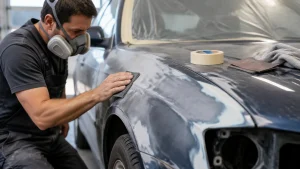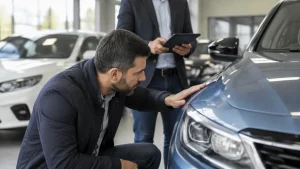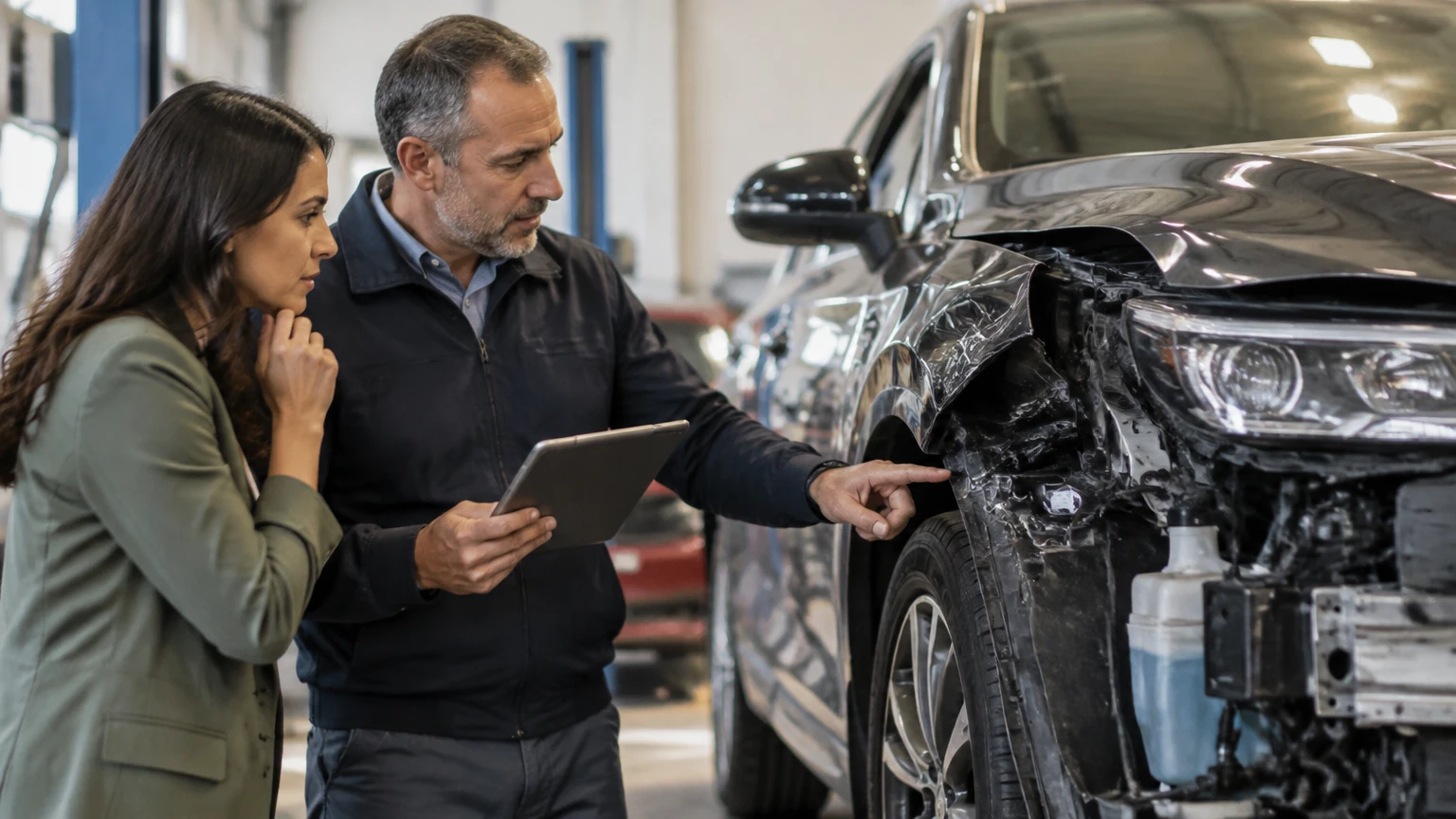
Insurance may cover collision repair through your own collision coverage or another driver’s property-damage liability coverage. Your policy pays for your vehicle after a covered crash, minus your deductible, while the at-fault driver’s insurer generally pays without your deductible. Liability-only insurance does not repair your vehicle after an accident you caused.
Key Facts at a Glance
- Collision coverage repairs or replaces your vehicle after a covered impact, regardless of who caused the crash, subject to policy limits and a deductible.
- Property-damage liability pays for another person’s vehicle when you are legally responsible, but it does not repair your own vehicle.
- Comprehensive coverage usually excludes ordinary crashes and instead covers events such as hail, theft, fire, and many animal impacts.
- A typical collision deductible is $250-$1,000, although policies may offer higher or lower amounts.
- Moderate collision repairs commonly cost $2,500-$5,500, while airbags, structural damage, and advanced sensors can push costs above $10,000.
- A total-loss settlement is based on the vehicle’s actual cash value, not automatically on the remaining loan balance or the cost of a replacement vehicle.
What Does Collision Coverage Pay For?
Collision coverage pays to repair or replace your insured vehicle after contact with another vehicle or object, or after a rollover. Covered examples include striking a guardrail, tree, parking barrier, or pothole. The claim normally remains subject to your deductible and the policy’s actual cash value limit.
Collision coverage is first-party insurance. That means you claim against your own insurer even when another driver caused the accident. Your insurer may later recover its payment from the responsible driver’s carrier through subrogation, but that recovery happens between insurers and does not usually delay your repair.
Collision coverage does not automatically pay every expense connected with a crash. Medical bills, damage to another person’s car, personal belongings, rental vehicles, and loan shortfalls may require separate coverage or endorsements.
Does collision coverage pay when you are at fault?
Yes. Collision coverage generally pays for your covered vehicle after an at-fault crash, minus the selected deductible. Fault determines whether another driver’s liability insurer should reimburse you, but collision coverage is designed to protect your vehicle without requiring a successful liability dispute first.
For example, assume repairs total $6,200 and your collision deductible is $750. Your insurer may approve $5,450, subject to policy terms, while you pay $750. If a second driver was also responsible, your insurer may later seek reimbursement and possibly recover some or all of your deductible.
Collision coverage can still be denied for exclusions such as intentional damage, racing, an excluded driver, policy fraud, or unpaid premiums. Coverage also cannot exceed the vehicle’s value when repair is no longer economical under the applicable total-loss rules.
What Does Liability Insurance Pay?
Property-damage liability insurance pays for damage you cause to another person’s vehicle or property. It does not pay to repair your own vehicle after an accident for which you are responsible. This distinction makes the phrase “full coverage” unreliable because the phrase has no uniform legal policy definition.
| Coverage | Typical covered event | Vehicle receiving payment | Typical deductible |
|---|---|---|---|
| Collision | Crash with vehicle, object, or pothole | Your vehicle | $250-$1,000 |
| Property-damage liability | Damage you cause to another vehicle | Other driver’s vehicle | $0 |
| Comprehensive | Hail, theft, fire, animal, falling object | Your vehicle | $100-$500 |
| Uninsured-motorist property damage | Qualified damage caused by uninsured driver or hit-and-run | Your vehicle | $0-$500 |
Liability limits matter. A policy with $25,000 in property-damage liability may not cover a $42,000 vehicle and a damaged fence from the same accident. You may become personally responsible for amounts above the available limit, depending on state law and the facts.
How do collision and comprehensive differ?
Collision coverage responds to impact-related losses, while comprehensive coverage responds to specified non-collision losses. A car striking a deer may be covered under comprehensive in many policies, but swerving to avoid the deer and hitting a tree is commonly treated as a collision claim.
| Damage event | Usually classified as | Common coverage | Example deductible |
|---|---|---|---|
| Rear-end crash | Collision | Collision | $500 |
| Backing into a post | Collision | Collision | $500 |
| Hail damage | Non-collision | Comprehensive | $250 |
| Vehicle theft | Non-collision | Comprehensive | $250 |
| Deer impact | Usually non-collision | Comprehensive | $250 |
| Swerving into a barrier | Collision | Collision | $500 |
Policy wording controls. Some states and insurers classify animal incidents differently, so the declarations page and loss definitions deserve review before relying on a verbal description.
How Do You File a Collision Repair Claim?
A collision repair claim usually involves seven stages: preserve evidence, report the loss, verify coverage, obtain an inspection, authorize repairs, handle supplements, and settle payment. The fastest path depends on complete documentation and whether fault or coverage remains disputed.
Step 1: Document the accident scene
Photograph every damaged area, both vehicles, license plates, road markings, traffic controls, debris, and the surrounding approach. Record the time, location, weather, witnesses, police agency, and other driver’s insurance information.
Do not move an unsafe vehicle merely to obtain better photographs. Call emergency services when injuries, blocked traffic, suspected impairment, or significant property damage makes a police response appropriate.
Step 2: Report the loss promptly
Notify your insurer through its claims line or application. Provide a factual account without guessing about speed, fault, or hidden damage. A police report, witness contact, dashcam file, repair invoice, and photographs can become important if accounts conflict.
A delayed report does not automatically eliminate coverage, but delay can make evidence harder to preserve and may violate policy duties. Follow the notice requirement in your policy.
Step 3: Confirm the applicable coverage
Ask the adjuster to identify the coverage being used, the deductible, the claim number, and any applicable limits. Also ask whether rental reimbursement, towing, storage, glass, gap, or uninsured-motorist property-damage coverage applies.
You can pursue the other driver’s liability insurer when that driver appears responsible. Using your collision coverage may provide faster repair access, although you may initially pay the deductible while your insurer investigates recovery.
Step 4: Obtain a complete estimate
A photo estimate is useful for triage, but it cannot reliably reveal bent rails, crushed absorbers, wiring damage, suspension misalignment, water intrusion, or sensor damage. Request a physical inspection when the vehicle has structural, wheel, restraint-system, or ADAS damage.
Modern vehicles may require radar, camera, blind-spot, parking-sensor, steering-angle, or occupant-restraint calibration after repairs. A low estimate that omits calibration is not necessarily a complete safe-repair estimate.
Step 5: Select a repair facility
You generally may choose a qualified repair shop rather than accepting an insurer’s direct-repair-program facility. State rules differ regarding steering, guarantees, estimates, and parts disclosure, so ask the state insurance department or read the policy if a carrier pressures you.
A DRP shop may offer streamlined communication and insurer-backed workmanship terms. An independent shop may provide a different repair plan or stronger manufacturer-specific experience. Compare the written scope, warranty, certifications, and repair methods rather than choosing solely on insurer referral.
Step 6: Approve teardown and supplements
The shop may disassemble damaged areas to identify hidden loss. It then sends a supplemental estimate to the insurer. Supplements commonly add labor, clips, brackets, sensors, refinishing materials, alignment, corrosion protection, and calibration.
Do not authorize unrelated work without a written price. Ask the shop to distinguish accident damage from pre-existing wear, maintenance, or unrelated mechanical problems.
Step 7: Review the final invoice
The final invoice should identify insurer payments, your deductible, customer-authorized upgrades, supplemental work, storage charges, and any balance not covered by the claim. Pay the deductible to the repair facility unless your insurer gives different written instructions.
How Much Does Collision Repair Cost?
Typical collision repair costs range from $500-$1,500 for minor cosmetic damage, $2,500-$5,500 for moderate body repairs, and more than $10,000 for structural damage, multiple airbags, or advanced-driver-assistance-system repairs. Vehicle type, labor rates, parts, paint blending, and hidden damage create wide variation.
| Damage level | Typical repair range | Typical shop time | Common cost drivers |
|---|---|---|---|
| Paint scuff or small dent | $500-$1,500 | 2-4 days | Paint blending, bumper replacement |
| Moderate panel damage | $2,500-$5,500 | 1-2 weeks | Panels, refinishing, labor |
| Suspension or cooling damage | $4,000-$9,000 | 1-3 weeks | Alignment, radiators, steering parts |
| Airbag and structural damage | $10,000-$25,000+ | 3-6+ weeks | Frame work, restraints, sensors |
| Luxury or electric vehicle impact | $8,000-$30,000+ | 2-8 weeks | OEM parts, battery isolation, calibration |
These are typical practitioner ranges, not guaranteed prices. Regional labor rates, parts availability, manufacturer procedures, and insurer estimating software can change the total substantially.
When do you pay the deductible?
You pay the deductible when your own collision or comprehensive coverage applies, unless another insurer reimburses it through subrogation or the responsible driver’s liability claim resolves first. A $500 deductible on a $900 repair leaves only $400 potentially payable by the insurer.
| Repair bill | Deductible | Initial insurer payment | Your initial share |
|---|---|---|---|
| $900 | $500 | $400 | $500 |
| $3,000 | $500 | $2,500 | $500 |
| $7,500 | $1,000 | $6,500 | $1,000 |
| $18,000 | $1,000 | $17,000 | $1,000 |
A deductible is not a repair-shop discount. It is the portion of a covered loss that remains your responsibility under the policy.
Can You Choose the Repair Shop?
In many United States jurisdictions, an insurer cannot require you to use a particular body shop, although state law controls the precise rule and an insurer may limit payment to reasonable covered costs. You should confirm local requirements before signing a dispute-sensitive authorization.
Ask the shop these questions:
- Will the shop use OEM, aftermarket, recycled, or remanufactured parts?
- Who warranties the workmanship and parts?
- Will the shop perform required calibrations and provide documentation?
- Does the estimate include corrosion protection, alignment, scans, and paint blending?
- Who communicates supplements to the insurer?
- What happens if the insurer refuses a manufacturer repair procedure?
A carrier’s preferred shop can be convenient, but convenience does not establish technical superiority. For a vehicle with aluminum construction, extensive ADAS equipment, hybrid systems, or a manufacturer repair network, repair capability should carry more weight than referral status.
Which Parts Will Insurance Approve?
Insurers may estimate aftermarket, recycled, or remanufactured parts when the policy and state rules permit them. OEM parts may be required by policy endorsement, manufacturer repair guidance, vehicle age rules, safety considerations, or a negotiated supplement, but they are not automatically guaranteed by every collision policy.
| Part category | Typical source | Potential advantage | Common limitation |
|---|---|---|---|
| OEM new | Vehicle manufacturer | Exact design and fit specification | Highest price, possible delay |
| Certified aftermarket | Alternative manufacturer | Lower price, broader availability | Fit or finish may vary |
| Recycled OEM | Salvage vehicle | Original design at lower cost | Color, mileage, availability |
| Remanufactured | Rebuilt supplier | Lower price for selected components | Not suitable for every body part |
Ask for the exact policy language and written estimate. A shop should not quietly substitute a cheaper part when the estimate, warranty, safety procedure, or customer authorization says otherwise.
When Does a Damaged Car Become a Total Loss?
An insurer declares a total loss when repairing the vehicle is uneconomical under the applicable state formula or when the projected repair and related costs approach the vehicle’s actual cash value. A 70%-80% repair-to-value ratio is a common planning range, but states and insurers use different thresholds and methods.
Actual cash value reflects the vehicle’s pre-loss market value, adjusted for mileage, condition, equipment, and comparable local vehicles. It is not the original purchase price, replacement cost, or loan payoff.
If your vehicle is totaled, review:
- Comparable listings with similar trim, mileage, options, and location.
- The insurer’s condition adjustments and valuation report.
- Sales tax, title, registration, and transfer fees where recoverable.
- Prior damage deductions and whether they were applied correctly.
- The salvage deduction if you retain the vehicle.
- The remaining loan balance and any gap insurance.
Gap insurance may cover the difference between the insurer’s settlement and the finance balance, subject to exclusions and limits. It does not usually increase the vehicle’s market value.
What Covers Uninsured Drivers and Hit-and-Runs?
Uninsured-motorist property-damage coverage may pay for vehicle damage caused by an uninsured driver or qualifying hit-and-run, but availability, deductibles, exclusions, and limits vary by state. Collision coverage is the broader fallback when UMPD is unavailable or does not apply.
Report a hit-and-run promptly, preserve video and witness details, and obtain a police report when required. A carrier may deny or restrict a claim if the facts do not establish physical contact, the vehicle cannot be identified, or the policy imposes specific reporting conditions.
Underinsured-motorist property-damage coverage may help when the responsible driver has insurance but insufficient property-damage limits. In other cases, your collision coverage may pay first, followed by possible recovery from the at-fault driver’s insurer.
Can a Collision Claim Raise Your Premium?
A collision claim can raise premiums at renewal, but the outcome depends on state law, insurer rating rules, claim history, fault, severity, and available accident-forgiveness protection. A not-at-fault claim can still affect underwriting in some markets, although many jurisdictions restrict rating practices.
Before filing a very small claim, compare the expected payment with the deductible and possible long-term premium effect. Do not avoid reporting a serious loss merely to protect a discount, because policy conditions may require prompt notice and cooperation.
An insurer may also cancel or decline renewal for reasons governed by state law. Ask whether the policy includes accident forgiveness, whether the event will be chargeable, and how long the claim remains in the insurer’s rating history.
What Should You Do When the Insurer and Shop Disagree?
Request a written, line-by-line comparison of the insurer estimate and the shop estimate. The disagreement should identify the repair operation, labor rate, part type, procedure, calibration, or damage item at issue rather than remaining a verbal argument.
Useful escalation steps include:
- Ask the shop for manufacturer repair procedures and photographs.
- Ask the adjuster for the policy or state basis for refusing an item.
- Request a reinspection or supervisor review.
- Preserve all estimates, invoices, emails, and recorded approvals.
- Use the policy appraisal clause for eligible valuation disputes.
- Contact the state department of insurance for regulatory guidance.
- Consult a lawyer when injuries, bad-faith conduct, major coverage limits, or litigation are involved.
An appraisal clause usually addresses the amount of a covered loss, not whether the policy covers the loss. That distinction prevents many unsuccessful appraisal demands.
How Do Different Drivers Choose Coverage?
Coverage decisions depend on vehicle value, financing, emergency savings, driving exposure, and tolerance for a large unexpected bill. No single deductible or policy combination is best for every driver.
| Driver situation | Usually valuable coverage | Practical deductible | Main reason |
|---|---|---|---|
| Vehicle worth under $5,000 | Liability, possibly comprehensive | $500 or less | Collision payout may be limited by ACV |
| New financed vehicle | Collision, comprehensive, gap | $500-$1,000 | Protects lender interest and loan balance |
| Luxury or sensor-heavy vehicle | Collision, OEM endorsement, rental | $500-$1,000 | Parts and calibration costs are high |
| Limited emergency savings | Collision, rental reimbursement | $250-$500 | Reduces immediate repair burden |
| High-mileage paid-off vehicle | Liability, selective physical damage | $500-$1,000 | Premium may approach practical benefit |
For an older vehicle, compare annual collision premiums plus the deductible with the vehicle’s actual cash value. Dropping collision coverage does not make sense solely because the car is old, but it may make sense when you can replace the vehicle and accept the loss.
Rental reimbursement pays according to a daily and maximum limit, such as $40 per day for 30 days. It does not automatically cover every day of a repair delay, storage dispute, or parts shortage.
Expert Rules That Prevent Expensive Mistakes
A photo estimate is a starting point, not a safe-repair diagnosis. A bumper photograph cannot reveal crushed reinforcement, broken mounting points, or radar misalignment. Physical teardown and post-repair scans matter more on newer vehicles.
A low deductible does not guarantee lower total cost. Paying $250 more per policy term to reduce a deductible from $1,000 to $250 may be poor value if you rarely file claims, but it can be sensible when a $1,000 emergency bill would disrupt essential finances.
A total-loss settlement can be challenged with evidence, not sentiment. Comparable listings, optional equipment, mileage corrections, and documented condition provide stronger support than the vehicle’s purchase price or emotional value.
Frequently Asked Questions
Does insurance cover cosmetic damage without a collision?
Collision coverage may cover cosmetic damage caused by a covered impact, subject to the deductible. Comprehensive coverage may cover cosmetic damage from hail, vandalism, or falling objects. Normal wear, neglected paint, rust, and pre-existing damage generally do not qualify as an insured collision loss.
Does insurance cover repairs after a pothole?
Collision coverage commonly covers vehicle damage caused by hitting a pothole, minus the deductible. Tire and wheel damage may be included when caused by the same impact, but coverage depends on policy terms. Some municipalities also accept separate roadway-damage claims, although reimbursement rules vary.
Can I repair my car before the insurance inspection?
You should usually photograph the damage and obtain insurer approval or an inspection before permanent repairs. Emergency work that prevents further damage, such as towing or temporary weather protection, may be reasonable, but keep receipts and avoid destroying evidence needed to evaluate the claim.
Does insurance pay for diminished value?
Collision repair coverage pays for covered physical damage, not automatically for the reduction in resale value after a repaired accident. Some states permit diminished-value claims against an at-fault driver’s liability policy, while first-party policies often exclude or limit them.
What happens if the other driver has no insurance?
You may use uninsured-motorist property-damage coverage, collision coverage, or pursue the driver personally, depending on state law and policy terms. A police report, witness evidence, vehicle identification, and prompt notice are often important for a hit-and-run or uninsured-driver claim.
Should you file a claim for a repair below the deductible?
A repair bill below your deductible normally produces no payment under your collision policy. You may still need to report the incident under policy terms, particularly if another person or vehicle is involved. Compare the deductible, possible hidden damage, and legal reporting duties before deciding.
The Bottom Line
Whether insurance covers collision repair depends on the coverage involved, the accident facts, fault allocation, policy exclusions, deductible, and vehicle value. Collision coverage usually repairs your car after a covered impact, liability coverage pays for damage you cause to others, and comprehensive coverage handles specified non-collision events. Check the declarations page, document the loss, obtain a complete estimate, and compare the settlement with the vehicle’s actual cash value before authorizing repairs.