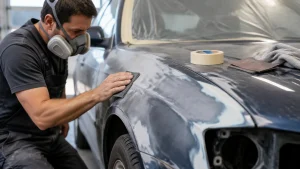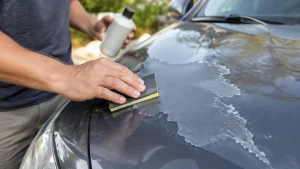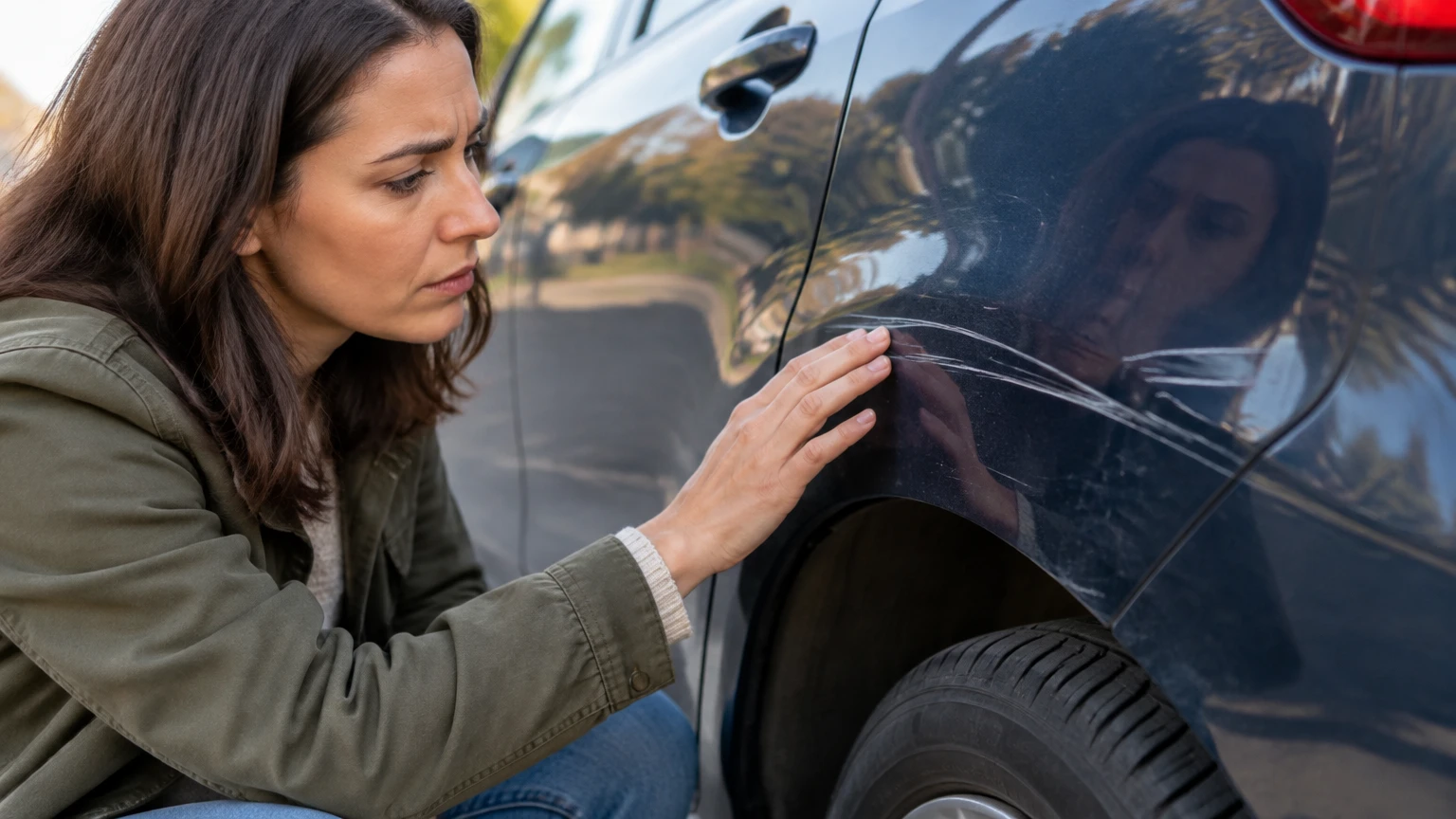
Car insurance can cover paint scratches when a covered, sudden event caused them, but coverage depends on the policy and the damage’s cause. Comprehensive insurance generally covers vandalism, hail, falling objects, and animals; collision insurance generally covers impact-related scrapes. Liability-only insurance does not repair scratches to your own vehicle.
Key Facts at a Glance
- Liability insurance pays for damage you cause to another person’s vehicle, not ordinary scratches on your own car.
- Comprehensive coverage can cover vandalism, including keying, when the policy includes comprehensive protection.
- Collision coverage can cover paint damage caused by hitting another vehicle, object, tree, pole, or guardrail.
- A claim normally pays only the covered amount above the applicable deductible.
- Typical professional scratch repairs range from about $150 for light clear-coat damage to $3,500 or more for multiple deep panels.
- Policy wording, state law, fault, prior damage, and the incident date can change the result.
Does Basic Car Insurance Cover Paint Scratches?
Basic liability insurance does not cover paint scratches on the policyholder’s vehicle. Liability coverage pays another party when the insured driver is legally responsible for bodily injury or property damage, so it cannot fund repairs to the insured car after an unexplained scrape, parking mistake, or act of vandalism.
A policy described as “full coverage” usually combines liability, collision, and comprehensive insurance, but “full coverage” is not a standardized insurance product. The declarations page is the reliable source. Look for comprehensive and collision limits, deductibles, exclusions, and any uninsured-motorist property-damage endorsement.
Paint damage becomes an insurance issue only after two questions are answered:
- What caused the damage?
- Which policy coverage responds to that cause?
An insurer may deny a scratch claim when the damage is gradual, pre-existing, cosmetic wear, excluded by the contract, or below the deductible. A scratch caused by a covered event can qualify even when the repair itself is cosmetic.
Which Insurance Coverage Pays for Paint Damage?
Comprehensive coverage pays for non-collision events, collision coverage pays for impact events, and uninsured-motorist property-damage coverage may pay for certain hit-and-run losses. The same visible scratch can therefore receive different treatment depending on whether a vandal, driver, tree branch, or the policyholder caused it.
| Cause of paint damage | Likely coverage | Typical deductible or limitation |
|---|---|---|
| Keying or deliberate vandalism | Comprehensive | Comprehensive deductible, often $250-$1,000 |
| Hail, falling branch, or animal contact | Comprehensive | Comprehensive deductible, policy exclusions apply |
| Scraping a pole while parking | Collision | Collision deductible, often $500-$1,500 |
| Sideswiping another vehicle | Collision or at-fault liability | Own collision deductible; third-party fault rules |
| Hit-and-run while parked | UMPD or collision | State and policy dependent; police report often required |
| Old oxidation or repeated washing marks | Usually no coverage | Maintenance and wear exclusions |
| Unknown damage with no covered event | Often no coverage | Causation cannot be established |
When Does Comprehensive Insurance Cover Scratches?
Comprehensive insurance can cover scratches caused by vandalism, hail, falling objects, animals, or other non-collision perils listed in the policy. A keyed door in a parking lot is a standard comprehensive scenario, provided the damage was not present before the policy began and the deductible does not exceed the repair cost.
Comprehensive coverage is not a general cosmetic-maintenance plan. It normally excludes ordinary deterioration, rust from neglect, faded paint, repeated minor abrasion, and damage that existed before the loss. A police report may be required for vandalism, although the exact requirement depends on the insurer, state, and policy.
When Does Collision Insurance Cover Scratches?
Collision insurance can cover scratches caused by the vehicle striking another vehicle or object, regardless of whether the object was a pole, wall, tree, fence, curb, or guardrail. Collision coverage commonly applies when a driver scrapes a pillar while parking or sideswipes a barrier.
Collision claims usually carry a separate deductible from comprehensive claims. A driver who hits a stationary object may owe a $500 collision deductible even if the visible damage is limited to paint. A third-party driver who caused the accident might instead be pursued under that driver’s property-damage liability coverage.
Can Uninsured-Motorist Coverage Pay for a Hit-and-Run?
Uninsured-motorist property-damage coverage may pay for scratches caused by a driver who hits the vehicle and flees, but availability and rules differ substantially by state. Some states do not offer UMPD, some require a police report, and some apply a separate deductible or require physical contact between vehicles.
Collision coverage is often the more predictable route when it exists, although the collision deductible may be higher. Record the location, time, witness details, security-camera information, and vehicle fragments before moving the vehicle if safe.
How Much Does Scratch Repair Cost?
Typical professional scratch repair costs range from $150-$300 for a superficial clear-coat mark and $1,500-$3,500 or more for deep damage across several panels. Actual pricing depends on paint depth, panel count, color formulation, body-shop labor rates, blending requirements, and whether the metal or plastic substrate is damaged.
| Damage type | Typical repair price | Typical shop time | Common method |
|---|---|---|---|
| Transfer mark or light scuff | $75-$200 | 1-2 hours | Cleaning, solvent, polishing |
| Clear-coat scratch | $150-$300 | 1-3 hours | Wet sanding, compound, polish |
| Primer-visible scratch | $300-$900 | 1-2 days | Sanding, primer, paint, clear coat |
| Bare-metal door scratch | $500-$1,500 | 2-4 days | Corrosion control and panel refinishing |
| Deep scratches across multiple panels | $1,500-$3,500+ | 2-5 business days | Blending and multi-panel repaint |
| Matte, tri-coat, or specialty finish | $800-$4,000+ | 3-7 business days | Specialized color matching |
These figures are typical consumer-market ranges, not guaranteed estimates. A luxury vehicle with pearl, matte, or tri-coat paint can cost substantially more because a repairer may need to blend adjacent panels. A plastic bumper can avoid rust but still require removal, preparation, and recalibration of sensors.
How Can You Tell How Deep a Scratch Is?
A scratch that disappears when wet may be confined to the clear coat, while a mark showing primer, bare metal, or a contrasting substrate is deeper. Running a clean fingernail lightly across the mark can provide a rough indication, but it cannot replace a professional inspection.
| Visible sign | Probable layer | Immediate concern |
|---|---|---|
| Paint transfer from another object | Surface contamination | Usually cosmetic |
| White or hazy line that catches no nail | Clear coat | Polishing may work |
| Body-color paint missing | Color coat | Requires refinishing |
| Gray, white, or black substrate visible | Primer or plastic | Water intrusion or appearance |
| Shiny steel or orange discoloration | Bare metal | Rust prevention is urgent |
Do not repeatedly polish a deep scratch. Abrasive compound removes clear coat and cannot recreate missing color paint. If bare metal is visible, temporary touch-up paint can limit exposure, but a body shop should complete the repair for a uniform finish.
Should You File an Insurance Claim or Pay Cash?
Paying cash is usually sensible when the repair estimate is below or only slightly above the deductible; filing is more defensible when covered damage substantially exceeds the deductible. The decision also depends on claim history, renewal risk, fault, lease obligations, and whether the damage may contain hidden repair costs.
| Example repair estimate | Deductible | Insurance payment before limits | Practical choice |
|---|---|---|---|
| $250 | $500 | $0 | Pay cash |
| $600 | $500 | $100 | Usually pay cash |
| $1,200 | $500 | $700 | Compare rate and claim effects |
| $2,800 | $1,000 | $1,800 | Claim may be reasonable |
| $4,500 | $500 | $4,000 | Claim often makes financial sense |
The basic calculation is:
Potential insurer payment = covered repair cost – deductible
The calculation is incomplete if the claim could affect premiums. The Insurance Information Institute notes that claim effects vary by insurer, state, loss type, and prior history. Comprehensive claims are often rated differently from at-fault collision claims, but no universal “no-rate-increase” rule exists.
A claim can also create an insurance-loss record. The Comprehensive Loss Underwriting Exchange, commonly called CLUE, is operated by LexisNexis Risk Solutions and may contain reported property-loss information used by insurers, subject to applicable consumer-reporting rules. Ask whether a payment request or formal claim will be recorded before providing extensive details, but answer all questions truthfully.
Why Can a Small Claim Cost More Than It Saves?
A $100 payment above the deductible may not justify a claim if renewal pricing, eligibility, or future underwriting changes create a larger financial consequence. The effect cannot be predicted from the repair bill alone because insurers use different rating plans and jurisdictions regulate insurance pricing differently.
Do not misrepresent the cause to move a loss from collision to comprehensive. Saying a self-inflicted parking scrape was vandalism can constitute insurance fraud, void coverage, and create more serious consequences than a premium increase.
How Do You File a Paint-Scratch Claim?
File a scratch claim by preserving evidence, identifying the cause, checking the deductible, obtaining an estimate, and notifying the insurer within the policy’s required time. A six-step process reduces disputes about when and how the damage occurred.
- Photograph the entire vehicle. Take daylight images, close-ups, panel boundaries, the odometer, location, and surrounding objects. Keep original files with metadata.
- Write down the incident. Record the date, approximate time, place, weather, witnesses, suspected cause, and whether the vehicle was moved.
- Make a police report when appropriate. Report vandalism, hit-and-run, theft-related damage, or suspicious conduct when local rules or the insurer require it.
- Check the declarations page. Confirm comprehensive, collision, UMPD, deductibles, exclusions, and any rental or repair-shop provisions.
- Obtain a written estimate. Ask a reputable body shop whether the mark is polishable, requires a spot repair, or requires panel blending.
- Notify the insurer promptly. Submit photos, the report number, estimate, registration, and truthful incident details. The adjuster may inspect the vehicle before repairs.
Do not sand, repaint, wash away transfer material, or authorize major repairs before the insurer confirms its inspection requirements. Emergency rust prevention is reasonable, but retain receipts and photographs.
How Long Do You Have to Report Scratch Damage?
Many policies require prompt notice, while practical claim-reporting windows commonly range from 30-90 days; the actual deadline comes from the contract and applicable state law. Delayed reporting can make causation harder to prove, especially when the vehicle accumulates additional marks or rust.
Late notice does not automatically eliminate every claim. The insurer may ask why reporting was delayed and whether the delay prevented inspection. Read the notice-of-loss clause rather than relying on a generic 30-day assumption.
What Happens if the Scratch Was Caused by Someone Else?
A driver who damages your parked vehicle and can be identified may be responsible under that driver’s property-damage liability coverage. You can pursue the other insurer, use your own collision or UMPD coverage, or sometimes wait for liability investigation, depending on urgency and state procedure.
Obtain the other driver’s name, insurer, policy number, plate, license, photographs, and witness information. Never agree privately that the damage is minor before an inspection, because bumper mounts, sensors, and panel edges can conceal costs.
If a business, parking facility, or property owner may have security footage, request preservation quickly. Many systems overwrite recordings within days. A documented request is more useful than returning weeks later after the video has disappeared.
Are Old or Unknown Scratches Covered?
Old, pre-existing, and unexplained scratches are commonly excluded because insurance covers a covered loss, not damage that existed before the policy or developed through ordinary use. An insurer may compare prior inspection photographs, vehicle-history records, repair invoices, and the pattern of damage.
Multiple unrelated scratches do not automatically prove vandalism. Vandalism usually has a discernible intentional pattern, while door dings, brush contact, car-wash abrasion, and parking-lot contact can produce different marks. Report only what the evidence supports.
A prior scratch that becomes rusty is generally not transformed into a new covered loss. Comprehensive insurance may cover a newly fallen branch that creates fresh damage, but it does not normally pay to refinish unrelated old defects on the same panel.
What About Leased, New, or Luxury Vehicles?
Leased vehicles should be repaired according to the lessor’s standards before turn-in, while new and luxury vehicles may justify lower deductibles because specialty paint and blending are expensive. The best choice depends on lease inspection rules, vehicle value, remaining term, and the actual estimate.
A lease company can charge for excess wear even when an insurance claim is unavailable. Ask the lessor for its inspection guide, measure scratches against its stated limits, and obtain an inspection before the return date.
For older cars, a $1,000 deductible paired with a $400 scratch makes insurance irrelevant. For a newer vehicle with a $250 comprehensive deductible and $2,000 vandalism damage, a claim may be financially rational, especially when matching a specialty finish is difficult.
Paint protection film and ceramic coatings do not replace insurance. A covered event may damage the film, paint, or both, but the policy’s valuation and exclusions determine which layers are repairable. Keep installation invoices and photographs to establish pre-loss condition.
What Common Mistakes Cause Problems?
The most expensive mistakes involve misidentifying the peril, repairing before inspection, and assuming a low deductible guarantees a worthwhile claim. Scratch claims are easier to evaluate when the owner preserves the original condition and separates evidence from speculation.
- Filing a $600 claim with a $500 deductible: The $100 potential payment may not justify a loss record or future underwriting effect.
- Calling a parking scrape vandalism: The coverage category must match the physical evidence and truthful cause.
- Polishing before photographing: Cleaning can remove transfer evidence that helps identify the event.
- Waiting until rust develops: Delay can make the original damage impossible to distinguish from later deterioration.
- Using touch-up paint on a large panel: A pen can protect exposed metal temporarily but usually produces a visible repair.
- Assuming one deductible applies to everything: Comprehensive and collision deductibles can differ, and UMPD may have separate rules.
A useful practitioner rule is to get an estimate before deciding, unless the policy or police investigation requires immediate notice. The estimate converts an emotional decision into a deductible and repair-cost comparison.
Paint-Scratch Insurance FAQ
Does a zero-dollar comprehensive deductible cover every scratch?
No. A zero-dollar comprehensive deductible removes the deductible for an eligible comprehensive loss, but it does not cover wear, pre-existing damage, collision damage, or an unexplained mark. The cause must still fit the policy’s covered perils, and exclusions remain enforceable.
Will a comprehensive scratch claim increase my premium?
A comprehensive claim can affect future pricing or underwriting, although insurers often treat it differently from an at-fault collision claim. State rules, insurer rating models, claim frequency, prior losses, and the size of the payment determine the practical effect.
Can I wash my car before the adjuster inspects it?
Avoid washing or polishing the damaged area before inspection because cleaning may remove paint transfer, debris, or evidence of the event. Photograph the vehicle first. If road salt or contamination could cause additional damage, ask the insurer how to clean it while preserving evidence.
Does car insurance cover scratches from a car wash?
Coverage depends on the cause and the policy. A mechanical failure or operator error at a commercial car wash may create a claim against the business or its insurer, while ordinary brush marks can be treated as maintenance or wear. Document the vehicle before and after the wash.
Can I claim scratches if I do not know when they happened?
You can notify the insurer, but an unknown date and unknown cause make coverage difficult to establish. The insurer may investigate prior damage, possible vandalism, collision evidence, and policy inception. Do not guess or select a peril solely because it has a lower deductible.
Is touch-up paint better than filing a claim?
Touch-up paint is usually better for a small, inexpensive mark below the deductible, especially on an older vehicle. It is not a substitute for professional refinishing when bare metal, multiple panels, specialty paint, corrosion, or lease-return standards are involved.
The Bottom Line
Does car insurance cover paint scratches? Yes, when a covered event caused the damage and the repair cost meaningfully exceeds the applicable deductible. Comprehensive insurance generally handles vandalism and weather, collision insurance handles impact scrapes, and liability-only insurance does not repair the policyholder’s vehicle. Document the damage, verify the cause, obtain an estimate, and compare the covered payment with possible claim-history and premium consequences before filing.