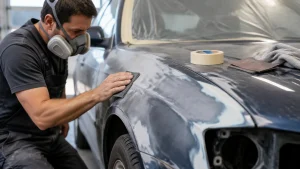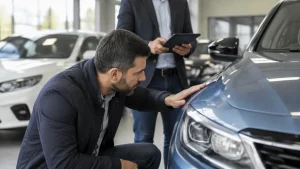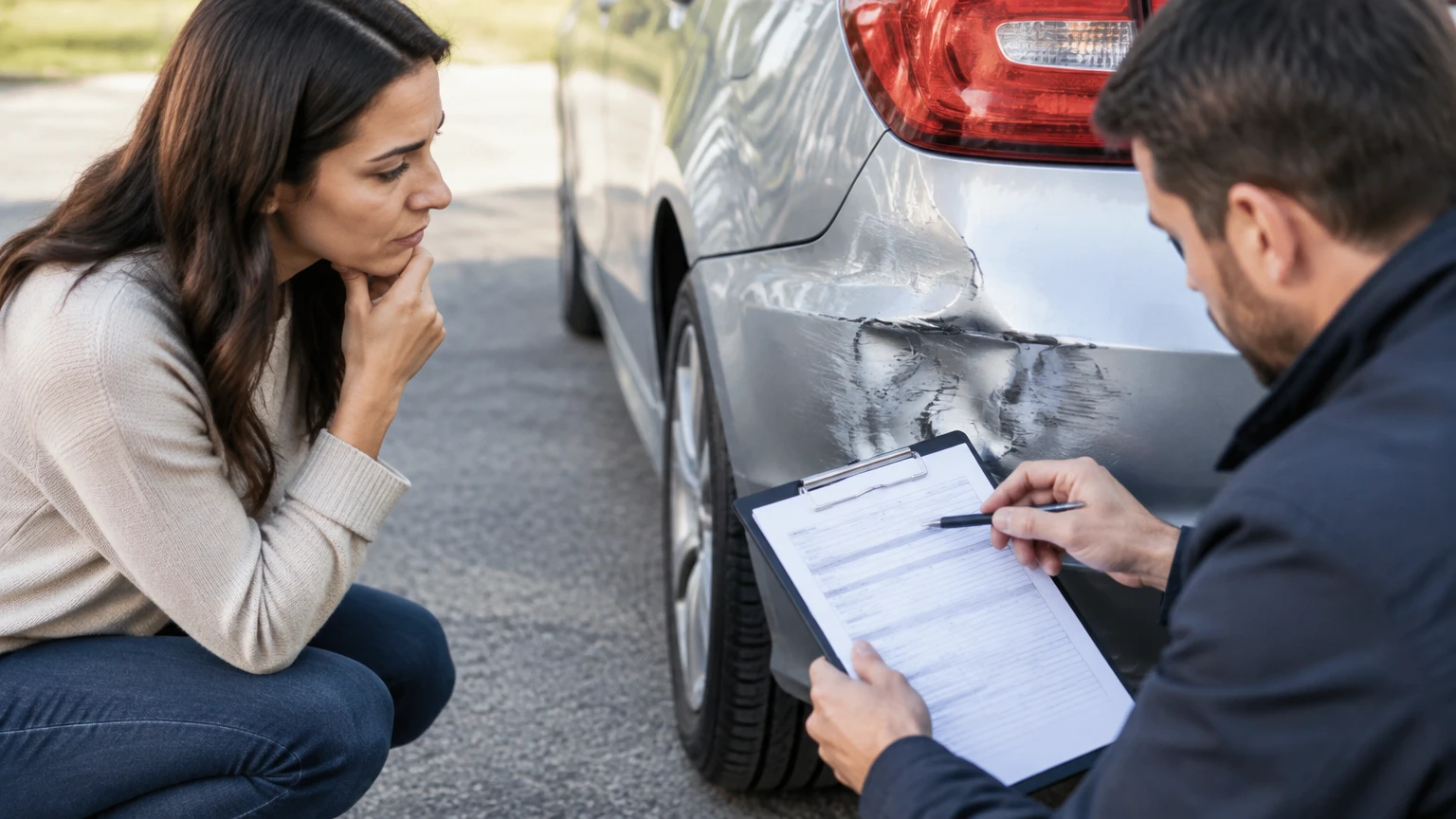
Car insurance can cover bumper repair or replacement, but the result depends on the damage cause, your coverage, fault, deductible, and policy wording. Collision coverage generally pays for your bumper after a crash, comprehensive coverage can apply to vandalism, weather, theft, or animal damage, and liability insurance usually pays only for damage you cause to someone else’s vehicle.
Key Facts at a Glance
- Liability-only insurance normally does not pay to repair the policyholder’s own bumper after an at-fault crash.
- Collision coverage can pay for your bumper after impact, subject to the collision deductible.
- Comprehensive coverage generally applies when a non-collision event, such as vandalism, hail, or an animal strike, damages the bumper.
- A claim usually pays the covered repair cost minus the deductible, not the entire estimate.
- Typical bumper work ranges from about $150 for a minor scuff to more than $3,500 for a sensor-equipped replacement.
- “Bumper-to-bumper” and “zero depreciation” are policy terms with different meanings across countries and insurers.
When Does Car Insurance Cover Bumper Repair?
Car insurance covers bumper repair when a covered, sudden event caused the damage and the applicable policy section is active. The insurer may repair the bumper, replace it, or pay the vehicle’s covered loss after applying the deductible, policy limits, exclusions, and approved parts rules.
The cause controls the coverage route. A collision with another car, wall, pole, or shopping cart usually points to collision coverage. Hail, vandalism, theft, falling objects, and many animal strikes usually point to comprehensive coverage. If another driver caused the crash, that driver’s property-damage liability coverage may pay your repair, depending on liability findings and local law.
Insurance is not a maintenance contract. Sun damage, age-related cracking, sagging plastic, fading paint, and loose trim that gradually deteriorates normally fall outside accidental-loss coverage.
What Determines the Coverage Decision?
Adjusters commonly compare the reported event with the damage pattern, photographs, prior claims, vehicle history, and repair estimate. A fresh impact mark, broken absorber, displaced reinforcement, and damaged mounting tabs provide a different evidence pattern from a long split caused by brittle plastic.
The policy controls the final answer. A declarations page may show collision and comprehensive limits, deductibles, rental reimbursement, glass provisions, OEM-part endorsements, and exclusions that materially change the settlement.
Which Insurance Coverage Pays for the Damage?
Collision, comprehensive, and liability coverage handle different bumper-loss situations. Collision protects the policyholder’s vehicle after an impact, comprehensive addresses specified non-collision events, and liability coverage pays for property damage the insured causes to another person.
| Damage situation | Coverage usually involved | Typical deductible or limit | Who receives payment |
|---|---|---|---|
| You hit a concrete post | Collision | $250-$1,500 deductible | Your body shop or you |
| Another driver rear-ends you | At-fault driver liability or your collision | $0 under some third-party claims, otherwise your collision deductible | Your body shop or you |
| Hail cracks the bumper cover | Comprehensive | $100-$1,000 deductible | Your body shop or you |
| Someone keys or kicks the bumper | Comprehensive | $100-$1,000 deductible | Your body shop or you |
| You damage another driver’s bumper | Your property-damage liability | State or policy limit | The other driver |
| A hit-and-run damages your parked car | Collision, uninsured-motorist property damage, or no coverage | Varies by state and policy | Your body shop or you |
Does Liability Insurance Pay for Your Bumper?
Liability insurance usually does not pay for the policyholder’s own bumper. Property-damage liability pays for another person’s vehicle when the insured driver is legally responsible, while collision coverage is the first-party protection normally used for the insured vehicle.
For example, if you reverse into a parked car, liability may pay the parked car’s repair, but your own bumper requires collision coverage. If another driver causes the crash, you can generally pursue that driver’s property-damage liability insurer or use your own collision coverage and allow your insurer to seek recovery.
State insurance systems differ. No-fault rules primarily address injury claims and do not universally eliminate fault-based property-damage claims.
Does Comprehensive Insurance Cover Bumper Damage?
Comprehensive insurance can cover bumper damage caused by vandalism, hail, falling objects, theft-related damage, fire, flood, or an animal strike. Comprehensive coverage does not normally cover a bumper damaged by hitting another vehicle, curb, wall, or pole.
Coverage still depends on the policy’s exclusions and deductible. A $500 comprehensive deductible makes a $450 vandalism repair a private expense, while a $1,500 covered repair could produce an insurer payment of about $1,000 before any policy-specific adjustment.
Does Collision Insurance Cover a Cracked Bumper?
Collision insurance can cover a cracked bumper when a collision caused the crack. A crack that developed from sunlight, age, repeated flexing, or a poor earlier repair is generally considered wear, deterioration, or a pre-existing condition rather than a covered collision loss.
The shop should inspect the absorber, reinforcement bar, energy-absorbing foam, brackets, wiring, parking sensors, and radar mounts. A bumper cover can appear repairable while hidden tabs or sensor brackets make replacement the safer repair.
How Much Does Bumper Repair Cost?
Typical US bumper repair costs range from $150-$500 for a light scuff and $800-$2,000 for an ordinary full replacement. Luxury vehicles, electric vehicles, painted sensors, radar units, complex grilles, and calibration requirements can push a replacement estimate to $1,500-$3,500 or more.
These are typical market ranges, not guaranteed insurer valuations. Labor rates, paint blending, parts availability, regional prices, and the vehicle’s construction create substantial variation.
| Repair type | Typical total cost | Typical time | Main cost drivers |
|---|---|---|---|
| Light scratch or scuff | $150-$500 | 1-2 days | Sanding, primer, paint blending |
| Small dent or localized plastic repair | $250-$700 | 1-2 days | Plastic type, access, paint |
| Cracked cover with repairable plastic | $500-$1,300 | 2-4 days | Plastic welding, refinishing, hidden tabs |
| Standard bumper-cover replacement | $800-$2,000 | 3-5 days | Part, paint match, labor, clips |
| Luxury or EV replacement | $1,500-$3,500+ | 4-7 days | OEM parts, sensors, grilles, labor |
| Radar or camera calibration | $300-$800 typical | Same day to 2 days | Calibration method, scan tools, alignment |
A preliminary estimate may exclude supplements. Once the bumper comes off, a shop may find broken brackets, crushed foam, bent reinforcement, wiring damage, or radar misalignment. The insurer should review that additional damage before final payment.
Does the Deductible Make a Claim Worthwhile?
A bumper claim is financially useful only when the covered repair estimate materially exceeds the deductible and the future cost of a claim does not outweigh the payment. If a repair costs $900 and the deductible is $750, the theoretical insurer payment is only $150 before other adjustments.
Use this simple comparison:
Potential claim payment = covered repair cost – applicable deductible
| Covered estimate | Deductible | Approximate payment before adjustments | Practical response |
|---|---|---|---|
| $400 | $500 | $0 | Usually pay privately |
| $900 | $500 | $400 | Compare claim history and premium risk |
| $1,800 | $500 | $1,300 | A claim may be reasonable |
| $3,500 | $1,000 | $2,500 | Report promptly and inspect sensors |
The calculation is only a starting point. Ask the insurer whether a coverage inquiry creates a claim record, whether a claim-free discount could change, and whether the loss affects renewal pricing in your jurisdiction.
What Is Bumper-to-Bumper or Zero-Depreciation Coverage?
“Bumper-to-bumper” can mean different products, so the policy endorsement matters more than the label. In some markets, zero-depreciation motor coverage reduces deductions for replaced parts; in the United States, a similar phrase may describe a vehicle service contract rather than an insurance endorsement.
Standard auto insurance does not promise a new part without conditions. The insurer may specify aftermarket, recycled, or refurbished parts, subject to state law, repair standards, and policy language. OEM-part coverage may require an additional endorsement.
| Feature | Standard collision or comprehensive | Zero-depreciation endorsement | Vehicle service contract |
|---|---|---|---|
| Main purpose | Covered accidental loss | Reduces specified depreciation deductions | Mechanical or electrical breakdown |
| Covers crash damage | Usually, with collision | Usually, if collision is included | Usually excluded |
| Covers cosmetic age damage | Usually no | Usually no | Usually no |
| Controls payment | Policy, estimate, deductible | Policy endorsement and deductible | Contract exclusions and service terms |
| Bumper paint and clips | Covered if part of loss | May receive broader part valuation | Often excluded as wear items |
Zero depreciation does not remove the deductible, guarantee OEM parts, cover maintenance, or turn an excluded event into a covered event. It also may have vehicle-age limits, claim limits, or exclusions for consumable items.
How Do You File a Bumper Damage Claim?
A bumper claim usually requires immediate documentation, timely notice, an inspection, repair authorization, and final verification. The process often takes one to seven days for ordinary work, but parts delays and calibration can extend the repair.
Step 1: Photograph the Vehicle and Scene
Take wide photographs showing the vehicle’s position, close photographs of every damaged area, the license plates of involved vehicles, road conditions, and broken parts. Do not wash away paint transfer or discard detached pieces before documentation.
Step 2: Report the Loss Promptly
Notify the insurer within the time stated in the policy or local rules. A 24- to 48-hour report is a practical target, but no universal deadline applies to every policy or jurisdiction.
Provide the date, location, drivers, witnesses, police report number if applicable, and a factual description. Avoid guessing about speed, fault, or hidden damage.
Step 3: Obtain an Inspection and Written Estimate
The insurer may send an adjuster, request photographs, or direct you to an inspection center. Request a written estimate that identifies repair versus replacement, paint operations, labor hours, parts type, deductible, and calibration work.
Step 4: Select a Qualified Repair Facility
In many US states, drivers can choose their repair shop, although insurers may recommend a direct-repair network. Confirm the shop’s warranty, parts policy, diagnostic capability, and experience with your vehicle’s ADAS equipment.
Step 5: Review Supplements Before Approval
Ask the shop to photograph hidden damage after disassembly and submit a supplement. Do not approve a cash settlement based only on an exterior photograph when the bumper contains radar, ultrasonic sensors, cameras, or wiring.
Step 6: Verify the Completed Repair
Before signing acceptance, inspect paint match, panel gaps, parking sensors, warning lights, radar functions, camera views, and trunk or hood alignment. Request scan and calibration documentation when driver-assistance equipment was disturbed.
What Damage Will Insurance Deny?
Insurance commonly denies bumper damage caused by wear, gradual deterioration, excluded use, intentional acts by the insured, or a pre-existing condition. A claim can also be reduced or disputed when the reported event does not explain the observed damage.
Common denial or dispute conditions include:
- Sun-brittled plastic that cracks without an accident.
- A loose or sagging bumper caused by missing fasteners over time.
- Paint peeling from age or an earlier poor refinish.
- Damage that existed before the reported incident.
- Intentional damage or staged loss.
- Unreported commercial, racing, or delivery use where excluded.
- Repairs exceeding the policy limit or vehicle value.
- Damage occurring before coverage began.
A prior repair does not automatically defeat a new claim. The insurer may cover new accident damage while excluding the earlier defect, but the estimate must separate the two conditions.
Can a Bumper Look Fine but Still Need Repair?
A bumper can look cosmetically acceptable while retaining broken mounting tabs, crushed energy absorption material, bent reinforcement, or displaced sensors. Hidden damage matters because the cover may not remain attached during a later impact or at highway speed.
The most important practitioner rule is to inspect behind the cover before choosing paint-only work. A paint repair that ignores a broken radar mount can leave the vehicle visually attractive but electronically unsafe.
Should You Pay Privately or File a Claim?
Pay privately when the damage is clearly below the deductible, no safety system is involved, and the other driver is not disputing responsibility. File or at least notify the insurer when injuries, multiple vehicles, hidden structural damage, possible fraud, a hit-and-run, or significant ADAS damage exists.
| Situation | Usually stronger option | Reason |
|---|---|---|
| $300 scuff, $500 deductible | Private payment | No likely insurance contribution |
| $1,200 crash repair, $500 deductible | Compare both options | Net payment about $700 before claim effects |
| $2,800 repair with radar damage | Insurance claim | Hidden costs and calibration risk |
| Other driver clearly at fault | Third-party claim | Avoid using your own collision deductible if accepted |
| Unclear fault with injuries | Prompt insurer report | Protects evidence and defense rights |
| Older car worth $4,000 with $2,000 bumper estimate | Compare total-loss value | Repair economics may not support replacement |
Do not delay reporting solely to avoid a claim record when a serious loss may later develop. Some policies require prompt notice, and late reporting can impair the investigation.
What Changes for Different Vehicles?
New, luxury, and sensor-equipped vehicles usually justify more careful coverage and repair planning because parts, paint systems, and calibration cost more. Older vehicles may still need comprehensive and collision coverage when replacement value, financing requirements, or personal risk tolerance supports the premium.
New or Luxury Vehicles
Confirm OEM-part coverage, rental limits, diminished-value rules, and calibration requirements. A painted bumper cover may be only one component of a $3,000 repair involving radar, grille shutters, cameras, and wiring.
Electric Vehicles
An electric vehicle bumper may contain sensors, cameras, cooling components, charging-related hardware, or specialized trim. Use a repair facility trained for the vehicle brand, and ask whether manufacturer procedures require post-repair scans or alignment checks.
Older Vehicles
Compare the annual premium and deductible with the vehicle’s actual cash value. Dropping physical-damage coverage can reduce cost, but it transfers the full repair or replacement risk to the owner and may violate a lender’s requirements.
Expert Rules That Prevent Expensive Mistakes
A cosmetic estimate is not a final estimate. Bumper covers hide clips, foam, reinforcement, wiring, and sensor mounts. Insurers commonly authorize supplements after teardown, so the first estimate should not be treated as the complete repair price.
A deductible is not the only claim cost. A small payment can coincide with a lost claim-free discount, changed renewal pricing, or higher future premiums. Ask the insurer about those effects before filing a minor own-damage claim.
Calibration is part of a safe repair, not an optional upgrade. If a bumper-mounted radar or camera moves, the vehicle may require a manufacturer-specified target procedure, alignment, scan, or road test. A warning-light-free dashboard does not prove accurate sensor performance.
“Bumper-to-bumper” is not a universal insurance category. Read the endorsement, exclusions, deductible, parts rules, age limits, and market definition. The phrase alone cannot establish coverage.
Frequently Asked Questions
Does insurance cover bumper repainting without a collision?
Insurance may cover repainting when paint damage resulted from a covered event such as vandalism, a collision, or a covered falling object. Insurance generally does not pay for fading, oxidation, peeling clear coat, or ordinary cosmetic deterioration. The estimate must connect the repainting to the reported event.
Can I claim bumper damage from a parking lot hit-and-run?
You may use collision coverage or, in some states, uninsured-motorist property-damage coverage for a parking-lot hit-and-run. Comprehensive coverage usually does not apply merely because the responsible driver is unknown. Photograph the scene, seek camera footage, file a police report when required, and notify the insurer promptly.
Will insurance pay for aftermarket bumper parts?
The answer depends on the policy, state law, insurer estimate, and available parts. Some policies permit aftermarket or recycled parts of comparable kind and quality, while an OEM-parts endorsement may require original manufacturer components. Ask the shop to identify the part source and warranty in writing.
Can I choose my own body shop for bumper repair?
Many policies and US state laws allow the vehicle owner to choose a repair facility, although an insurer can recommend a network shop. Confirm whether the selected shop will work directly with the insurer, whether you owe any price difference, and what warranty covers paint, parts, and workmanship.
Does a deductible apply when another driver caused the crash?
A deductible may not apply when the at-fault driver’s insurer accepts liability and pays your property-damage claim. Your own collision deductible usually applies if you use your policy first, although your insurer may later recover it through subrogation. Recovery timing and deductible reimbursement vary.
The Bottom Line
Car insurance can cover bumper repair, but Does Car Insurance Cover Bumper Repair? has no universal yes-or-no answer. Collision coverage usually handles impact damage to your vehicle, comprehensive coverage handles specified non-collision events, and liability coverage generally pays for damage you cause to someone else.
Compare the repair estimate with your deductible, claim-history consequences, vehicle value, and hidden sensor costs. Document the damage, report serious losses promptly, use a qualified repair facility, and confirm that all bumper-mounted safety systems were inspected and calibrated before accepting the vehicle.