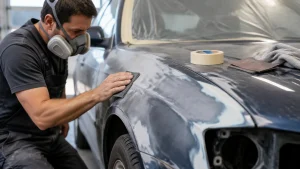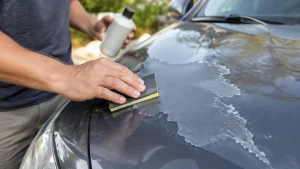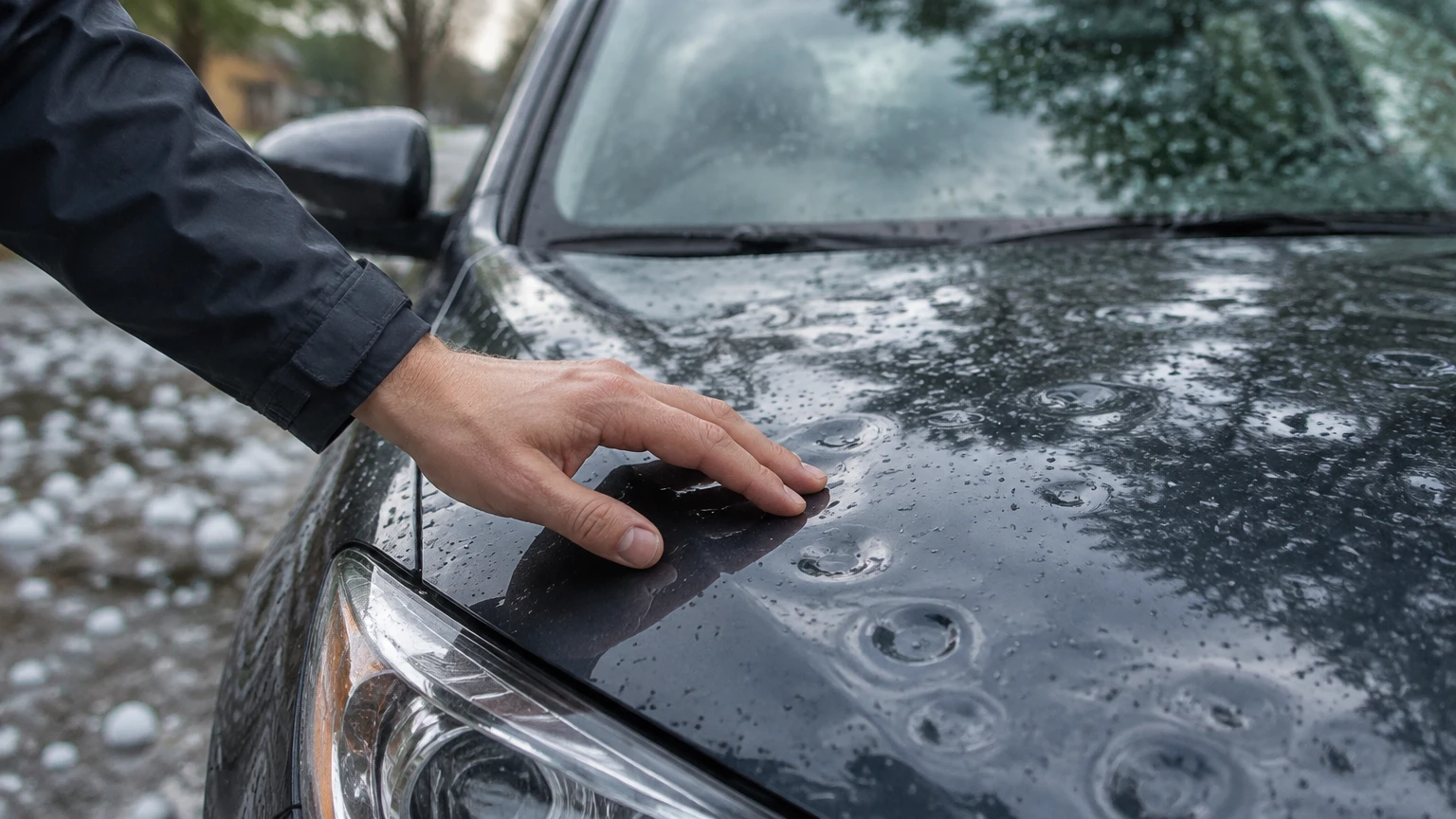
Yes, hail damage can crack car paint, especially when large, sharp, or wind-driven hail forces a metal panel beyond the paint system’s flexibility. Small hail often creates shallow dents without visible coating failure, but impact rings, spider-web cracks, chips, and exposed metal indicate that the clear coat, color coat, primer, or more than one layer has failed.
Key Facts at a Glance
- A hail dent can damage paint even when no bare metal is visible.
- Clear-coat micro-cracks may appear as white lines, dull spots, rings, or spider-web patterns under angled light.
- Paintless Dent Repair is appropriate only when the coating remains intact and bonded to the panel.
- Touch-up paint can temporarily seal a small chip, but it cannot restore cracked or delaminating paint.
- Typical hail-related paint repair costs range from $150 for isolated chips to more than $2,500 for extensive panel replacement and refinishing.
- Exposed steel should receive temporary corrosion protection as soon as possible, ideally the same day it is discovered.
When Does Hail Crack Car Paint?
Hail cracks car paint when impact bends or stretches the body panel faster or farther than the cured coating can tolerate. The highest-risk conditions are hailstones roughly 1.5 inches or larger, sharp irregular stones, high wind speed, brittle or previously repaired paint, and dark panels heated by sunlight before a storm.
Hail size alone does not determine paint failure. A round 1-inch stone striking a warm, flexible hood may leave only a dent, while a smaller angular stone can chip the coating. The panel’s curvature also matters: sharp body creases, door edges, roof rails, and previously filled areas concentrate stress.
How Does Hail Break the Paint Layers?
Automotive paint is a layered system rather than a single film. A typical steel panel may contain corrosion protection, e-coat, primer, basecoat, and clear coat, while aluminum and plastic parts use different preparation materials and primers.
- Impact: The hailstone transfers kinetic energy into the outer panel.
- Panel deformation: The metal bends inward, stretching the coating over the depression.
- Clear-coat fracture: The transparent top layer may develop fine linear or radial cracks.
- Basecoat or primer failure: A harder impact can separate color or primer from the substrate.
- Water entry: Moisture reaches the substrate through chips, cracks, or exposed edges.
- Delamination and corrosion: Heat, ultraviolet exposure, freeze-thaw cycles, and oxidation enlarge the failed area.
A crack does not always appear immediately. Fine fractures may become visible after the panel dries, warms, or receives several cycles of rain and sunlight. Paint thickness, cure quality, age, and prior refinishing change the result.
What Does Hail-Cracked Paint Look Like?
Hail-cracked paint commonly appears as fine white lines, radiating spider-web fractures, a circular impact ring, a chip with a sharp edge, or a dull patch at the bottom of a dent. A clean vehicle and a bright light held at a shallow angle reveal defects that ordinary overhead lighting often hides.
Common Paint Failure Patterns
| Pattern | Typical appearance | Likely failure | Recommended response |
|---|---|---|---|
| Spider webbing | Radial white lines, 2-10 mm around dent | Clear coat or basecoat fracture | Professional inspection |
| Impact ring | Circular line tracing dent perimeter | Coating stretched around impact | Avoid aggressive polishing |
| Chipping | Missing paint, sharp exposed edge, 1-20 mm area | Coating struck or gouged away | Seal exposed substrate |
| Crow’s feet | Parallel or branching linear cracks | Severe stretching or old repair failure | Refinish or replace panel |
| Dull crater | Matte center with no obvious line | Clear coat compression or abrasion | Paint-thickness and adhesion check |
| Bubbling | Raised blister, often brown underneath | Moisture or corrosion below coating | Sanding and corrosion repair |
A white mark is not automatically a crack. Dried polish, wax residue, transferred paint, and a scuff in the clear coat can imitate micro-fracturing. A trained technician compares the mark with surrounding dents, checks adhesion, and uses a paint inspection light rather than relying on color alone.
Can Clear-Coat Damage Be Invisible?
Clear-coat damage can be invisible from standing height while remaining structurally important. A narrow fracture may open only when the panel flexes, and a transparent crack may not contrast against silver, white, or pearl paint.
A paint-safe inspection should include washing the vehicle with automotive shampoo, drying it with a clean microfiber towel, and viewing each dent from multiple angles. A 500-1,000 lumen directional flashlight placed nearly parallel to the surface can reveal rings and branching lines. Do not scrape the area with a blade or press hard with a fingernail, because those actions can enlarge a fragile chip.
How Can You Inspect Hail-Cracked Paint?
Inspect hail-cracked paint after washing and drying the vehicle, then examine every dent under angled light before applying wax, polish, suction tools, or adhesive. Photograph the panel, paint defects, and vehicle identification before cleaning if an insurance claim may be filed.
A Safe Inspection Sequence
- Document the storm damage. Photograph the vehicle outside, including the date if possible, and record the approximate hail size.
- Wash the panel gently. Use automotive soap, a soft wash mitt, and clean water. Avoid a high-pressure nozzle aimed at a loose paint edge.
- Use cross-lighting. Move a directional flashlight around each dent instead of pointing it directly at the panel.
- Inspect edges and creases. Look at hood ribs, roof rails, door frames, mirror caps, and the upper trunk edge.
- Check for substrate exposure. Bare steel may look silver-gray and begin developing orange-brown corrosion; aluminum usually forms a dull oxide rather than red rust.
- Record paint transfer separately. A colored streak from a tree branch or gutter may sit on top of intact clear coat.
- Arrange a professional inspection. Ask for a paint-thickness reading and an adhesion assessment when cracks, previous repairs, or peeling are present.
The fingernail test has limited value. A nail catching on a chip confirms a surface edge, but a nail sliding smoothly does not prove that the paint is sound. A paint meter also has limits because common meters measure thickness, not adhesion or hidden micro-cracking.
Can PDR Fix Paint Cracks?
Paintless Dent Repair cannot repair cracked paint, missing coating, or delamination by itself. PDR may restore the panel shape, but manipulating metal beneath failed paint can enlarge the fracture and leave a flat-looking panel that still requires refinishing.
PDR is a metal-shaping process. A technician accesses the back of the panel and gradually returns the metal to its original position with rods, leverage, or controlled glue-pulling. The method preserves the factory finish only when the paint remains flexible, bonded, and free of significant chips.
Which Hail Repair Method Fits Each Condition?
| Vehicle condition | PDR suitability | Typical repair path | Typical cost per panel |
|---|---|---|---|
| Shallow dent, intact paint | High | Traditional PDR | $100-$600 |
| Deep dent, intact paint, accessible backside | Medium | PDR with extra labor | $300-$900 |
| Cracked clear coat, stable panel | Low alone | Push-to-paint and refinish | $400-$1,000 |
| Multiple chips and stretched paint | Low | Body repair, primer, basecoat, clear coat | $500-$1,500 |
| Severe dents across hood or roof | Low | Panel replacement or extensive bodywork | $800-$2,500+ |
| Rust under a paint failure | None alone | Corrosion removal and refinishing | $700-$2,000+ |
The practical boundary is not dent depth alone. Paint condition, access behind the panel, previous body filler, panel material, and the location of the impact determine whether PDR is safe.
What Is Push-to-Paint Repair?
Push-to-paint repair combines limited dent correction with conventional refinishing. The technician reduces the dent, avoids excessive stretching, fills remaining imperfections with minimal material, sands the surface, applies primer and color, then blends clear coat across the repair area.
This approach is useful when the panel is repairable but the original coating cannot survive full PDR. It usually preserves more original metal than aggressive pulling and can reduce filler thickness. It does not preserve the original paint, however, and a color mismatch remains possible on older vehicles with faded or oxidized panels.
How Much Does Hail Paint Repair Cost?
Hail paint repair typically costs $150-$600 for isolated chips, $400-$1,500 per refinished panel, and $800-$2,500 or more for panel replacement. The final bill depends on the number of dents, paint-layer failure, panel material, vehicle size, paint code, labor rates, and whether adjacent panels need blending.
| Repair scope | Typical parts and labor | Typical time | Main cost driver |
|---|---|---|---|
| Touch-up protection for one chip | $20-$150 | 30 minutes-2 hours | Paint-code accuracy |
| One-panel PDR | $100-$600 | 2-8 hours | Dent count and access |
| Push-to-paint panel | $400-$1,000 | 2-4 days | Bodywork and color blending |
| Conventional repair and respray | $500-$1,500+ | 3-7 days | Filler, primer, booth labor |
| Hood or trunk replacement | $800-$2,500+ | 2-5 days | Part price and paint matching |
| Multi-panel hail claim | $2,000-$10,000+ | 4 days-3 weeks | Total dent count and parts |
These are typical North American consumer ranges, not guaranteed estimates. A metallic tri-coat finish, large SUV hood, aluminum panel, or discontinued paint code can increase labor and blending costs. Local labor rates may also make a two-hour repair materially more expensive in a major metropolitan area than in a rural market.
Is Touch-Up Paint a Real Repair?
Touch-up paint is a temporary protective measure for a small, stable chip, not a structural repair for cracked clear coat or peeling paint. It can reduce moisture entry until a body shop evaluates the vehicle, but it will not flatten a dent, rebond delaminated layers, or stop corrosion already present beneath the coating.
For a small exposed-metal chip, clean and dry the area, remove loose flakes without enlarging the defect, apply the manufacturer’s compatible primer if required, add thin coats of factory-matched paint, and protect it with the recommended clear coat. Avoid household enamel, nail polish, and thick blobs that trap solvent or produce a visible ridge.
Will Comprehensive Insurance Cover Cracked Paint?
Comprehensive auto insurance commonly covers sudden hail damage, including paint cracking and body dents, subject to the policy’s exclusions and deductible. Collision coverage generally applies to impact with another vehicle or object, while comprehensive coverage is the category normally associated with weather events.
Coverage varies by jurisdiction and policy language. Before authorizing repairs, the vehicle owner should:
- Photograph every affected panel and any exposed metal.
- Obtain the claim number and confirm the comprehensive deductible.
- Ask whether the insurer requires a preferred inspection or repair network.
- Request a written estimate that separates PDR, refinishing, blending, and replacement.
- Confirm whether aftermarket or recycled panels affect the repair plan.
- Keep invoices and records of temporary corrosion protection.
A claim may be economically unattractive when the repair estimate is only slightly above the deductible. A $1,200 repair with a $1,000 deductible creates a different decision from a $6,000 repair with the same deductible. Claim history, renewal pricing, state rules, and the vehicle’s value also matter, so an insurer or licensed agent must answer policy-specific questions.
What Happens If Hail-Cracked Paint Is Ignored?
Ignored hail-cracked paint can admit water, allow corrosion on steel, and cause clear-coat or basecoat delamination to spread. Rust may develop within weeks in wet or salty conditions, although the timing depends on exposure, chip depth, humidity, panel construction, and whether the bare area is steel.
Aluminum does not produce the same red rust as steel, but it can corrode and lose coating adhesion. Plastic bumper covers do not rust, yet paint can peel from them when impact or poor previous preparation breaks the bond. A cracked panoramic roof frame or damaged glass also creates a water-leak risk that paint repair alone cannot address.
A temporary response is better than leaving bare metal exposed. Wash away road salt, dry the area, apply a compatible touch-up or corrosion-inhibiting product, and arrange a permanent assessment. Do not seal dirt, standing water, or active rust under a clear film or wax.
Which Hail Damage Mistakes Cause More Damage?
The most expensive hail-repair mistakes are glue-pulling cracked paint, polishing a fractured coating, delaying exposed-metal protection, and approving a repair estimate without checking previous bodywork. Each mistake changes a localized defect into a larger refinishing or corrosion problem.
- Glue pulling on cracked paint: Adhesive can remove surrounding coating along with the dent.
- Aggressive compound or wet sanding: Abrasion may thin the clear coat around an already weak impact.
- Using a suction cup: Vacuum force can lift loose paint and distort a thin panel.
- Parking outside for weeks after exposure: Rain and salt enter chips repeatedly.
- Choosing PDR solely because it is cheaper: A failed finish can require a second visit for bodywork and paint.
- Skipping adjacent-panel inspection: Hail frequently affects roofs, pillars, hood edges, and mirror caps together.
One practitioner rule is especially useful: if a technician sees a paint edge, chip, ring crack, or prior filler, the repair plan should address coating failure before metal cosmetics. A perfectly reshaped dent is not a completed repair when the coating remains open.
Does Hail Affect Aluminum and Plastic Panels Differently?
Hail affects aluminum panels differently from steel because aluminum bends and work-hardens differently, while plastic panels flex and recover rather than forming the same type of permanent dent. Paint failure can occur on all three materials, but repair access, corrosion behavior, and technician technique vary.
| Panel material | Hail response | Paint risk | Common repair limitation |
|---|---|---|---|
| Mild steel | Permanent dent with moderate stretch | Chips, cracks, and red rust | Rust spreads beneath exposed coating |
| High-strength steel | Less movement in some zones | Localized coating fracture | Higher leverage can damage the panel |
| Aluminum | Larger shallow deformation, work hardening | Cracks and oxide-related adhesion loss | Fewer PDR cycles before metal fatigue |
| ABS or polypropylene plastic | Flexing, whitening, or fracture | Peeling and impact chips | Heat and plastic adhesion requirements |
| Fiberglass or composite | Cracking or delamination | Surface fractures and exposed fibers | Often requires composite-specific repair |
Aluminum hail repair should be assigned to a technician equipped for aluminum work. Steel tools, contaminated abrasives, and improper sanding practices can introduce repair complications. Plastic bumper paint also requires compatible adhesion promoter and flexible refinishing materials, so a steel-panel touch-up procedure is not automatically suitable.
Should You Repair Hail Damage Before Selling or Returning a Lease?
Repair hail damage before selling a newer vehicle when the damage is visible, the paint is cracked, or the buyer’s inspection will expose the defect. For a leased vehicle, compare the repair estimate with the lessor’s excess-wear charges and schedule the work before the return inspection.
A professional repair usually improves presentation and reduces concerns about hidden corrosion, but it does not guarantee that the full cost will be recovered in the sale price. A buyer may prefer documented damage repair over an undisclosed claim, while an older vehicle may justify temporary chip protection rather than a complete multi-panel respray.
Lease contracts differ. Some assess dents by diameter, panel location, paint loss, or repair quality; others use an inspection company with its own standards. Obtain the lessor’s written wear guidelines, not a generic dealership opinion, and retain repair documentation.
What Should You Do Immediately After a Hailstorm?
Immediately after a hailstorm, photograph the vehicle, remove loose debris, inspect for exposed metal and water entry, and arrange an insurer or body-shop assessment before attempting dent removal. The priority is preventing secondary damage, not making the panel look temporarily flatter.
Use this short response plan:
- Check for broken glass, sharp metal, and unsafe driving conditions.
- Photograph dents, chips, cracked paint, roof damage, and the surrounding location.
- Cover a small exposed-metal chip only after cleaning and drying it.
- Avoid heat guns, dry ice, glue tabs, suction cups, and polishing compounds.
- Contact the insurer if comprehensive coverage may apply.
- Obtain at least one estimate that identifies paint failure separately from dent repair.
- Ask whether the proposed repair preserves factory corrosion protection.
Do not wash a vehicle with loose paint at a self-service bay using a concentrated spray. High-pressure water can force under an edge and convert a small chip into a lifting section.
How Should Different Vehicle Owners Decide?
A new-car owner should prioritize factory-correct corrosion protection, paint matching, and a documented warranty on refinishing. An older owner should compare repair cost with market value and may reasonably choose temporary protection for minor chips. A leased-vehicle owner should follow the lessor’s return standard rather than relying on personal tolerance for cosmetic damage.
| Owner situation | First priority | Usually reasonable choice | Avoid |
|---|---|---|---|
| New vehicle, cracked clear coat | Factory appearance and adhesion | Push-to-paint or full refinishing | Cosmetic touch-up alone |
| Older, low-value vehicle | Cost control and rust prevention | Targeted sealing or selected repairs | Spending near vehicle value |
| Lease ending within 6 months | Return compliance | Insurer-approved repair before inspection | Waiting for the final week |
| Aluminum hood with many dents | Correct panel technique | Aluminum-capable shop assessment | Repeated amateur leverage |
| Bare steel visible | Corrosion prevention | Immediate temporary seal, then repair | Leaving it through rain or salt |
| Intact paint and shallow dents | Original finish preservation | Qualified PDR | DIY glue pulling |
A shop warranty should specify what is covered, such as peeling, adhesion failure, color mismatch, or workmanship, and for how long. “Lifetime warranty” has little value if it excludes substrate corrosion, pre-existing repairs, or normal environmental damage.
Hail Damage Paint FAQ
Can one-inch hail crack a car’s paint?
One-inch hail can crack paint, but the result is not predictable from diameter alone. Wind direction, stone shape, impact speed, panel temperature, coating age, and previous repairs all affect the outcome. Round stones often dent without coating failure, while angular stones can chip paint at smaller sizes.
Can polishing remove hail-related paint cracks?
Polishing can remove superficial transfer marks and very shallow clear-coat scuffs, but polishing cannot repair a fracture that reaches through the clear coat or color layer. Abrasive polishing may thin the surrounding finish and enlarge the visible defect, so a cracked impact should be inspected before correction work.
How long can hail damage remain before repair?
A sound dent with intact paint can often wait for a scheduled PDR appointment, but exposed steel or a lifting paint edge should be protected immediately. Rain, road salt, ultraviolet exposure, and freeze-thaw cycling accelerate corrosion and delamination, making an initially localized repair more expensive.
Does paint cracking prove that the panel needs replacement?
Paint cracking does not prove that a panel needs replacement. Many cracked panels can be straightened, prepared, primed, blended, and refinished. Replacement becomes more likely when the metal is sharply stretched, heavily perforated with dents, badly corroded, difficult to access, or more expensive to repair than a suitable painted replacement part.
Can hail damage void a vehicle’s paint warranty?
Hail damage is usually treated as an external accident rather than a manufacturing defect, so a factory paint warranty commonly excludes it. Warranty coverage may still apply to unrelated peeling or adhesion failure, but the dealer or manufacturer will distinguish storm impact from defective preparation.
Should I file an insurance claim for a few cracked chips?
File or avoid a claim based on the estimated repair cost, comprehensive deductible, policy impact, and vehicle value. A few chips below or near the deductible may justify immediate touch-up and self-funded repair, while widespread dents and cracked panels usually warrant a formal estimate before deciding.
The Bottom Line
Can hail damage crack car paint? Yes. Hail can fracture clear coat, basecoat, primer, or multiple layers when impact stretches the coating beyond its tolerance, and the damage may remain hidden until angled light reveals it. Inspect after cleaning, protect exposed metal promptly, and choose PDR only when the original finish remains intact.
For cracked, chipped, peeling, or previously repaired paint, a push-to-paint or conventional refinishing plan is more appropriate than PDR alone. Compare the repair estimate with the comprehensive deductible, vehicle value, lease requirements, and risk of corrosion before authorizing work.