Painting a car costs about $500-$1,500 for a basic cosmetic job, $1,500-$5,000 for a standard professional respray, and $5,000-$10,000 or more for premium work. A full restoration or custom finish can exceed $30,000. Labor, surface preparation, vehicle size, paint type, and whether the color changes determine the final estimate.
Key Facts at a Glance
- A standard professional paint job for a typical sedan usually costs $2,000-$5,000.
- Labor and surface preparation commonly represent roughly 70%-80% of a professional paint estimate.
- Painting one bumper, door, or fender typically costs $150-$400, while a hood or roof commonly costs $300-$600.
- A complete color change can add 30%-50% because door jambs, trunk edges, and under-hood areas require additional work.
- Large SUVs, pickup trucks, vans, and long-wheelbase vehicles commonly cost 20%-50% more than compact cars.
- A professional respray commonly takes 3-7 days, while rust repair, disassembly, or custom finishing can extend the job to several weeks.
What Does It Cost to Paint a Car?
A complete car paint job has four practical price bands: $500-$1,500 for basic coverage, $1,500-$5,000 for standard professional work, $5,000-$10,000 or more for premium refinishing, and $10,000-$30,000-plus for custom or concours-quality work. These are typical United States market ranges, not guaranteed quotes.
The lowest price usually means limited disassembly, minimal body repair, inexpensive paint, and little polishing. The highest prices pay for labor-intensive preparation, corrosion treatment, premium coatings, repeated sanding, and painted jambs or interior edges. A shop cannot price a failing clearcoat, rusted quarter panel, and lightly scratched bumper in the same way.
| Service scope | Typical price | Typical time | Usually included |
|---|---|---|---|
| Basic exterior refresh | $500-$1,500 | 1-3 days | Limited sanding, basic masking, economical coating |
| Standard full respray | $1,500-$5,000 | 3-7 days | Two-stage paint, sanding, minor repairs, clearcoat |
| Premium refinish | $5,000-$10,000+ | 1-3 weeks | Extensive disassembly, block sanding, premium materials |
| Custom or restoration finish | $10,000-$30,000+ | 1-3+ months | Bare-metal work, special effects, repeated polishing |
Kelley Blue Book describes automotive painting as a service whose price depends heavily on vehicle condition, paint quality, and the shop performing the work. That aligns with the central buying rule: compare the written scope, not the headline price.
Why Do Paint Estimates Vary So Much?
Automotive paint estimates vary because the visible spraying is only one stage of the job. Technicians must remove contamination, level defects, protect adjacent parts, apply compatible coatings, and allow each layer to cure. A cheap estimate often removes preparation rather than finding a cheaper way to perform the same work.
What Does a Professional Paint Job Include?
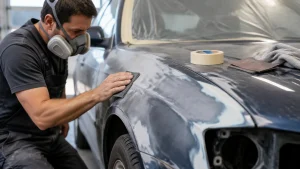
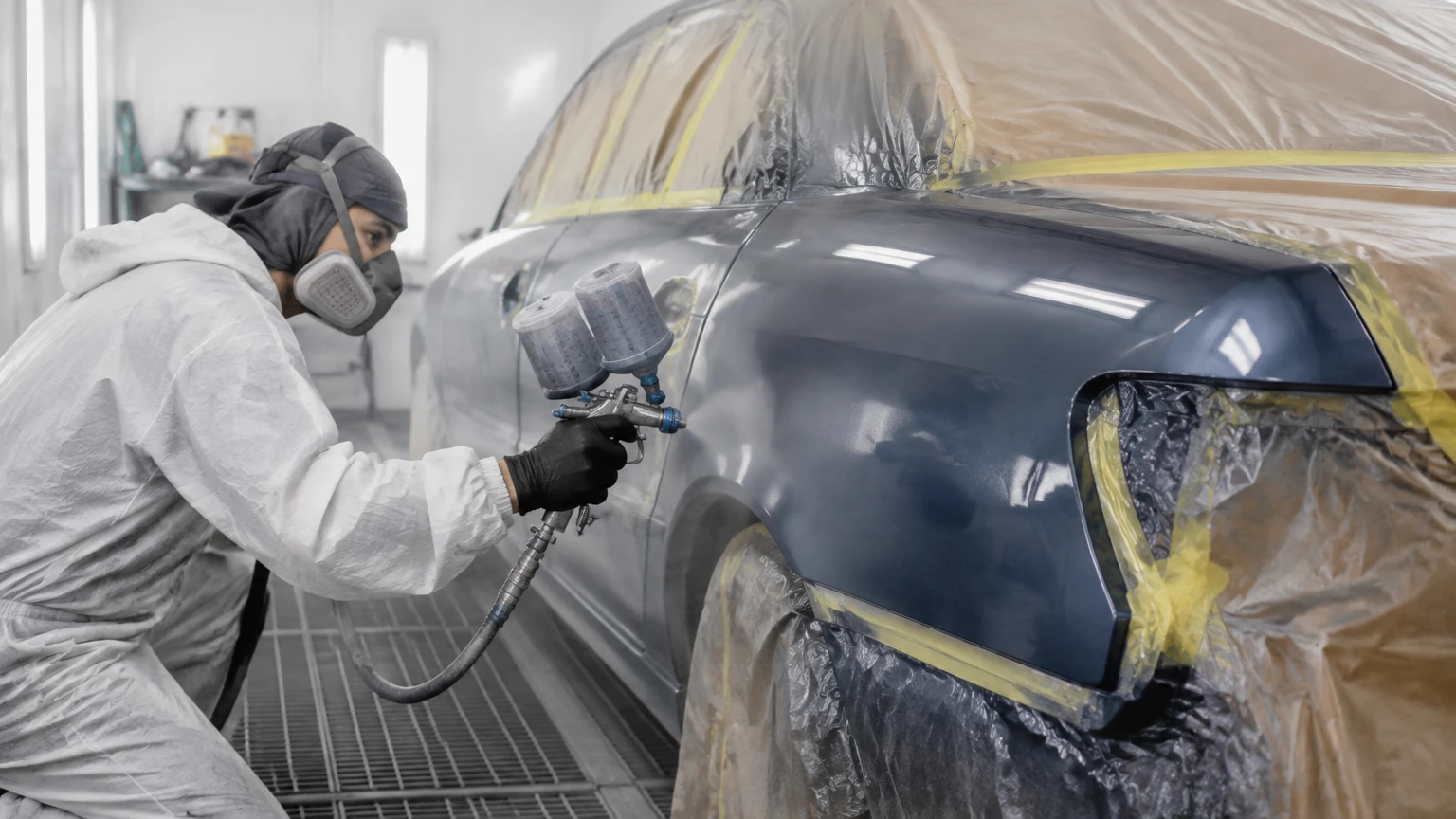
A complete refinish normally includes washing, chemical degreasing, sanding, masking, primer or sealer, color coats, clearcoat, curing, and final inspection. Door handles, lamps, badges, moldings, and bumpers may be removed or masked, and each choice affects labor time.
The paint system typically contains these layers:
- Substrate: Steel, aluminum, galvanized metal, plastic, or composite bodywork.
- Corrosion protection: Factory e-coat or an appropriate epoxy or etch primer on exposed metal.
- Primer surfacer: A fillable layer that creates a uniform surface for sanding.
- Sealer: A barrier that improves adhesion and controls color absorption.
- Basecoat: The pigmented layer containing solid, metallic, pearl, or special-effect color.
- Clearcoat: A transparent protective layer that provides gloss, UV resistance, chemical resistance, and depth.
A technician normally removes wax, silicone, tar, and grease before sanding. Contamination left under the coating can create fish eyes, adhesion loss, or premature peeling.
How Much Does Labor Contribute?
Labor and preparation often account for approximately 70%-80% of a professional estimate. Paint material may cost hundreds of dollars, but removing trim, repairing panels, block-sanding, masking, spraying, curing, and polishing can require dozens of technician hours.
A useful estimate question is, “How many labor hours are included?” A $2,500 quote with 25 hours of documented preparation may be better value than a $1,700 quote with five hours and no written repair allowance. Shops also price labor differently by location, certification, booth equipment, and demand.
How Much Does One Panel Cost?
Painting one panel usually costs $150-$400 for a bumper, door, or fender and $300-$600 for a hood or roof. Small mirrors and handles commonly cost $80-$150 each. Blending adjacent panels can increase the bill because the painter must fade the new color into surrounding paint.
| Part or repair | Typical price | Typical time | Common complication |
|---|---|---|---|
| Mirror cap or handle | $80-$150 | 0.5-1 day | Removal, textured plastic, color matching |
| Door or fender | $150-$400 | 1-2 days | Dent repair, edge blending |
| Bumper cover | $200-$500 | 1-2 days | Plastic repair, sensor hardware |
| Hood or roof | $300-$600 | 1-3 days | Large surface, stone chips, clearcoat failure |
| Quarter panel | $400-$1,000+ | 2-5 days | Rust, wheel-arch repair, blend limitations |
A panel quote should state whether dent repair, primer, clearcoat, blending, and removal of trim are included. A “paint-only” price may leave sanding, plastic repair, or color blending as additional charges.
What Paint Job Tier Fits Your Car?
The correct tier depends on the car’s remaining service life, body condition, viewing distance, and desired finish. A daily commuter often needs corrosion control and consistent color, while a collector vehicle needs straight panels, correct materials, and documented preparation.
| Owner situation | Recommended tier | Typical budget | Reason |
|---|---|---|---|
| Short-term commuter | Basic or limited standard | $800-$2,500 | Controls appearance and surface deterioration |
| Daily driver kept 5-plus years | Standard professional | $2,000-$5,000 | Better adhesion, durability, and repairability |
| Late-model luxury vehicle | Premium refinish | $5,000-$10,000+ | Better color match and panel consistency |
| Classic or show vehicle | Restoration or custom | $10,000-$30,000+ | Detailed disassembly and finish correction |
The cheapest coating is rarely the cheapest ownership option if it peels after two years. Repainting a failing job requires stripping unstable material, so the second repair can cost more than a properly prepared first job.
Does a Color Change Cost More?
A complete color change normally costs 30%-50% more than repainting the car in its original color. Exterior panels can be resprayed without changing hidden areas, but a convincing transformation requires door jambs, trunk openings, fuel-door recesses, hood edges, and sometimes the engine bay.
A same-color respray can conceal the original finish beneath exterior panels. A color change cannot hide the old color around hinges, weatherstripping, or interior edges. Removing doors and glass may improve the result, but each removal adds labor and creates reassembly risks.
A partial color change can be a sensible compromise. For example, changing a silver sedan to dark gray while leaving jambs silver costs less than a factory-style full transformation, but the mismatch becomes visible when doors open.
Which Paint Finish Costs the Most?
Solid gloss paint is usually the least expensive and easiest to repair. Metallic, pearl, tri-coat, matte, and satin finishes cost more because they require more precise application, specialized materials, or difficult refinishing techniques.
| Finish | Typical material impact | Repair difficulty | Practical concern |
|---|---|---|---|
| Solid gloss | Baseline, 0%-10% | Low | Easiest color matching |
| Metallic | 10%-20% higher | Moderate | Flake orientation can vary |
| Pearl or tri-coat | 20%-40% higher | High | Tint and layer count affect match |
| Satin | 20%-40% higher | High | Polishing changes sheen |
| Matte | 25%-50% higher | Very high | Defects cannot be conventionally buffed |
Matte paint is not automatically more durable than gloss paint. Its main drawback is repairability: a scratch or localized defect can require refinishing an entire panel because polishing creates a visible shiny spot.
How Does Vehicle Condition Change the Price?
Vehicle condition changes the price more than color in many estimates. Surface rust, peeling clearcoat, dents, cracked plastic, previous filler, and exposed metal must be stabilized before new paint can perform properly.
Typical additional allowances include:
- Minor rust treatment: $300-$1,000.
- Dent repair: $100-$1,000-plus depending on access and panel replacement.
- Widespread clearcoat failure: $500-$2,000 above a simple respray.
- Plastic bumper repair: $100-$500 before painting.
- Bare-metal restoration: several thousand dollars in labor before final color.
Rust is the important edge case. Paint over active corrosion may look acceptable at pickup but bubble underneath months later. Ask whether the shop will cut out rusted metal, weld replacement steel, or merely sand and seal the affected area. Those are different repairs with different expected lifespans.
Previous body filler also matters. Thick or poorly bonded filler can crack beneath a new coating. A responsible shop may recommend stripping a panel instead of guaranteeing a cosmetic repair over unknown older work.
How Long Does a Paint Job Take?
A basic exterior paint job commonly takes 1-3 days, a standard respray takes 3-7 days, and premium restoration work takes 1-3 weeks or longer. Custom builds can occupy a shop for one to three months because repeated primer, sanding, clearcoat, curing, and polishing cycles require additional time.
A typical professional workflow includes:
- Inspection and estimate: The shop identifies rust, dents, plastic damage, and required blending.
- Disassembly and masking: Technicians remove or protect lamps, badges, handles, trim, glass, tires, and seals.
- Cleaning and degreasing: Solvents remove wax, road film, silicone, grease, and tar.
- Sanding and stripping: Unstable clearcoat is removed, and sound edges are feathered.
- Body repair: Dents are straightened, filler is shaped, and exposed metal receives compatible primer.
- Sealing: Primer surfacer and sealer create a consistent base.
- Spraying: A spray booth receives multiple basecoat and clearcoat passes at manufacturer-specified flash times.
- Curing and correction: The finish cures before technicians color-sand dust nibs and polish the surface.
- Reassembly and inspection: Trim returns to the vehicle, and the shop checks fit, color, gloss, and overspray.
A booth may use heated curing near 60°C, or 140°F, but the exact temperature depends on the product system and manufacturer instructions. Forced heat accelerates curing; it does not make poor preparation acceptable.
What Extra Charges Should You Expect?
Extra charges commonly arise from hidden damage, added disassembly, color blending, sensor calibration, and work outside the original estimate. Written estimates should identify whether taxes, hazardous-material fees, shop supplies, storage, and reassembly are included.
Modern vehicles may contain radar, ultrasonic, or camera-based driver-assistance sensors in or near bumper assemblies. Painting a bumper does not always require recalibration, but removal, replacement, bracket movement, or coating thickness can make calibration necessary. A typical ADAS calibration allowance is $250-$600, depending on the vehicle and procedure.
Other possible additions include:
- Door-jamb painting: $300-$1,500.
- Trunk and hood-edge coverage: $200-$800.
- Trim or glass removal: $300-$2,000.
- Premium color materials: $300-$1,500.
- Paint protection film after curing: $1,500-$5,000.
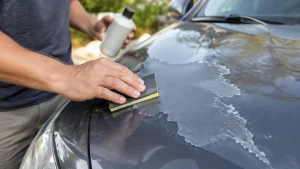
- Ceramic coating after paint has fully cured: $500-$2,000.
Never assume a ceramic coating protects fresh paint immediately. The paint manufacturer’s cure window controls when additional products may be safely applied.
Is Repainting Financially Worthwhile?
Repainting is financially sensible when the body is structurally sound, the mechanical systems are reliable, and the expected repair cost is below the vehicle’s retained value. Repainting is usually poor value when rust, frame damage, transmission problems, or extensive interior wear already make the vehicle uneconomic to keep.
For a $6,000 car, a $4,000 standard respray rarely improves resale value by the full amount. The owner may still choose it for sentimental value, low replacement cost, or long-term use. Classic and collector vehicles are exceptions, because originality, correct color, and documented restoration affect value differently from ordinary used-car economics.
A shop should not promise that a new paint job will eliminate every old defect. New gloss can make waves, panel gaps, and poor bodywork easier to see.
Paint Versus Wrap: Which Is Better?
Professional paint is the better choice for permanent restoration, rust treatment, and maximum longevity. Vinyl wrapping is usually better for reversible color changes on a straight, rust-free vehicle with sound original paint.
| Option | Typical cost | Typical life | Best use | Main limitation |
|---|---|---|---|---|
| Professional paint | $1,500-$10,000+ | 10-20+ years | Permanent restoration | High cost and downtime |
| Vinyl wrap | $2,500-$6,000 | 3-5 years | Reversible styling | Cannot hide dents or rust |
| Liquid wrap | $1,000-$2,500 | 1-3 years | Temporary budget finish | Lower chemical and abrasion resistance |
| Paint protection film | $1,500-$5,000 | 5-10 years | Rock-chip protection | Does not change damaged bodywork |
A wrap cannot repair peeling clearcoat underneath. Loose paint can lift during installation or removal, and rust continues beneath the film. Wrapping over a damaged panel may conceal it temporarily while making later diagnosis harder.
Can You Paint a Car Yourself?
A competent hobbyist can paint individual panels, but a full-car DIY refinish requires a safe spray environment, respiratory protection, compressor capacity, sanding equipment, and extensive practice. A realistic equipment investment is often $2,500-$4,000 before paint, body filler, primer, and replacement parts.
DIY painting is not suitable for an open driveway. Wind, insects, dust, solvent vapor, and overspray affect both finish quality and health. Two-component automotive coatings can contain isocyanates, which require professional-grade respiratory and ventilation controls; a basic nuisance-dust mask is not adequate.
A first-time painter should practice on scrap panels, verify compressor output, use water separators, follow the coating technical data sheet, and arrange legal disposal of solvent and contaminated materials. DIY is most defensible for a low-value project car where learning has value. It is not a reliable shortcut to a showroom finish.
How Should You Inspect the Finished Paint?
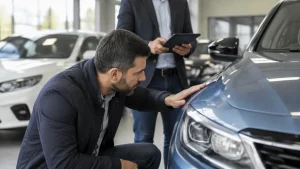
Inspect the vehicle in direct daylight and indoor lighting before accepting the work. Check color consistency, panel edges, jambs, trim, glass, rubber seals, wheel openings, and the transition areas where new paint blends into old paint.
Look for these defects:
- Orange peel: A textured surface caused by spray setup, viscosity, temperature, or technique. Mild cases may respond to color-sanding and polishing.
- Runs or sags: Thick drips on vertical panels. The area may require leveling and refinishing.
- Fish eyes: Circular craters caused by silicone, oil, or other contamination. Sanding and respraying are usually required.
- Overspray: Fine paint particles on glass, rubber, wheels, or adjacent panels. Removal is easier before the material fully cures.
- Mottling: Uneven metallic or pearl distribution that creates cloudy bands or tiger stripes. The basecoat may need respraying.
- Edge mapping: Visible outlines where old damage, filler, or a repair boundary telegraphs through the new finish.
Expert inspection rule: run a clean hand over the panel only after the shop confirms the surface is safe to touch. Fresh clearcoat can remain vulnerable even when it appears dry.
How Can You Get an Accurate Estimate?
Provide the shop with the vehicle identification number, current color code if available, photographs of every damaged area, and a clear statement about the intended finish. Ask for an itemized estimate that separates preparation, body repair, paint materials, disassembly, reassembly, blending, taxes, and calibration.
Ask these questions:
- Is the quoted price for exterior panels only?
- Are door jambs, trunk edges, and hood edges included?
- Which dents, rust areas, and plastic repairs are included?
- Will the shop remove trim, lights, handles, and badges?
- What paint brand and coating system will be used?
- How many labor hours are budgeted?
- What warranty covers peeling, adhesion failure, fading, and corrosion?
- Who pays if hidden rust appears after disassembly?
- Is ADAS inspection or recalibration required?
- What curing time applies before washing, waxing, or applying film?
Get at least three estimates with identical scope. A lower price is meaningful only when the preparation and warranty are equivalent.
Frequently Asked Questions
Does insurance pay for a complete car repaint?
Insurance usually pays for paint work when it results from a covered collision, vandalism, or weather event, subject to the policy deductible and claim decision. Insurance generally does not pay for fading, oxidation, neglected clearcoat, or a voluntary color change. The insurer may authorize only the damaged panels and required blending.
How often should a car be repainted?
A properly prepared professional finish can last 10-20 years, although sunlight, road salt, washing methods, storage, and coating quality change the result. A budget refinish may deteriorate sooner, especially when technicians spray over unstable clearcoat or omit corrosion treatment. Paint failure is often preparation failure rather than ordinary age.
Can a body shop match the original factory color?
A body shop can usually match the original color code, but age, ultraviolet exposure, variant formulas, and metallic orientation affect the result. Professional painters often blend adjacent panels because spraying only the damaged panel can leave a technically correct formula visibly different from weathered surrounding paint.
Is it cheaper to paint a car black or white?
Solid black and white are often among the least expensive colors when using a standard single-stage or basecoat-clearcoat system. Black shows dust, sanding defects, and waviness more clearly, while white can require careful primer and sealer selection. Finish complexity usually matters more than the basic color name.
How long should fresh automotive paint cure?
Cure time depends on the paint system, booth temperature, hardener, film thickness, and manufacturer instructions. A vehicle may be driveable within a day or two, yet remain unsuitable for aggressive washing, waxing, or paint protection film for several weeks. The shop should provide the exact care schedule in writing.
Should I repair rust before painting?
Rust should be repaired before painting because corrosion continues beneath a cosmetic coating. Minor surface rust may require cleaning and primer, while perforation usually requires cutting out metal and welding replacement steel. Painting over bubbling rust produces a short-lived appearance repair rather than a durable refinish.
The Bottom Line
How much does it cost to paint a car? Plan on $1,500-$5,000 for a standard professional respray, $500-$1,500 for limited budget work, and $5,000-$10,000 or more for premium preparation. Choose the estimate that clearly documents labor, body repair, coating materials, disassembly, warranty, and hidden-damage terms, not simply the lowest advertised price.