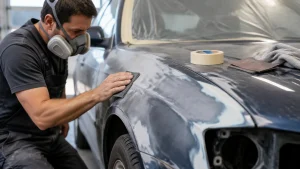
Car frame damage is caused by a force or deterioration that bends, cracks, shifts, or weakens the vehicle’s primary structural members. The most common causes are collisions, severe pothole or curb impacts, improper towing or recovery, rollover forces, and advanced corrosion. Damage can alter suspension geometry, crash-energy management, door alignment, and occupant protection.
Key Facts at a Glance
- A vehicle frame can be damaged without obvious exterior dents, especially after a suspension, wheel, or bumper impact.
- Modern sedans and crossovers usually use unibody construction, while many pickups and large SUVs use separate ladder frames.
- Wheel alignment alone cannot confirm structural integrity because worn or bent suspension parts can create similar symptoms.
- A qualified repair facility measures structural reference points against manufacturer data before deciding whether pulling, sectioning, or replacement is suitable.
- Severe corrosion can make a frame unsafe even when the vehicle has never been in a collision.
- Frame repair costs vary widely, but typical US structural repairs range from about $1,500 for limited pulling to more than $15,000 for extensive replacement work.
What Counts as Car Frame Damage?
Car frame damage means permanent structural distortion, cracking, separation, or corrosion in a vehicle’s chassis or unibody structure. The affected area may include frame rails, crossmembers, rocker panels, floor sections, strut towers, suspension mounting points, pillars, or a pickup’s ladder-frame rails.
The word “frame” is used broadly in everyday automotive language. A body-on-frame truck has a distinct chassis beneath the body, while a unibody vehicle integrates the frame, floor, pillars, roof, and body structure into one load-bearing shell.
A dented fender is cosmetic damage. A bent rail behind that fender is structural damage. The distinction matters because structural members control wheel location, passenger-cell strength, and the way the vehicle absorbs a later collision.
What Is Not Automatically Frame Damage?
A crooked steering wheel, uneven tire wear, or a large bumper dent does not prove a bent chassis. A damaged tie rod, control arm, wheel bearing, subframe, strut, tire, or alignment adjustment can produce the same symptom.
Professional diagnosis separates primary structural damage from bolt-on component damage. The distinction prevents unnecessary frame pulling and identifies dangerous damage that a routine alignment may miss.
How Structural Damage Happens
Frame damage occurs when impact energy exceeds the elastic capacity of a structural member or its attachment points. The metal may bend permanently, buckle, tear, crack at a weld, or shift a mounting point even when the panel above it remains intact.
How Does a Collision Bend the Chassis?
A collision transfers kinetic energy through the bumper reinforcement, crash boxes, rails, crossmembers, suspension mounts, and body structure. When force exceeds the metal’s yield strength, the affected section no longer returns to its original dimensions.
The damage pattern depends on speed, impact angle, overlap, vehicle mass, and the location of the strongest resistance. A narrow offset impact can bend one rail more severely than a centered impact with greater visible damage.
Crumple zones are designed to deform in a controlled sequence. A crushed crumple zone is not automatically a failed repair, because controlled deformation is part of the safety design. Damage becomes a concern when the crush extends into the passenger cell, shifts reference points, tears seams, or leaves replacement parts unable to restore factory geometry.
What Are Mash, Sag, Twist, and Sway?
| Distortion pattern | Structural movement | Common cause | Typical symptom |
|---|---|---|---|
| Mash | Front or rear length shortens | Head-on or rear collision | Reduced crumple-zone length, tight hood or trunk gaps |
| Sag | Rail or body section drops vertically | Offset impact or heavy loading | Uneven door gaps, low suspension reference point |
| Twist | One side rotates relative to another | Corner impact or rollover | Cross-measured points fail, unstable handling |
| Sway | Structure shifts sideways | Side impact or uneven pull | Dog-tracking, steering correction, asymmetric gaps |
A one-inch displacement at a front reference point can move suspension mounting geometry and create problems farther down the vehicle. The exact effect depends on the platform, but structural misalignment can cause multiple apparently unrelated faults.
Which Vehicle Structures Are Most Vulnerable?
Body-on-frame vehicles concentrate structural damage in separate steel rails and crossmembers. Unibody vehicles distribute loads through a larger shell, so deformation can involve floors, pillars, rocker panels, roof rails, and suspension towers.
| Vehicle structure | Common examples | Main damage locations | Repair implication |
|---|---|---|---|
| Ladder frame | Ford F-150, Toyota Tacoma, Chevrolet Silverado | Rails, crossmembers, cab mounts | Frame measurement and rail alignment are central |
| Front-wheel-drive unibody | Honda Civic, Toyota Corolla | Rails, strut towers, floor, apron panels | Wheel geometry and welded body structure interact |
| Crossover unibody | Toyota RAV4, Honda CR-V | Subframes, rocker panels, pillars, floor | Structural and electronic calibration checks may both apply |
| Reinforced SUV unibody | Jeep Grand Cherokee, Ford Explorer | Rails, pillars, roof, suspension towers | Rollover and side-impact paths can affect the occupant cell |
A separate frame can sometimes be replaced more directly, but the body, wiring, fuel lines, brake lines, and powertrain still require careful transfer. A unibody repair often involves controlled sectioning of approved panels and precise welding at manufacturer-specified locations.
What Causes Car Frame Damage Besides a Crash?
Can a Pothole Bend a Frame?
A severe pothole can damage a frame or unibody when the wheel and suspension transmit a concentrated upward force into a mounting point. The more common results are a bent wheel, tire failure, damaged control arm, broken strut, or shifted subframe, but deep potholes can also distort structural attachment points.
Inspect the wheel, tire sidewall, control arm, knuckle, strut tower, subframe fasteners, and alignment readings after a severe impact. A frame conclusion requires more than a visual check beneath the vehicle.
Can a Curb Impact Damage the Chassis?
A curb impact can damage structural mounting areas when a tire strikes at an angle or the vehicle lands heavily after climbing the curb. Front corners, rear suspension mounts, and subframes receive concentrated loads, especially when the tire is underinflated or the vehicle is moving quickly.
A curb strike that produces a steering pull, displaced wheel, cracked wheel, or immediate tire wear deserves a lift inspection. Continuing to drive can turn a small suspension defect into a control or tire failure.
How Does Improper Towing Cause Frame Damage?
Improper towing can bend a chassis through excessive tongue weight, overloaded cargo, incorrect recovery points, or tie-down forces applied to thin body panels. A recovery strap attached to an unsuitable location can pull a rail sideways or tear a mounting bracket.
Towing capacity is not the same as recovery capacity. The owner’s manual specifies trailer limits, hitch loading, and approved attachment points, while recovery equipment requires rated frame-mounted points designed for shock loads.
Can a Rollover Damage the Frame?
A rollover can distort roof rails, pillars, floor sections, suspension towers, and the vehicle’s central safety cell. Even when the roof is repaired cosmetically, stretched metal, torn seams, and shifted pillars may compromise occupant protection.
Rollover inspection should include roof structure, windshield and door openings, seatbelt anchors, airbags, pretensioners, and the floor. A replacement roof skin does not restore a damaged pillar automatically.
Can Rust Cause Structural Frame Damage?
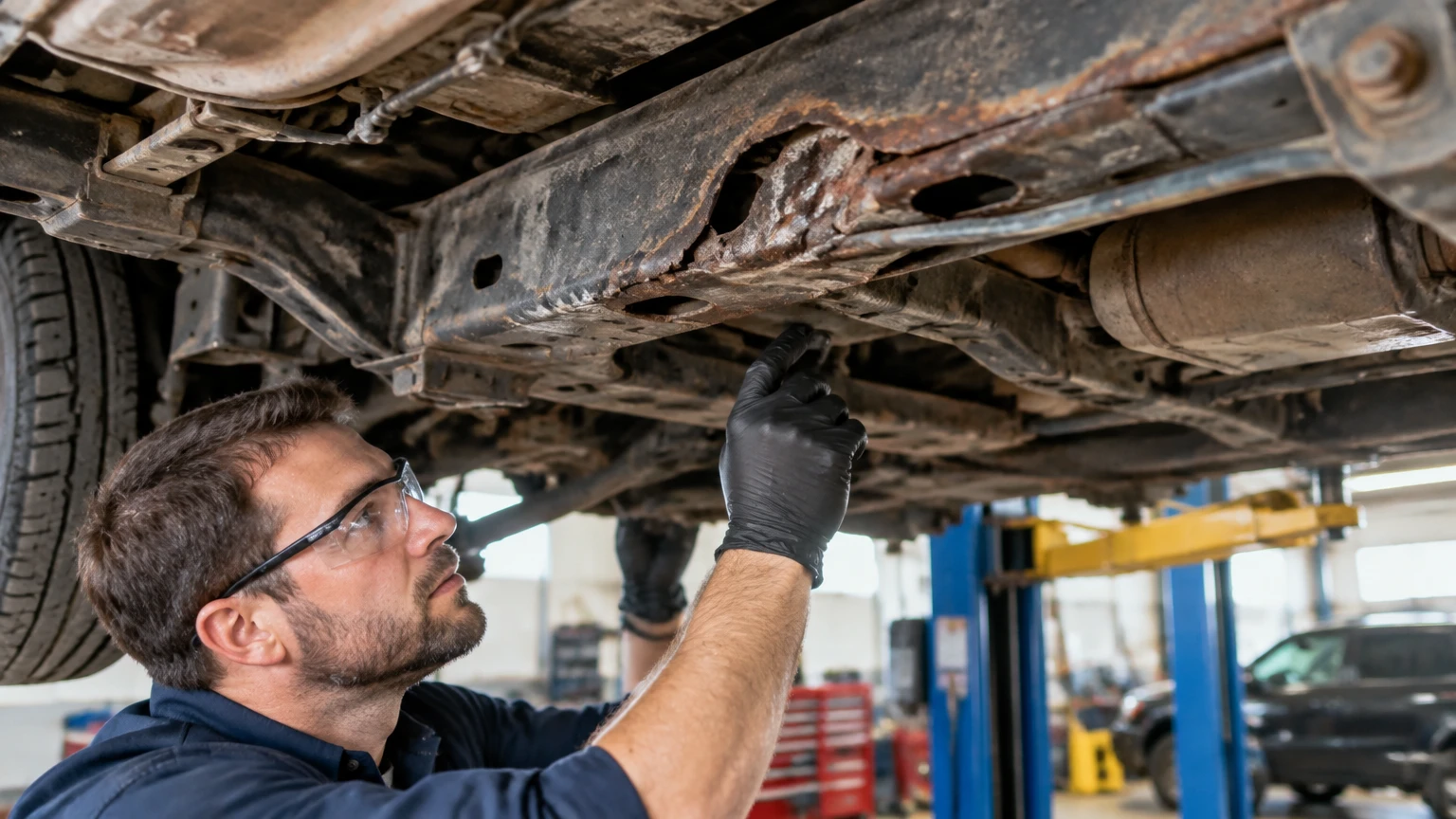
Severe corrosion weakens a chassis by removing metal thickness and separating layers at seams, welds, and boxed sections. Road salt, trapped moisture, mud, and drainage failures accelerate corrosion around frame rails, body mounts, suspension brackets, and rocker panels.
Surface rust is usually an appearance or maintenance issue. Flaking scale, perforation, soft metal, swelling seams, and rust separation around a suspension mount indicate a structural concern.
| Corrosion condition | Visible appearance | Structural meaning | Typical action |
|---|---|---|---|
| Light surface oxidation | Thin orange-brown film | Minimal section loss | Clean, treat, and monitor |
| Heavy scaling | Layered flakes and swollen seams | Measurable metal loss possible | Lift inspection and thickness assessment |
| Local perforation | Holes near mounts or rails | Load path may be weakened | Manufacturer-approved repair evaluation |
| Seam separation | Layers pulling apart | Welded section may no longer carry load | Structural specialist assessment |
| Extensive perforation | Multiple holes and soft rails | Repair may be unsafe or uneconomical | Replacement or vehicle retirement |
Corrosion repair is not equivalent to covering rust with plates. A patch that traps moisture or bypasses the original load path can hide deterioration while adding unpredictable stiffness.
What Symptoms Suggest Structural Damage?
Structural damage often appears as a combination of symptoms rather than one definitive clue. A vehicle that pulls after a collision, shows repeated alignment failure, and has uneven body gaps deserves structural measurement.
Exterior and Interior Warning Signs
Look for these indicators:
- Uneven hood, door, fender, or trunk gaps that change from one side to the other.
- Doors that bind, latch poorly, or require unusual force.
- Cracked seam sealer, wrinkled floor metal, displaced carpet, or buckled trunk panels.
- Paint overspray, mismatched texture, fresh undercoating, or weld marks in repaired areas.
- Cracked strut towers, distorted shock mounts, or missing factory fasteners.
- A windshield or door opening that no longer appears square.
Panel gaps can be repaired cosmetically, so they are evidence rather than proof. Structural inspection must reach the underlying reference points.
Driving and Tire Symptoms
Dog-tracking occurs when the rear wheels follow a path that is not aligned with the front wheels. A steering wheel that remains off-center, rapid edge wear, repeated alignment changes, vibration, or a vehicle that drifts on a level road can also indicate geometry problems.
Suspension wear, tire conicity, road crown, and incorrect tire pressure can mimic these symptoms. A professional compares thrust angle, camber, caster, toe, and manufacturer body dimensions before blaming the frame.
How Do Professionals Confirm Frame Damage?
Professionals confirm structural damage by measuring designated reference points, comparing left and right dimensions, checking suspension geometry, and inspecting welds, seams, and mounting locations. A computerized measuring system may use a tram gauge, laser sensors, or mechanical fixtures, depending on the vehicle and repair facility.
The process normally includes:
- Photographing the vehicle and documenting visible impact evidence.
- Inspecting the underside on a lift.
- Checking wheels, tires, suspension, subframes, and body mounts.
- Measuring structural points against current manufacturer data.
- Comparing cross-diagonal dimensions and height readings.
- Scanning restraint and driver-assistance systems after repairs.
- Performing alignment and road testing only after structural discrepancies are addressed.
Alignment data is useful but limited. A vehicle can align within adjustment range while a damaged crash structure remains weakened, and a healthy body can show poor alignment because a control arm is bent.
Which Repairs Are Appropriate?
Repair choice depends on the damage location, material, manufacturer procedures, corrosion, access, and whether the affected section can return to approved dimensions without unacceptable weakening.
| Repair method | Typical US cost | Typical time | Suitable condition | Main limitation |
|---|---|---|---|---|
| Measurement and minor pull | $500-$1,500 | 1-3 days | Limited distortion with sound metal | Does not replace torn or corroded material |
| Hydraulic straightening | $1,500-$5,000 | 2-5 days | Repairable rails or mounting points | Requires documented measurements and controlled force |
| Section replacement | $3,000-$8,000 | 5-10 days | Manufacturer-approved damaged section | Weld location and procedure must be exact |
| Frame replacement | $8,000-$15,000 or more | 2-4 weeks | Severely damaged replaceable ladder frame | Labor, transfers, corrosion, and hidden damage raise cost |
These are typical US ranges, not estimates for a specific vehicle. Luxury vehicles, EVs, imported parts, high labor markets, and extensive electronic calibration can increase the total substantially.
Straightening does not automatically make a vehicle unsafe. The relevant question is whether the manufacturer permits the procedure, whether the metal remains within specification, and whether the shop documents the final measurements. Some high-load or heavily fatigued components are better replaced than repeatedly pulled.
Is a Frame-Damaged Car Safe to Drive?
A vehicle with suspected structural damage should not be driven at highway speed until a qualified facility inspects it. Immediate risks include altered steering response, tire separation, suspension failure, poor crash-energy management, and nonfunctional airbags or seatbelt pretensioners.
A short low-speed trip may still be unsafe if the wheel, tire, brake, steering, fuel, or restraint system is damaged. Towing is the prudent option when the vehicle pulls sharply, a wheel is displaced, fluids leak, an airbag deployed, or structural parts visibly crack.
How Do Insurance and Total-Loss Decisions Work?
Insurers commonly compare repair cost, salvage value, vehicle value, local regulations, and hidden-damage probability. A vehicle can be repairable in an engineering sense but uneconomical to repair when labor and replacement systems exceed its actual cash value.
A salvage or rebuilt title does not identify the exact structural quality of the repair. Request before-and-after photographs, measurement reports, parts invoices, weld documentation, alignment results, restraint-system scans, and calibration records.
How Should You Inspect a Used Car?
A used-car inspection should combine vehicle-history research, a cold visual inspection, a lift inspection, a road test, and independent measurement when evidence suggests structural damage. A history report can reveal a collision or total-loss event, but a clean report cannot prove that the chassis is undamaged.
Use this checklist:
- Obtain the VIN and compare it with the dashboard, door label, and title.
- Review accident, salvage, flood, and registration records.
- Inspect underbody rails, seams, welds, drain holes, and suspension mounts.
- Compare paint texture, panel gaps, fasteners, and undercoating.
- Check tire brands, tread patterns, edge wear, and wheel offsets.
- Confirm that doors, hood, trunk, and liftgate open and latch normally.
- Request a scan for airbag, ABS, steering, and ADAS fault codes.
- Ask for repair invoices and structural measurement documents.
- Pay for an independent pre-purchase inspection before exchanging money.
A seller who refuses an independent inspection creates a meaningful risk. A fresh alignment receipt is not a substitute for structural documentation.
Common Diagnostic Mistakes
Mistake 1: Blaming the Frame for Every Alignment Problem
Bent suspension components often create alignment readings that resemble chassis damage. Inspect the control arms, knuckles, struts, tie rods, bushings, and subframe position first.
Mistake 2: Treating a Small Bumper Dent as Harmless
Plastic bumper covers can return to shape while reinforcement beams, crash boxes, absorbers, or frame horns remain crushed. Remove or properly inspect the bumper system after a meaningful impact.
Mistake 3: Pulling Without Manufacturer Dimensions
A shop cannot verify a repair by making the panels look straight. Structural work requires the correct vehicle-specific reference data and a final measurement report.
Mistake 4: Using a Winch, Tree, or Chain at Home
DIY pulling applies uncontrolled force and can release stored energy violently. It also cannot establish whether the repaired chassis meets dimensions, weld requirements, or restraint-system needs.
Mistake 5: Ignoring Advanced Driver Assistance Systems
A collision repair can leave cameras, radar sensors, steering-angle sensors, and parking systems misaligned. ADAS calibration requirements vary by vehicle, so the manufacturer’s repair information must determine the post-repair procedure.
Mistake 6: Overlooking EV Structural Components
Electric vehicles may have battery enclosures and high-voltage components integrated near the floor structure. A collision or lift-point error can damage the battery case, and inspection requires technicians trained for high-voltage safety.
Expert Rules of Thumb
- Measure before pulling. A vehicle that looks crooked may need a suspension part, while a vehicle that looks straight may have shifted reference points.
- Follow the load path. Inspect from the impact location through rails, crossmembers, mounts, pillars, and the occupant cell rather than focusing only on the visible dent.
- Treat corrosion differently from impact distortion. Clean, sound metal may be repairable; perforated or layered metal may lack the section strength needed for a reliable repair.
- Documentation has safety value. Final dimensions, weld procedures, restraint scans, and calibration records help establish what was repaired and what remains uncertain.
FAQ
Can a low-speed accident cause frame damage?
Yes. A low-speed impact can damage structural components when the force is concentrated at a corner, wheel, hitch, or rigid object. Speed alone does not determine damage; impact angle, overlap, vehicle design, object stiffness, and the condition of the bumper system also matter.
Can a wheel alignment detect a bent frame?
A wheel alignment can reveal geometry that is inconsistent with factory specifications, but it cannot independently prove frame damage. Bent suspension parts, shifted subframes, worn bushings, tire defects, and incorrect adjustment can create similar readings. Structural measurement and underside inspection provide the necessary confirmation.
Is a bent frame worth repairing?
A bent frame may be worth repairing when the manufacturer permits the procedure, the metal is sound, the structure can return to specification, and repair cost is reasonable compared with vehicle value. Extensive corrosion, occupant-cell distortion, unavailable procedures, or major restraint damage can make replacement or retirement safer.
How long does frame repair take?
Limited measurement and straightening commonly take 2-5 days, while section replacement often takes 5-10 days. Full frame replacement may take 2-4 weeks. Parts availability, hidden damage, paint work, wheel alignment, restraint repairs, and ADAS calibration can extend those timeframes.
Does a clean vehicle-history report prove there is no frame damage?
No. History services depend on reported events, insurance records, inspections, and data availability. Unreported private repairs, minor collisions, imported vehicles, and incomplete records can leave structural damage absent from the report. An independent lift inspection remains necessary.
What should I do immediately after a suspected impact?
Park safely, photograph the vehicle, check for fluid leaks and tire damage, avoid highway driving, and arrange a professional inspection. Do not crawl under an unstable vehicle or attempt to straighten structural metal. Provide the inspector with impact location, speed, symptoms, warning lights, and any prior repair history.
The Bottom Line
The main causes of car frame damage are collisions, severe wheel impacts, improper towing or recovery, rollovers, and advanced corrosion. The visible dent is only part of the diagnosis because structural damage can shift mounting points, weaken crash protection, and create symptoms that resemble ordinary alignment or suspension problems.
If you suspect What Causes Car Frame Damage? in a specific vehicle, do not rely on panel gaps, a clean history report, or a single alignment printout. Use a qualified structural repair facility, manufacturer dimensions, documented measurements, restraint-system scans, and ADAS calibration records before deciding whether the vehicle should be repaired, purchased, or driven.