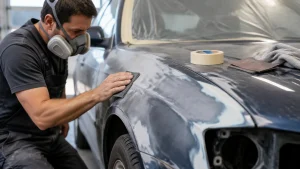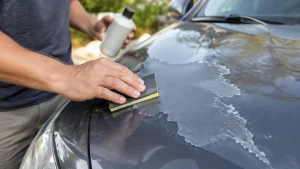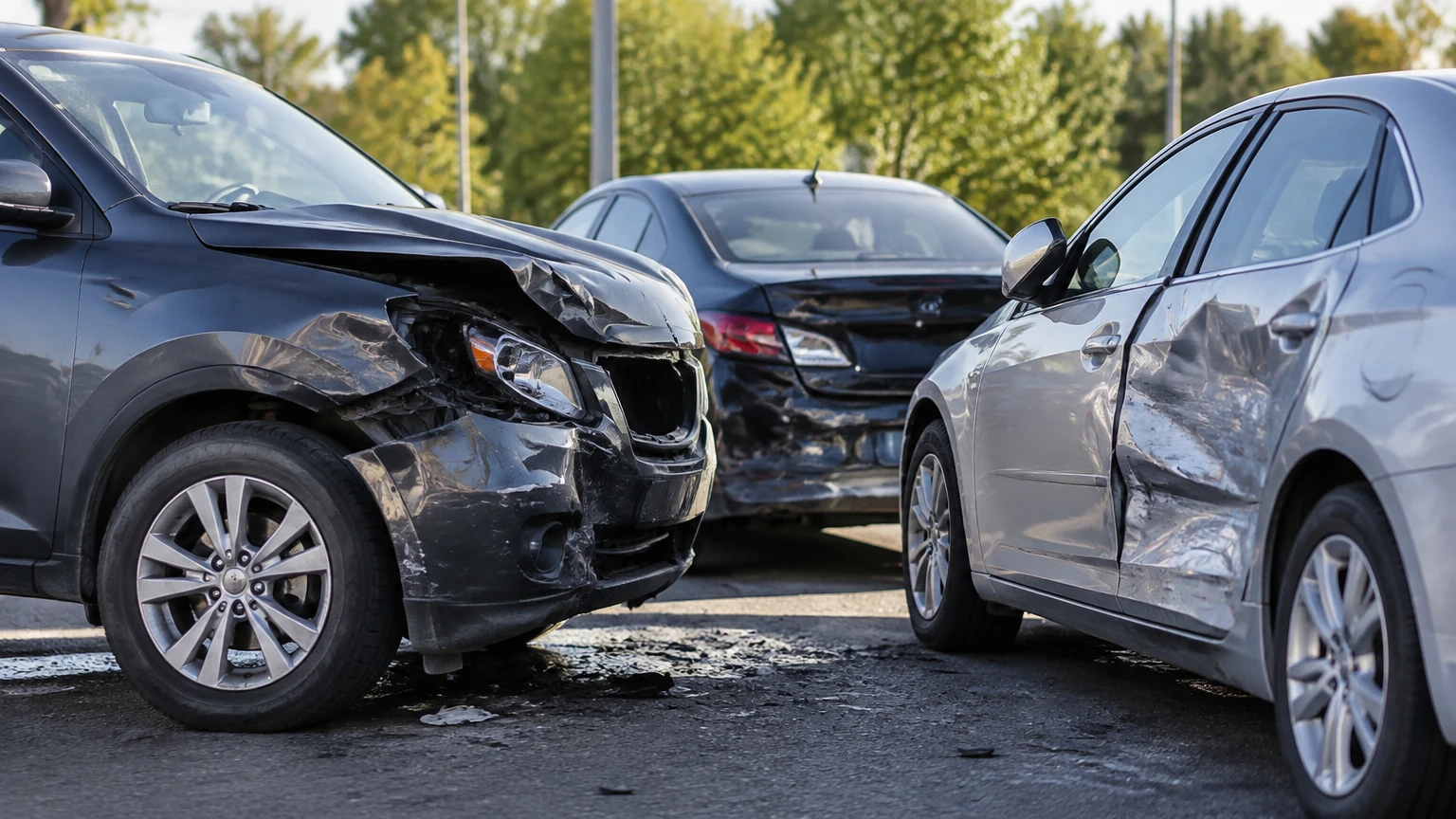
Collision damage includes cosmetic, structural, mechanical, electrical, and safety-system damage caused by an impact. Cosmetic damage affects appearance, structural damage affects the vehicle’s crash-management shell, and mechanical or electronic damage affects movement, restraint systems, sensors, and vehicle computers. One crash can produce several types simultaneously.
Key Facts at a Glance
- Cosmetic collision damage includes scratches, dents, paint loss, cracked lamps, and damaged trim.
- Structural damage affects frame rails, floor sections, pillars, suspension mounting points, or unibody alignment.
- Mechanical damage can involve steering, suspension, cooling, braking, drivetrain, wheels, and axles.
- Electronic damage can disable airbags, seatbelt pretensioners, radar, cameras, parking sensors, or wiring networks.
- A vehicle that looks repaired may remain unsafe if ADAS calibration, restraint replacement, or wheel alignment is incomplete.
- Typical collision repair costs range from about $75 for a small paintless dent repair to more than $15,000 for extensive structural and safety-system work.
What Are the Main Types of Collision Damage?
The main types of collision damage are cosmetic, structural, mechanical, electrical, and safety-system damage. Cosmetic damage changes the exterior appearance, while structural damage changes the vehicle’s load-bearing geometry; mechanical, electrical, and restraint damage can affect whether the vehicle steers, stops, protects occupants, or detects hazards.
| Damage type | Common affected parts | Typical evidence | Typical cost |
|---|---|---|---|
| Cosmetic | Paint, clear coat, trim, lamps | Scratches, chips, shallow dents | $75-$1,200 |
| Structural | Rails, pillars, floor, mounting points | Buckles, misalignment, measurement deviation | $2,500-$15,000+ |
| Mechanical | Suspension, radiator, steering, axle | Leaks, vibration, pulling, warning lights | $500-$8,000+ |
| Electrical | Wiring, modules, connectors, battery circuits | Fault codes, intermittent functions | $300-$4,000+ |
| Safety system | Airbags, pretensioners, crash sensors | Deployment, stored restraint codes | $2,000-$6,000+ |
Cosmetic Damage
Cosmetic damage affects visible or easily replaceable exterior components without necessarily changing the passenger compartment or suspension geometry. Typical examples include clear-coat scratches, paint chips, shallow door dents, cracked bumper covers, broken grilles, damaged badges, and scraped wheel finishes.
A paint scratch that reaches bare steel requires prompt sealing because moisture can create corrosion beneath intact surrounding paint. Paintless dent repair is suitable when the factory paint remains intact, the metal is not sharply creased, and technicians can reach the rear of the panel.
Cosmetic does not always mean harmless. A cracked bumper cover may conceal a crushed absorber, broken mounting bracket, displaced radar unit, or damaged reinforcement beam.
Structural Damage
Structural damage affects the vehicle’s crash-energy path or passenger-cell geometry. The affected parts may include frame rails on a body-on-frame truck, front or rear rails on a unibody vehicle, rocker panels, floor sections, pillars, roof rails, aprons, suspension towers, and subframe mounting points.
Structural damage is assessed by comparing measured points with OEM dimensions, not by looking for one obvious bend. A vehicle can have acceptable-looking panel gaps while its suspension mounting points remain displaced. Conversely, a visibly buckled bolt-on panel may be replaceable without permanent damage to the safety cell.
Modern high-strength steel, ultra-high-strength steel, aluminum, and mixed-material bodies have different repair limits. Heating, drilling, sectioning, or pulling a component outside the manufacturer’s procedure can reduce future crash performance.
Mechanical Damage
Mechanical collision damage affects systems that make the vehicle move, steer, cool, and stop. Common examples include bent control arms, tie rods, struts, wheel hubs, steering racks, drive axles, radiators, condensers, transmission coolers, engine mounts, exhaust components, and brake lines.
Suspension damage often appears after a wheel strikes another vehicle or curb during a crash. Symptoms include a steering wheel that remains off-center, vehicle pull, uneven tire wear, wheel vibration, clunks, fluid leakage, or a wheel that sits visibly farther forward or backward in its arch.
Mechanical damage can exist without dashboard warnings. A bent suspension arm may produce no fault code, so a diagnostic scan cannot replace a physical inspection and four-wheel alignment measurement.
Electrical and Electronic Damage
Electrical collision damage affects wiring harnesses, connectors, control modules, lighting circuits, battery systems, and communication networks. Impact can pinch a harness behind a bumper, break a connector, expose wiring to water, or interrupt communication between modules.
Electronic systems include parking sensors, blind-spot monitoring, adaptive cruise control, automatic emergency braking, lane-keeping cameras, and tire-pressure monitoring. Damage may appear as warning messages, unavailable features, false alerts, or intermittent operation.
Electric vehicles require additional precautions. A collision facility must assess the high-voltage battery case, isolation resistance, orange cables, cooling system, and manufacturer-specific disablement procedure. A quiet motor does not prove that an EV is safe to move or repair.
Safety-System Damage
Safety-system damage includes deployed airbags, locked seatbelt pretensioners, damaged impact sensors, torn seat covers, bent steering wheels, and compromised occupant-detection systems. An airbag may deploy even when exterior damage looks moderate because deployment depends on crash direction, deceleration, and sensor logic.
Replacing an airbag alone is incomplete. A proper repair may also require a new pretensioner, crash-data reset or module replacement, steering-wheel component, instrument panel, seat component, sensor, and post-repair scan. Used restraint parts create additional compatibility and history concerns.
How Does Collision Energy Create Different Damage Patterns?
Collision energy travels through the vehicle from the impact point toward stronger and weaker structures. Crumple zones deform to absorb energy, while passenger-cell structures preserve occupant space; a bumper impact can therefore damage hidden reinforcement, rails, cooling components, wiring, and sensors even when the cover appears repairable.
Vehicle speed, mass, impact angle, overlap, object height, braking, and restraint use determine the damage pattern. A heavier vehicle generally transfers more momentum in a two-vehicle collision, but vehicle design and impact geometry can matter more than weight alone.
Unibody vehicles integrate body and frame functions into one shell. Body-on-frame trucks separate the passenger body from frame rails, although suspension, steering, and body mounts can still transmit impact forces across the vehicle.
A low-speed corner impact can be more damaging than a centered bumper strike because the force enters through a wheel, suspension corner, or narrow rail. Repairers inspect diagonally opposite points because twisting can travel across the body.
Which Collision Damage Subtypes Cost the Most?
Structural, restraint, and combined mechanical damage usually cost the most because they require specialized measurement, replacement procedures, calibration, and post-repair testing. Paint-only work is usually least expensive, while a bumper repair becomes significantly more expensive when radar, lamps, absorbers, and adjacent structure are involved.
| Repair area | Typical time | Typical United States cost | Main cost variable |
|---|---|---|---|
| Paint chip or clear-coat repair | 1-2 days | $150-$600 | Paint blending and corrosion |
| Paintless dent repair | 2-6 hours | $75-$500 | Dent depth, access, and metal type |
| Bumper cover and brackets | 1-3 days | $500-$2,500 | Sensor damage and paint matching |
| Door, fender, or quarter panel | 2-5 days | $500-$3,500 | Repair versus replacement |
| Windshield with camera | 2-5 hours | $400-$1,500 | Glass type and camera calibration |
| Suspension corner | 1-3 days | $500-$5,000 | Hub, rack, axle, and alignment damage |
| Airbags and pretensioners | 2-5 days | $2,000-$6,000+ | OEM modules and interior parts |
| Structural unibody repair | 1-3 weeks | $2,500-$15,000+ | Measurement, sectioning, and refinishing |
These figures are typical planning ranges, not guarantees. Parts availability, regional labor rates, vehicle age, aluminum construction, carbon-fiber components, luxury branding, and calibration requirements can change the estimate substantially. A metropolitan specialty shop may exceed $200 per labor hour, while many markets remain below that level.
How Do Collision Centers Diagnose Hidden Damage?
Certified collision centers diagnose hidden damage through teardown, dimensional measurement, diagnostic scanning, mechanical inspection, and calibration verification. An estimate written from exterior photographs is preliminary because bumper covers, lamps, liners, and trim can conceal damage to rails, absorbers, wiring, cooling systems, and sensors.
| Diagnostic stage | What technicians do | Evidence produced | Typical timing |
|---|---|---|---|
| Initial inspection | Photograph impact, leaks, warning lamps, wheel position | Condition report and estimate | 30-90 minutes |
| Teardown | Remove covers, liners, lamps, and damaged trim | Supplementary damage list | 2-8 hours |
| Dimensional measurement | Compare datum points with OEM specifications | Measurement report | 2-6 hours |
| Electronic scan | Read restraint, powertrain, body, and ADAS modules | Diagnostic fault report | 30-90 minutes |
| Mechanical testing | Check alignment, leaks, steering, braking, and suspension | Test results | 1-4 hours |
| Calibration and road test | Aim cameras and radar, verify functions | Calibration report and final scan | 1-4 hours |
What Happens During Structural Repair?
Structural repair begins with controlled anchoring and measurement, followed by approved straightening, component replacement, welding, corrosion protection, and a second measurement. Modern repairers cannot assume that pulling every bent part back into shape is acceptable, because some materials lose strength or exceed manufacturer repair limits.
The facility should document the OEM procedure used for sectioning, welding, rivets, adhesives, fastener torque, and corrosion protection. Aluminum repairs may require isolated tools and a clean work area to prevent steel contamination. Carbon-fiber repairs require model-specific engineering guidance and are often replacement-only.
A final alignment printout is useful but insufficient. The shop should also verify steering-wheel position, ride height, tire condition, brake operation, warning lamps, and all relevant camera or radar functions.
Is Paintless Dent Repair Better Than Traditional Body Repair?
Paintless dent repair is better for shallow dents with intact paint and accessible metal; traditional body repair is necessary for cracked paint, sharp creases, torn metal, damaged edges, replaced panels, and structural components. PDR preserves original paint and usually costs less, but it cannot restore every dent.
| Decision factor | PDR | Traditional body repair |
|---|---|---|
| Suitable damage | Shallow dent, intact paint | Crease, scrape, torn or crushed panel |
| Typical time | 2-6 hours | 1-5 days |
| Typical cost | $75-$500 | $500-$3,500 |
| Paint retained | Yes | No, affected area refinished |
| Structural repair | No | Limited body repair only |
| Main limitation | Poor access or sharp edges | Color match and filler quality |
A practitioner rule is simple: if a magnet, paint inspection, or close lighting reveals exposed metal, cracking, or previous filler, PDR is not a complete repair. PDR also cannot correct a displaced bumper reinforcement, bent rail, or wheel alignment problem.
Should You Choose OEM, Aftermarket, or Recycled Parts?
OEM parts provide the strongest fitment and documentation consistency, while aftermarket and recycled parts can reduce cost when the part is nonstructural and compatible. For airbags, seatbelts, structural members, sensors, lamps, and safety-critical brackets, the repair plan should prioritize verified compatibility and the manufacturer’s repair requirements.
| Part source | Typical price versus OEM | Best application | Main risk |
|---|---|---|---|
| New OEM | 100% | Lease, warranty, structural or safety part | Highest estimate |
| Certified aftermarket | 40%-80% | Cosmetic bumper or fender | Fit and finish variation |
| Recycled OEM | 30%-70% | Matching nonstructural panel or lamp | Wear, history, availability |
| Remanufactured | 50%-85% | Approved steering or mechanical unit | Quality varies by supplier |
The Insurance Institute for Highway Safety has repeatedly emphasized that vehicle safety depends on crashworthiness and restraint performance, not exterior appearance alone. That principle supports caution when a cheaper component changes mounting geometry, energy absorption, sensor location, or material strength.
For leased vehicles, review the contract before authorizing non-OEM components. For older vehicles, an approved recycled panel may be financially rational, but it should not be used to bypass a required safety repair.
When Is Collision Damage Unsafe to Drive?
A vehicle is unsafe to drive when it has deployed airbags, steering or braking problems, fluid leakage, severe wheel misalignment, exposed high-voltage components, unstable body parts, damaged lights at night, or warning messages related to restraints. Towing is safer than a short test drive when any of these conditions exists.
Do not drive if the tire rubs, the steering wheel turns far off-center, coolant or fuel leaks, the hood cannot latch, a door cannot close, the windshield obstructs vision, or an airbag light remains illuminated. A car may move under its own power and still lack crash protection.
A low-speed impact deserves inspection when symptoms appear later. Delayed signs include tire wear, battery drain from damaged wiring, intermittent sensor faults, water intrusion, and alignment changes after suspension components settle.
When Does Collision Damage Make a Vehicle a Total Loss?
An insurer generally declares a total loss when the repair cost plus salvage value, taxes, storage, and related expenses exceed the vehicle’s actual cash value under applicable state rules. The exact threshold varies by jurisdiction and insurer, so no universal percentage determines every total-loss decision.
Structural damage, multiple deployed airbags, unavailable parts, aluminum labor, EV battery damage, and diminished resale value can push a vehicle toward total loss. A repair estimate also changes after teardown, when hidden damage becomes a documented supplement.
Ask the insurer for the valuation report, comparable vehicles, condition adjustments, salvage deduction, and applicable threshold. Owners may challenge inaccurate mileage, options, trim level, prior condition, or local comparable vehicles. A repairable vehicle can still carry a branded title or reduced resale value depending on the jurisdiction and claim outcome.
What Should a Collision Repair Estimate Include?
A complete collision estimate should identify damaged operations, part numbers, labor categories, paint materials, scan procedures, calibration, alignment, sublet work, and likely supplements. An estimate that lists only a bumper and paint may omit hidden damage and post-repair safety verification.
Check for these items:
- Pre-repair photographs and documented mileage.
- Teardown authorization and supplement procedure.
- OEM repair procedures for welding, adhesives, and sectioning.
- Part source, warranty, and compatibility.
- Pre-scan and post-scan charges.
- Wheel alignment and suspension measurements.
- ADAS calibration, target type, and calibration result.
- Airbag, pretensioner, and crash-module replacement.
- Corrosion protection after cutting or welding.
- Final road test and customer delivery report.
A diagnostic scan sheet does not prove calibration by itself. Calibration requires the correct target, distance, ride height, tire condition, software state, and vehicle position specified by the manufacturer.
How Does Collision Damage Affect Resale Value?
Collision damage can reduce resale value even after a technically correct repair because buyers and vehicle-history services may record the accident. The reduction depends on severity, title status, structural involvement, airbag deployment, repair quality, vehicle age, and the transparency of documentation.
A repaired bumper on an older car may have little market effect. A late-model luxury SUV with structural repairs and multiple supplements may lose substantially more because buyers price in future fitment, corrosion, warranty, and accident-history concerns.
Keep the repair estimate, invoices, alignment report, scan results, calibration report, photographs, and parts documentation. Complete records cannot erase an accident record, but they can distinguish a documented professional repair from an unexplained prior loss.
Which Advice Fits Your Vehicle Situation?
New Vehicle or Lease
Prioritize OEM parts, certified repair procedures, corrosion protection, and complete calibration records. Review lease return standards before approving alternatives, because an acceptable insurance repair may not satisfy a lessor’s inspection policy.
Older, Lower-Value Vehicle
Compare the repair estimate with actual cash value before approving cosmetic work. PDR and quality recycled parts may reduce cost, but safety systems, steering, braking, tires, and structure should not be downgraded to preserve the vehicle.
Electric Vehicle
Use a facility trained for the vehicle’s high-voltage system. Ask whether the battery enclosure, isolation resistance, underbody, coolant circuits, and post-repair diagnostic requirements were inspected.
Rental Vehicle
A collision damage waiver changes who pays for covered damage, but it may exclude tires, glass, unauthorized drivers, or policy violations. Check personal auto insurance and credit-card coverage before declining the rental company’s waiver.
Expert Rules That Prevent Expensive Mistakes
- A bumper cover is not the bumper structure. Plastic fascia, foam absorber, reinforcement beam, brackets, radar, and mounting rails are separate inspection points.
- An alignment printout cannot certify the whole vehicle. Alignment can be within specification while an airbag system, wiring harness, or ADAS camera remains faulty.
- The cheapest estimate is often the least complete estimate. Teardown, supplements, calibration, and corrosion protection determine whether the first price represents the finished repair.
- Airbag deployment changes the repair category. Interior restraint components and crash data often cost more than the visible exterior damage.
- Original paint has economic value, but safety has priority. PDR is valuable only when the dent does not involve edges, cracks, structural metal, or displaced mounting points.
Frequently Asked Questions
Can a Minor Collision Cause Frame Damage?
Yes, a minor-looking collision can cause frame or unibody damage when the impact reaches a rail, suspension mounting point, or corner structure. Visible bumper damage does not establish severity. Dimensional measurement and suspension alignment data provide stronger evidence than appearance alone.
Does Replacing a Windshield Require ADAS Calibration?
A windshield replacement requires ADAS calibration when a forward camera is mounted to or optically aligned through the glass. The exact procedure depends on the vehicle, camera design, ride height, and manufacturer instructions. Request the calibration result, not merely an invoice for glass replacement.
How Long Do Collision Repairs Usually Take?
Simple paint or PDR work may take several hours to two days, while panel replacement commonly takes two to five days. Structural repairs, parts delays, supplements, and ADAS calibration can extend a repair to one to three weeks or longer.
Does Insurance Pay for Hidden Collision Damage?
Insurance commonly covers hidden damage when the damage resulted from the covered collision and the policy applies. The repair facility documents hidden damage during teardown, then submits a supplement to the insurer. Coverage disputes may concern unrelated prior damage, policy limits, depreciation, or causation.
Can I Repair Collision Damage Myself?
You can often handle minor cosmetic work, such as touch-up paint or trim replacement, if no safety system or structural component is involved. Airbags, pretensioners, high-voltage EV parts, structural welding, and ADAS calibration require specialized equipment, procedures, and training.
Is Collision Damage the Same as Accident Damage?
Collision damage is a type of accident damage caused by contact with a vehicle, object, animal, or surface. Accident damage is broader and may include fire, flood, vandalism, or weather-related harm, depending on the insurer’s terminology and policy definitions.
The Bottom Line
The different types of collision damage include cosmetic, structural, mechanical, electrical, and safety-system damage. Cosmetic repairs may cost $75-$1,200, while structural or restraint repairs can exceed $15,000. The reliable way to judge a collision is to combine teardown, OEM dimensional measurement, mechanical inspection, diagnostic scanning, alignment, and ADAS calibration. A professional inspection matters more than the visible dent, and that principle should guide every repair decision involving collision damage.