How an impact can move a vehicle’s structure, and why alignment matters before cosmetics.
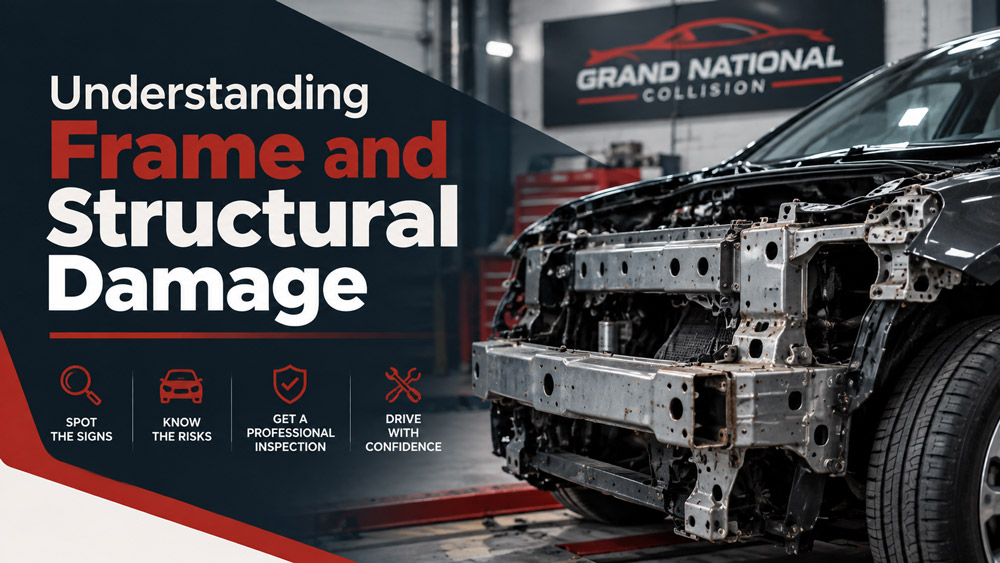
The body panels of a vehicle are the visible layer. Underneath them is the structure that carries the load, holds the panels in position, and protects the occupants in a crash. When an impact is strong enough to move that structure, the repair changes from cosmetic to structural, and the approach has to change with it.
Most modern cars and SUVs are built as a unibody, meaning the main structure and the body shell are integrated rather than a separate frame bolted underneath. Older trucks and some large vehicles use a body-on-frame design instead. The two are repaired differently. Either way, the structure acts as the foundation that the rest of the vehicle is aligned to.
Structural damage is not always obvious. A hard hit at one corner can bend or twist a section, and the signs may show up far from the point of impact. A door that no longer closes smoothly, a hood that sits unevenly, a gap that has opened between panels, uneven tire wear, or a vehicle that pulls to one side are all possible clues. Sometimes nothing looks wrong until the vehicle is measured.
Measurement is what separates a structural repair from guesswork. Repair shops use reference points and measurements specific to the vehicle to check whether the structure has returned to the position the manufacturer intended. Without measurement, a repair can look straight to the eye while the structure remains slightly out of line, which can cause alignment problems and uneven tire wear later.
Straightening brings the structure back toward its designed position using controlled pulling and pushing. The force is applied at specific points and monitored, not improvised. On newer vehicles this is especially important because high-strength steels used in crash structures respond differently to heat and force than older, softer steel. The manufacturer publishes repair methods for each model, and following them protects the strength of the structure.
Once the structure is correct, the alignment of doors, hood, trunk, and fenders follows. If the structure is right, those panels fit and operate as they should. If the structure is still out of line, no amount of adjusting will make the gaps even, which is exactly why structural work comes before cosmetic work and paint.
Driving a vehicle with suspected structural damage is a risk. Steering, braking, and handling can be affected, and driving can add damage or cause a tire to fail. If the vehicle pulls, feels unstable, or has a visibly shifted wheel, have it towed rather than driven. Mention the symptoms when you call so the shop knows what to look for.
Two more practical points help after a structural repair. First, keep driving normally for the first days and pay attention to whether the vehicle tracks straight, whether the steering wheel sits level, and whether any new noise or vibration appears. Second, have the alignment and tire wear checked if you notice anything unusual, because a structural repair that is a fraction out of position can show up as uneven wear over time. Raising those symptoms early gives the shop a chance to verify or correct the work while the record is fresh.
Remember that the goal of structural work is not to make the vehicle look fixed. It is to return the structure to a position where the vehicle is safe to drive and the panels align as designed. Appearance is the visible result, but measurement is the proof. If you are unsure whether your vehicle was measured during a repair, ask. That single question tells you whether the shop treated the structure seriously.
The honest conclusion is that structural damage is a case-by-case question. Some vehicles can be brought back into specification safely; others, depending on the damage and the vehicle, may be a different decision entirely. That determination comes from an inspection and measurement, not from a photo or a phone description. If structure is suspected, the right next step is a professional look, because a safe, measured repair is the foundation for everything that is painted on top of it.