Towing & Recovery
A damaged vehicle does not always arrive under its own power. One of the business's own listing photographs shows a flatbed carrier with a vehicle on the deck, which is the kind of transport a body shop uses for vehicles that cannot or should not be driven after a collision.
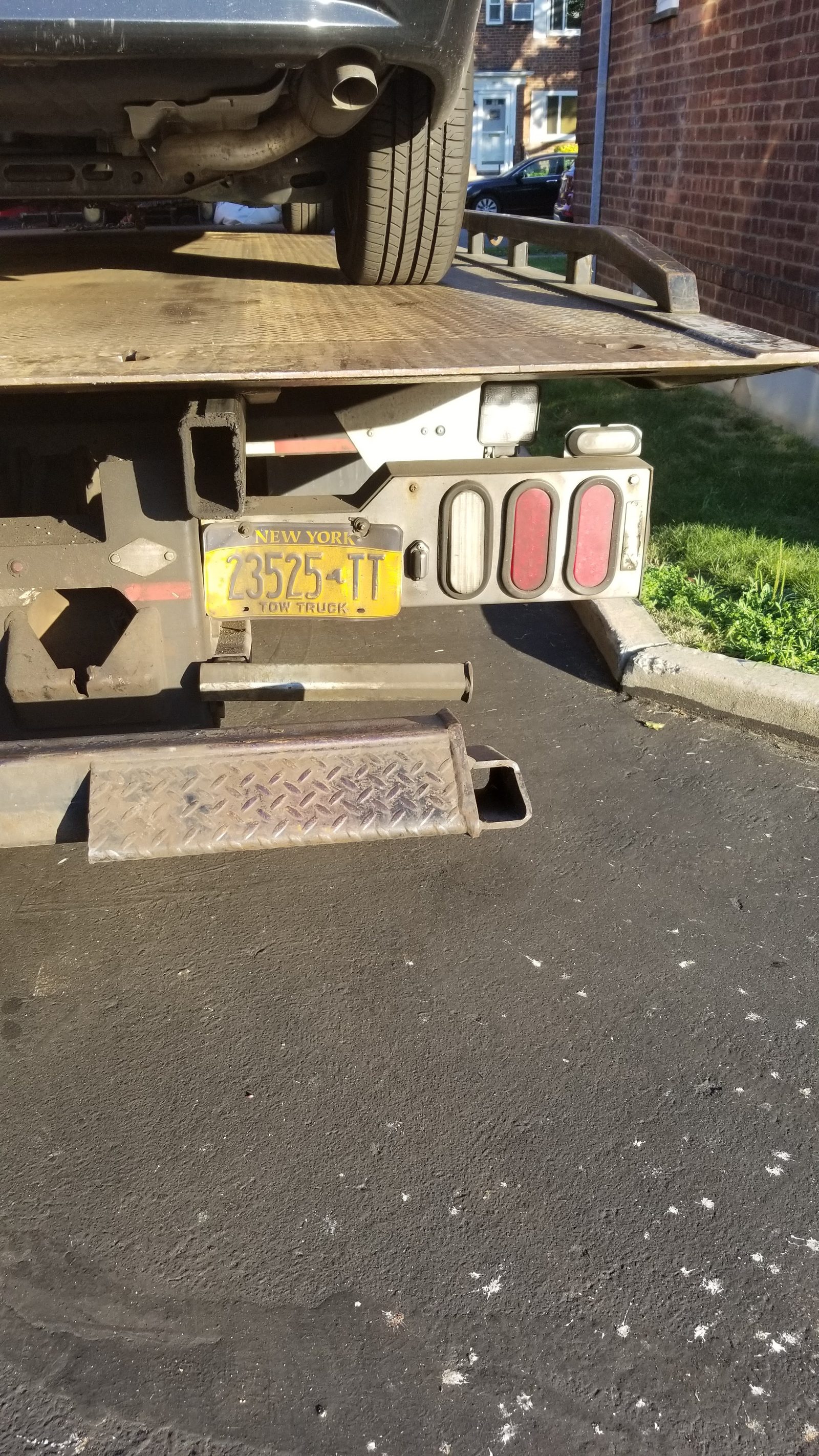
Towing and recovery for collision damage
A damaged vehicle does not always arrive under its own power. One of the business's own listing photographs shows a flatbed carrier with a vehicle on the deck, which is the kind of transport a body shop uses for vehicles that cannot or should not be driven after a collision.
Towing and recovery matters whenever driving the vehicle could add damage or create a safety risk. A pushed wheel, a leaking radiator, a deployed airbag, a broken lamp, or a door that will not latch are all reasons to stop and call for transport. Driving a damaged vehicle can turn a repairable hit into a larger one.
A flatbed carries all four wheels off the ground, which is the preferred method for many all-wheel-drive and low-clearance vehicles. A wheel-lift is another option for some situations. The right choice depends on the vehicle and the damage, and it is a decision for the operator on scene.
A third-party directory lists towing among the services associated with this address, and one listing photo shows a flatbed carrier. Because this site does not publish unverified arrangements as fact, the current towing option should be confirmed directly when you call.
What this service generally includes
- Flatbed transport. The vehicle rides fully on the deck, with all four wheels off the ground.
- Wheel-lift transport. An alternative method for some vehicles and situations, decided by the operator.
- Accident scene pickup. A vehicle that cannot be driven after a collision can be picked up and brought to the shop.
- Non-running vehicles. Vehicles that will not start or should not move under power can still be transported.
- Winching and recovery. A vehicle that has left the roadway or is stuck may need recovery before it can be loaded.
- Coordination with the repair. Transport is lined up so the vehicle reaches the shop ready for assessment.
What affects scope and timing
The condition of the vehicle decides the method and the equipment. A vehicle with a locked wheel, a damaged suspension, or low ground clearance needs a different approach from a car that simply will not start. Being honest about the vehicle condition when you call helps the right equipment be sent.
The location is the other factor. A vehicle in a safe parking lot is a straightforward pickup, while one on a shoulder, in a garage, or off the road adds time and risk. Tell the operator exactly where the vehicle is and whether it is accessible.
How to prepare
If it is safe to do so, move yourself and any passengers to a safe spot away from traffic before arranging transport. Do not stand behind or beside the vehicle on a roadway. If there are injuries or a hazard, call emergency services first.
Have the vehicle's location, a description, and the nearest cross street ready when you call. Mention if the wheels are turned, if the steering is locked, or if the vehicle is in a garage or tight space, since those details change how it is loaded.
After the visit
Once the vehicle reaches the shop, the assessment can begin. Keep the transport receipt and any paperwork with the claim documents, because moving a vehicle is often part of the insurance process and is easier to account for when the records are together.
When not to drive it
The hardest call after a collision is often whether the vehicle can be driven. When in doubt, do not drive it. The cost of a tow is small next to the risk of a secondary failure, a tire coming off a bent suspension, or a second collision caused by compromised steering or brakes.
Transport also protects the repair. A vehicle that is moved improperly can add damage to a bumper, an underbody component, or a wheel, which complicates both the repair and the claim. Letting a professional load it is the safer path.
Questions people ask about towing & recovery
Can you tow my car to the shop?
The shop can be asked about current towing arrangements for collision vehicles. Confirm the details and any cost by phone.
Will a flatbed damage my car?
A flatbed carries all four wheels on the deck. Properly loaded, it is the gentlest common method, especially for all-wheel drive and low vehicles.
Do I pay for the tow?
That depends on your coverage and the arrangement. Ask your insurer and the shop about the current process before authorizing transport.
Start with the damage in front of you
Call Grand National Collision at (516) 294-0019 to describe the damage and confirm current hours, scope, and how insurance is handled before you travel.